
Decentralized Stablecoins: Unmasking Structural Vulnerabilities and Systemic Risks in the 2025 Investment Landscape
The rise of decentralized stablecoins has been one of the most transformative developments in the crypto ecosystem, promising price stability and programmable finance. However, the collapse of algorithmic stablecoins like TerraUSD (UST) in 2022 and the subsequent failures of projects such as Iron Finance and Basis Cash have exposed profound structural vulnerabilities. These incidents underscore the systemic risks inherent in decentralized stablecoin models and the urgent need for robust hedging strategies. As of 2025, investors must navigate a landscape where technical fragility, economic instability, and regulatory uncertainty intersect, demanding a nuanced understanding of risk mitigation.
Structural Vulnerabilities: The Fragility of Algorithmic Models
Algorithmic stablecoins, which rely on automated supply adjustments and market incentives rather than tangible collateral, have proven particularly susceptible to collapse. The UST-LUNA ecosystem, for instance, imploded in May 2022 after a death spiral triggered by a loss of confidence. When UST's peg to the U.S. dollar weakened, users rushed to redeem it for LUNA, diluting the token's value and accelerating the depeg. This dynamic, as noted by a 2025 analysis, highlights the inherent instability of systems dependent on reflexivity and market sentiment.
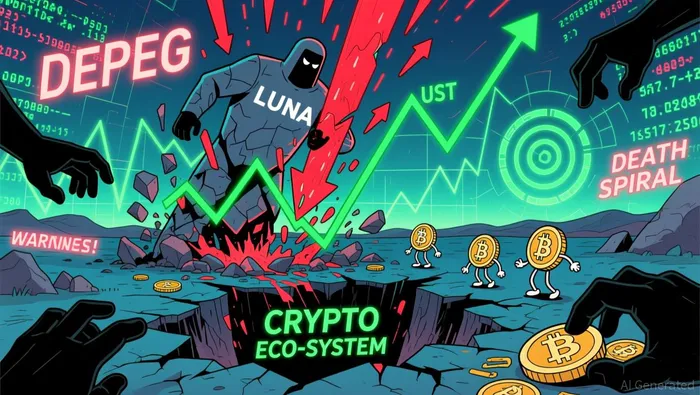 The fragility of algorithmic models is further compounded by interconnectedness. The UST collapse had cascading effects on other stablecoins, such as USDN on the WavesWAVES-- platform, which briefly lost its peg due to cross-market panic. Academic research corroborates these findings, identifying structural breaks in pegs as common among algorithmic and hybrid models, particularly during periods of stress. Unlike fiat- or crypto-collateralized stablecoins, which maintain reserves to absorb shocks, algorithmic designs lack this buffer, making them prone to rapid, irreversible failures.
Systemic Risk Assessment: Beyond Individual Failures
The systemic risks posed by decentralized stablecoins extend beyond isolated collapses. A 2025 report by Elliptic emphasizes that stablecoins can both absorb and amplify systemic risk, depending on their design and governance. For example, the UST-LUNA failure not only wiped out $40 billion in value but also triggered liquidity crises in DeFi protocols reliant on UST as collateral. This interconnectedness is exacerbated by the lack of transparency in reserve management and the opacity of algorithmic mechanisms, which obscure the true health of stablecoin systems.
Regulatory developments since 2023 have sought to address these risks. The EU's Markets in Crypto-Assets (MiCA) framework and the U.S. proposed GENIUS Act now mandate reserve transparency and redemption guarantees for stablecoin issuers. Meanwhile, the Bank of England's proposed regime for systemic stablecoins requires at least 40% of backing assets to be held in unremunerated central bank deposits, aiming to balance innovation with financial stability. These measures reflect a growing recognition that decentralized stablecoins, despite their decentralized ethos, cannot operate in isolation from systemic safeguards.
Hedging Strategies: Diversification, Collateral, and Compliance
To mitigate risks, investors must adopt a multi-pronged approach. Diversification remains a cornerstone strategy. While fiat-collateralized stablecoins like TetherUSDT-- (USDT) and USD Coin (USDC) dominate 84% of the market due to their 1:1 backing by fiat reserves, crypto-collateralized models offer alternative risk profiles. Over-collateralization using assets like EthereumETH-- (ETH) or WBTCWBTC-- provides a buffer against volatility, though it requires careful monitoring of liquidation thresholds. Hybrid models, which blend algorithmic mechanisms with partial collateralization, remain contentious but may offer middle-ground solutions if paired with conservative reserve ratios.
Technical safeguards are equally critical. Smart contract audits, multi-signature approvals, and time-delayed execution mechanisms can prevent unauthorized actions and reduce the risk of exploits. According to Elliptic, projects implementing formal verification and bug bounty programs have demonstrated resilience against reentrancy attacks and oracle manipulation-common vulnerabilities in decentralized systems.
Regulatory compliance is the final pillar. As of 2025, over 70% of jurisdictions have established stablecoin-specific frameworks, with penalties for non-compliance becoming increasingly severe. Investors should prioritize stablecoins adhering to these standards, as non-compliant projects face higher risks of sudden regulatory intervention. The UK's approach, which allows up to 60% of backing assets in short-term government securities while maintaining central bank deposits, offers a blueprint for balancing innovation with stability.
Conclusion: Navigating the New Stablecoin Paradigm
The 2023–2025 period has been a watershed for decentralized stablecoins, marked by both innovation and collapse. While algorithmic models have demonstrated their fragility, the broader ecosystem is evolving toward more transparent, collateralized, and regulated designs. For investors, the path forward lies in diversification, technical due diligence, and adherence to regulatory frameworks. As the crypto market matures, those who recognize the systemic risks of decentralized stablecoins-and act accordingly-will be best positioned to navigate the next phase of this dynamic asset class.






Comentarios
Aún no hay comentarios