
Decentralized Housing Prediction Markets: The Convergence of Real-Estate-Tech and Speculative Capital
The intersection of real-estate technology and decentralized prediction markets is emerging as a fertile ground for speculative capital, driven by innovations in blockchain-based data transparency, tokenized assets, and crowd-sourced forecasting. While direct information on a strategic partnership between Polymarket and Parcl remains elusive as of late 2025, the broader trends in real-estate-tech convergence and the structural advantages of prediction markets suggest a compelling case for investors to monitor this space.
The Rise of Real-Estate-Tech Convergence
Real-estate technology has long been a laggard in digital transformation, but recent advancements in blockchain, smart contracts, and decentralized autonomous organizations (DAOs) are reshaping the sector. Platforms like Parcl, which focus on tokenizing real estate to enable fractional ownership and liquidity, exemplify this shift. By converting property rights into tradable digital assets, such platforms reduce barriers to entry for investors and unlock new capital flows. According to a 2025 report by Bloomberg, tokenized real estate markets are projected to surpass $10 billion in total value locked (TVL) by 2027, driven by demand for programmable and globally accessible assets.
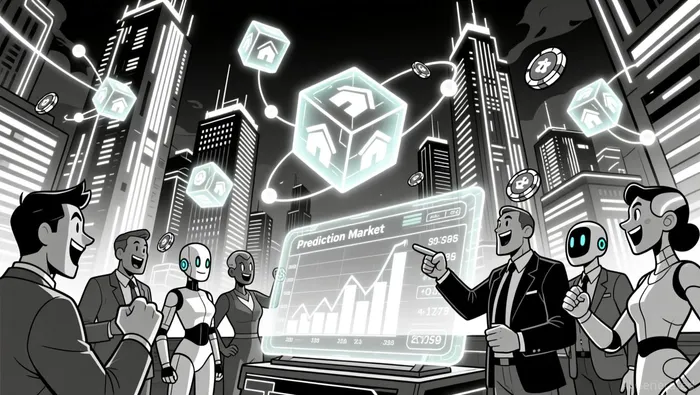
Simultaneously, prediction markets-platforms where users trade outcomes of future events-are evolving beyond traditional financial and political forecasting. Polymarket, a leading decentralized prediction market platform, has expanded its scope to include niche sectors like real estate. These markets aggregate collective intelligence to price probabilities, offering a novel lens for assessing housing market trends. For instance, Polymarket's 2025 Q4 data shows a surge in trading volume for contracts tied to regional housing price indices, with average daily volume increasing by 220% year-over-year.
Theoretical Synergies Between Polymarket and Parcl
While no official announcement confirms a collaboration between Polymarket and Parcl, the alignment of their core technologies suggests potential synergies. A hypothetical integration could involve using Parcl's tokenized real-estate assets as collateral or reference points for Polymarket's prediction contracts. For example, investors might trade outcomes tied to the future value of a tokenized property, with smart contracts automatically settling payouts based on real-time data feeds. This would create a feedback loop: prediction markets could inform investment decisions in real-estate tokens, while property performance data could refine market forecasts.
Such a model would also address a critical pain point in traditional real estate-liquidity. By enabling real-time betting on property valuations, prediction markets could act as a proxy for secondary trading, allowing investors to hedge risks or speculate on price movements without transferring ownership. This mirrors the role of derivatives in traditional finance, but with lower friction and global accessibility.
Speculative Capital Opportunities
For investors, the convergence of these technologies opens speculative avenues in three areas:
1. Early-Stage Platform Tokens: Projects bridging real estate and prediction markets may issue governance or utility tokens to incentivize participation. These tokens could appreciate as the platforms scale, particularly if they attract institutional adoption.
2. Liquidity Provision: Yield seekers could stake assets in decentralized exchanges or prediction market pools, earning fees from traders betting on real-estate outcomes.
3. Data Arbitrage: Aggregators of real-estate and prediction market data may identify mispricings between traditional housing indicators (e.g., Zillow indices) and crowd-sourced forecasts, enabling strategic entries or exits.
However, risks abound. Regulatory uncertainty around tokenized assets and prediction markets remains significant, particularly in jurisdictions with strict gambling or securities laws. Additionally, the nascent nature of these markets means liquidity can evaporate rapidly during downturns, as seen in the 2024 crypto winter.
Conclusion: A Watchlist for 2026
While the absence of confirmed details about a Polymarket-Parcl partnership underscores the experimental stage of this convergence, the underlying trends in real-estate-tech and decentralized finance (DeFi) warrant attention. Investors with a high risk tolerance may find value in positioning for scenarios where prediction markets become integral to real-estate valuation frameworks. As always, due diligence is critical-particularly in a space where innovation often outpaces regulation.







Comentarios
Aún no hay comentarios