
Decentralized Governance Under Scrutiny: The WLFI-Justin Sun Blacklist Controversy
The recent controversy surrounding World Liberty Financial (WLFI) and its decision to blacklist TronTRX-- founder Justin Sun's wallet has ignited a global debate about the fragility of decentralized governance in tokenized finance. This incident, which froze $75 million of Sun's WLFI holdings and triggered a 40% drop in the token's value since its September 2025 launch, underscores systemic risks in DeFi governance models while also highlighting opportunities for reform. As the crypto industry grapples with balancing decentralization, compliance, and user trust, WLFI's actions-and the backlash they provoked-serve as a cautionary tale for tokenized finance.
The Governance Model: Centralization in Disguise
WLFI, a DeFi project closely tied to the Trump family, positions itself as a bridge between traditional finance and blockchain innovation. Its governance token, WLFIWLFI--, grants holders voting rights on protocol decisions, with a total supply of 100 billion tokens. However, the project's structure reveals stark centralization: the Trump family and their affiliates control 22.5% of the token supply and 75% of revenue from token sales. This concentration of power contradicts the decentralized ethos of blockchain, as evidenced by the unilateral blacklisting of Sun's wallet.
The controversy began when WLFI froze 595 million unlocked WLFI tokens linked to Sun's address after a $9 million transfer to exchanges. 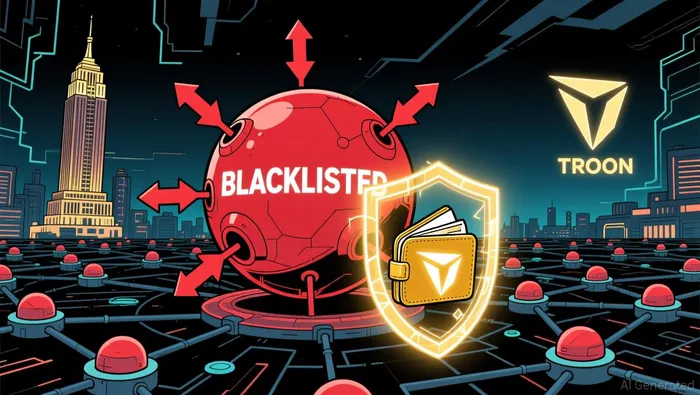 The project cited "phishing attacks" and "high-risk exposure" as justifications, but critics argue the move was politically motivated, given Sun's public criticism of WLFI's governance. The incident exposed a critical flaw: even projects claiming decentralization often retain centralized control over critical functions like wallet blacklisting.
Risks in Tokenized Finance Governance
The WLFI controversy highlights three systemic risks in tokenized finance:
Centralized Control and Trust Erosion
WLFI's ability to freeze assets unilaterally undermines the "sacred and inviolable" nature of blockchain tokens, a principle Sun himself emphasized in his response. This centralization risks alienating users and investors, as seen in the 42% price drop of WLFI tokens by December 2025. The project's governance model, which allows a Delaware-registered company to dictate token unlock schedules, further erodes trust.Regulatory and Compliance Challenges
WLFI's ties to the Trump family and its opaque governance have drawn regulatory scrutiny. For instance, the project faced backlash for selling tokens to individuals linked to sanctioned countries. Such practices raise questions about compliance with anti-money laundering (AML) and know-your-customer (KYC) regulations, which are increasingly critical in tokenized finance.Token Utility and Liquidity Constraints
The WLFI token is non-tradeable and non-transferable, limiting its utility beyond governance. This design, combined with locked token schedules, creates liquidity risks for investors. Sun's loss of $60 million in token value since September 2025 exemplifies the volatility inherent in such models.
Opportunities for Reform and Growth
Despite these risks, the WLFI incident also reveals opportunities for innovation in tokenized finance:
Stablecoin Expansion and Real-World Assets (RWAs)
WLFI's USD1USD1-- stablecoin, backed by U.S. Treasuries, could become a value-capture mechanism if integrated with cross-chain platforms like EthereumETH-- and BNBBNB-- Chain. Additionally, the project's planned RWA launch in January 2026 may stabilize its tokenomics by diversifying revenue streams.Partnerships and Ecosystem Development
WLFI's pending integration with AaveAAVE-- V3 and other DeFi platforms could enhance its utility. However, counterparties may demand stricter on-chain governance conditions post-incident, as seen in the backlash against the $9 million transfer.Governance Reforms
The controversy has spurred calls for decentralized governance reforms. For example, WLFI's proposal to allocate 5% of unlocked tokens to incentivize USD1 adoption could be restructured to include community voting. Such reforms would align with the project's stated goal of "user safety" while addressing centralization concerns.
Conclusion: A Crossroads for Tokenized Finance
The WLFI-Justin Sun blacklist controversy is a microcosm of the broader tensions in tokenized finance: the clash between centralized control and decentralized ideals, the need for regulatory compliance, and the quest for sustainable token utility. While WLFI's governance model has exposed vulnerabilities, it also presents a blueprint for reform. Projects must prioritize transparency, community participation, and on-chain governance to rebuild trust. For investors, the incident underscores the importance of scrutinizing tokenomics and governance structures before committing capital.
As the DeFi landscape evolves, the lessons from WLFI will likely shape the next generation of tokenized finance models-ones that balance innovation with accountability.






Comentarios
Aún no hay comentarios