
Decentralized Creator Incentives and the Steem Blockchain's Steemit Challenge Season 29
The rise of blockchain-based content ecosystems has redefined how creators and consumers interact, with decentralized platforms like SteemSTEEM-- pioneering models that reward participation and curation. Central to this evolution is the concept of decentralized creator incentives, which aim to align user contributions with token-based rewards. The Steem blockchain's Steemit Challenge Season 29, titled "Real Life Skills Challenge: Learn, Apply & Grow," represents a strategic effort to strengthen this model while addressing long-term sustainability. This analysis evaluates the interplay between community-driven initiatives, token economics, and structural challenges, offering insights for investors assessing the viability of blockchain-based content platforms.
Steemit Challenge Season 29: A Blueprint for Collaborative Growth
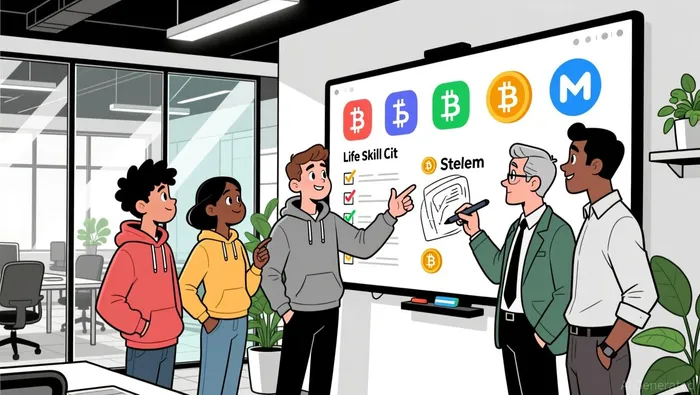
The Steemit Challenge Season 29, launched in late 2025, is designed to stimulate content creation by focusing on practical life skills such as financial planning, digital literacy, and productivity. Unlike traditional competitive formats, the challenge emphasizes collaborative engagement, requiring participants to comment meaningfully on at least three entries weekly. This structure fosters a feedback-driven community, where knowledge sharing and peer validation become intrinsic to the platform's value proposition.
The initiative also reinforces Steem's core economic model, which rewards creators and curators through Steem Power (SP) and Steem Dollars (SBD). By tying content quality to governance and staking mechanisms, Steem aims to create a self-sustaining ecosystem where user contributions directly influence platform dynamics. For instance, weekly winners are selected based on criteria like relevance, practical application, and community engagement, ensuring that high-value content is prioritized. This approach not only incentivizes niche creators but also aligns with broader trends in Web3, where tokenized rewards drive user retention.
Structural Challenges: Whale Dominance and Tokenomics
Despite these innovations, Steem faces persistent structural hurdles that limit its scalability. A 2025 analysis highlights whale dominance and rigid tokenomics as critical barriers to mass adoption. Large stakeholders, or "whales," control significant portions of Steem Power, skewing governance decisions and reducing the platform's decentralization. Additionally, the fixed supply of STEEM tokens and the lack of dynamic supply adjustments create volatility, deterring new users who seek stable earning opportunities.
Historical events, such as the 2020 fork and concerns about centralized influence, have further eroded trust. While initiatives like the Community Curator Applications program-which aims to distribute 13 million Steem Power-seek to decentralize governance, the requirement of a 7,000 Steem Power minimum for eligibility excludes smaller participants. These challenges underscore the tension between maintaining a decentralized ethos and achieving practical scalability.
Token Value and Engagement: A Delicate Balance
Recent data reveals a direct correlation between STEEM token value and community engagement. In the past quarter, STEEM's price fell by 2.88% over 24 hours, underperforming the broader cryptocurrency market. This decline coincided with reduced social activity, as creators and curators responded to lower rewards by reducing content output. A 2023 study noted a 0.91 correlation between STEEM's price and social actions like voting and commenting, suggesting that token value acts as a liquidity driver for user participation.
The drop in STEEM's value has been attributed to profit-taking after Season 28's reward distribution and exchange-specific events, such as Upbit's wallet maintenance. These factors increased sell pressure, compounding the impact of whale-driven market dynamics. For investors, this volatility highlights the risks of relying on speculative token price movements rather than sustainable user growth.
Long-Term Sustainability: Balancing Incentives and Innovation
The long-term value of Steem's ecosystem hinges on its ability to balance incentives with innovation. While challenges like whale dominance persist, the platform's focus on education and skill-based content creation offers a unique value proposition. The Steemit Challenge Season 29, for example, positions Steem as a hub for practical knowledge sharing, a niche that could attract a dedicated user base.
However, sustainability requires addressing tokenomics and governance. A dynamic supply model or mechanisms to reduce whale influence could enhance fairness and attract new users. Additionally, partnerships with educational institutions or corporate training programs could expand Steem's utility beyond social media, aligning with broader Web3 trends.
Conclusion: A High-Risk, High-Reward Proposition
For investors, Steem's ecosystem presents a high-risk, high-reward scenario. The platform's innovative use of tokenized incentives and community-driven challenges demonstrates potential, but structural challenges and token volatility remain significant hurdles. While initiatives like Season 29 and the Community Curator Applications program show promise, their success depends on overcoming whale dominance and refining token economics.
In the long term, Steem's ability to evolve into a self-sustaining, education-focused blockchain could differentiate it from competitors. However, investors must weigh the platform's visionary goals against its current limitations, recognizing that the path to mass adoption will require both technical innovation and community resilience.







Comentarios
Aún no hay comentarios