
Decentralization and Bitcoin Mining Profitability: Emerging Opportunities for Individual Investors in 2025
The Profitability Landscape: Efficiency as the New Currency
Bitcoin mining in 2025 is no longer a race to the bottom-it's a race to the top of the efficiency curve. According to a report by Blockchain Council, miners now earn over $380,000 per block, but this requires cutting-edge hardware like Bitmain's Antminer S21+ or MicroBT's WhatsMiner M66S+ and access to electricity priced below $0.05 per kWh. The network's hash rate has climbed to 921 EH/s, a 77% increase from 2024 lows, but this growth has come at a cost: rising difficulty levels and tighter margins, as highlighted in a Cointeeth analysis.
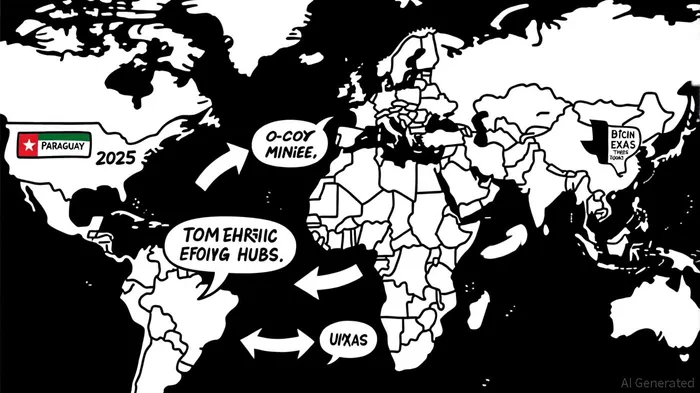
Electricity remains the single largest expense, with miners in regions like Oman and Paraguay enjoying a 60% cost advantage over those in the U.S. or Europe, according to Greenhouse Mining. For example, a miner in Paraguay with access to $0.035/kWh hydroelectric power can achieve profitability with a mid-tier ASIC, while a U.S. miner paying $0.10/kWh would need industrial-scale operations to break even, as reported by BeInCrypto. This has led to a geographic redistribution of mining activity, with countries like Bhutan and Texas becoming hubs for renewable-powered operations, a trend noted by the Blockchain Council report.
Decentralization: From Pools to Personalized Portfolios
The centralization of mining has long been a concern, with a handful of pools and ASIC manufacturers dominating the ecosystem. However, 2025 has seen a surge in initiatives to democratize access. Hosted mining services like ECOS and NiceHash now allow individuals to rent hash power without owning hardware, while cloud platforms like StormGain and HashFly offer flexible contracts starting at $75, catalogued in an Ambcrypto list. These models reduce upfront costs and operational complexity, enabling small investors to participate in mining pools with minimal risk.
AI tools are further leveling the playing field. Platforms like DeepHash and Magicrypto use machine learning to optimize hash distribution, switch pools in real time, and predict energy price fluctuations, as shown in a CryptoNinjas roundup. For instance, a solo miner using AI-driven tools reported a 30% increase in profitability by dynamically adjusting operations based on electricity costs and network difficulty, according to an AI-enabled analysis.
Decentralization is also being driven by protocol-level innovations. Projects like DATUM and StratumV2 empower individual miners to validate blocks independently, reducing reliance on large pools, as explained in a SoloSatoshi article. Meanwhile, Jack Dorsey's Block is experimenting with open-source hardware designs to lower entry barriers, described in a Medium post.
Case Studies: Real-World Gains in a Competitive Market
The rise of hosted and AI-optimized mining has created rare success stories for small investors. In Q3 2025, five solo miners in the U.S. and Canada each earned over $350,000 by mining a single block using a combination of low-cost hydroelectric power and AI-driven pool switching, documented in Radom insights. Another case study from OQTACORE highlights how an individual investor generated passive income by monetizing excess mining power through cloud services, achieving a 15% monthly return on a $5,000 investment, as detailed in an OQTACORE case study.
However, these opportunities come with risks. Scams like Tophash and GlobaleCrypto have defrauded users with unrealistic profit promises, underscoring the need for due diligence, a point emphasized in a CoinGeek article. Platforms like ECOS and BitFuFu stand out by emphasizing transparency and regulatory compliance, offering real-time dashboards and KYC/AML checks, as recommended in a Techi roundup.
Regulatory and Sustainability Shifts
Regulatory clarity has also boosted individual participation. The U.S. executive order in Q3 2025, which ended CBDC exploration and clarified that protocol mining is not a securities offering, has attracted new investors, according to the 99Bitcoins report. Meanwhile, sustainability mandates in New York and California are pushing miners to adopt renewable energy, creating a dual incentive for profitability and ESG alignment, as described in a Bitcoin Kitchen analysis.
Conclusion: A New Era for Bitcoin Mining
The 2025 mining landscape is defined by two forces: the relentless pursuit of efficiency and the democratization of access. For individual investors, the path to profitability lies in strategic partnerships (hosted mining), technological adoption (AI tools), and geographic arbitrage (low-cost energy). While the industry remains competitive, the barriers to entry have never been lower-and the rewards for those who navigate this shift wisely could be substantial.





Comentarios
Aún no hay comentarios