
The Debasement Trade: Strategic Reallocation in a Post-Fiat World
The global fiat currency system, once a cornerstone of economic stability, is showing cracks. Between 2020 and 2025, central banks flooded markets with liquidity to cushion pandemic and geopolitical shocks, eroding public trust in paper money. The U.S. dollar, long the world's reserve currency, hit a three-year low in Q2 2025 as the Federal Reserve eased monetary policy, exacerbating a century-long erosion of purchasing power (down 96% since 1929), according to The Fiat Currency Trap. This devaluation isn't just a U.S. story—emerging markets have seen their currencies depreciate by 4% year-to-date against the dollar, driven by narrowing interest rate differentials and capital outflows, according to BlackRock research.
The Cantillon Effect and the Wealth Gap
The consequences of fiat devaluation are uneven. The Cantillon Effect—the disproportionate benefit of newly created money to early recipients—has widened the wealth gap. Financial institutions and the wealthy, who gain first access to cheap capital, have thrived, while the broader population faces stagnant wages and rising costs, thebraindump's analysis finds. This dynamic has fueled a shift toward real assets: gold and BitcoinBTC-- have surged as hedges against inflation, with the iShares Gold Trust (IAU) and iShares Bitcoin Trust ETF (IBIT) gaining over 40% in the past year, a trend BlackRockBLK-- highlights.
Institutional Reallocation: From Fiat to Tangible
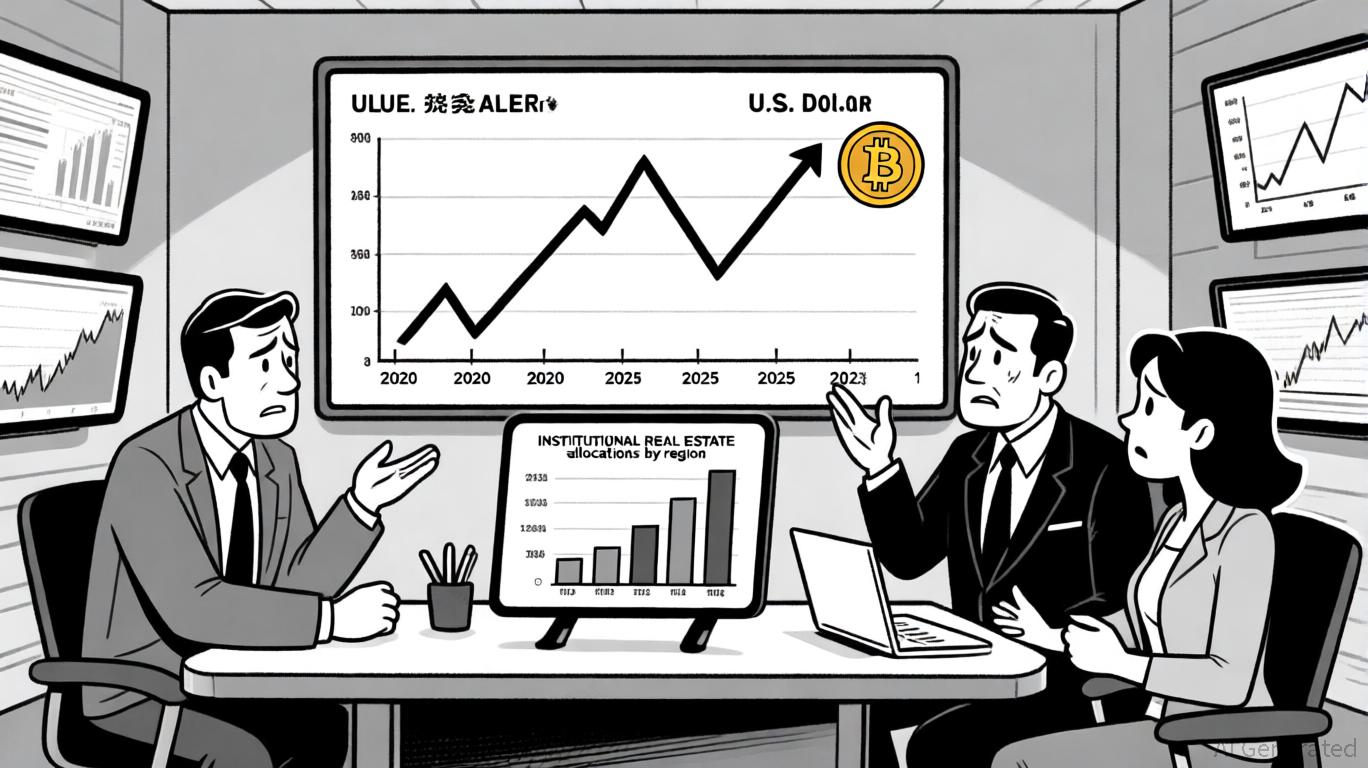
Institutional investors are rewriting the playbook. Real estate allocations have risen nearly 200 basis points since 2013, with 9.9% of portfolios now in real estate—close to the 10.7% target, according to The Real Estate Reel. This shift is partly due to the "denominator effect" reversal: as other asset classes lost value, real estate's relative appeal grew. Meanwhile, 39% of institutions now invest in listed REITs, prioritizing liquidity amid high mortgage rates, the Real Estate Reel notes.
Bitcoin, dubbed "digital gold," is also gaining traction. With a potential price target of $165,000, it's competing with gold as a store of value. Astoria Advisors advocates for diversified real asset portfolios—including gold, Bitcoin, infrastructure, and industrials—to combat inflation and preserve purchasing power.
Regional Divergence and ESG Priorities
Regional strategies vary. North American institutions favor high-risk, high-return value-add real estate investments, while EMEA institutions lean toward core strategies. APAC remains the most active cross-border allocator, with 80% of institutions investing abroad, per the Real Estate Reel. ESG policies are also reshaping allocations: 75% of European and Australian institutions integrate ESG into their processes, compared to just 23% in the U.S., the same report shows.
The Road Ahead: Challenges and Opportunities
Despite optimism, risks persist. Geopolitical tensions and high interest rates could dampen real estate returns. Yet, UBS predicts real estate will remain a key component of institutional portfolios for its long-term risk-adjusted returns, a view also highlighted in BlackRock research. For fiat currencies, the writing is on the wall: as nations diversify away from the dollar and explore alternatives, the era of unbacked money may be nearing its end, as Astoria has argued.
Conclusion
The debasement trade is no longer a niche strategy. As fiat currencies lose ground, investors are reallocating to real assets that preserve value and hedge against uncertainty. Whether through gold, Bitcoin, or real estate, the message is clear: in a post-currency crisis world, tangible assets are the new bedrock of wealth.





Comentarios
Aún no hay comentarios