
From 'The Day After' to Modern Portfolios: Geopolitical Risk and Defensive Asset Allocation
The 1983 broadcast of The Day After, a harrowing depiction of nuclear war's aftermath, serves as a pivotal case study in how media-driven public anxiety can shape both political discourse and investment behavior. By examining the film's psychological and cultural impact, modern investors can draw parallels to today's geopolitical uncertainties and refine defensive asset allocation strategies to mitigate risks in an increasingly volatile world.
The Psychological Shock of The Day After and Its Political Aftermath
When The Day After aired on November 20, 1983, it transformed abstract Cold War fears into visceral reality. The film's graphic portrayal of nuclear devastation in Lawrence, Kansas, resonated deeply with American audiences, sparking widespread anti-nuclear activism and even influencing President Ronald Reagan. According to a report by the Responsible Statecraft Initiative, Reagan reportedly watched the film, wrote in his diary that it "left me greatly depressed," and later shifted his rhetoric toward nuclear disarmament, contributing to the 1987 Intermediate-Range Nuclear Forces (INF) Treaty. This cultural moment underscores how media can amplify public perception of risk, creating pressure on policymakers to act-and indirectly shaping the economic environment in which investors operate.
Investment Behavior in the Shadow of Nuclear Anxiety
While direct evidence of immediate market reactions to The Day After is sparse, broader trends during the 1983 nuclear crisis reveal defensive asset allocation patterns. For instance, gold surged nearly 50% in 1983, with prices spiking $18 an ounce to $395.20 just nine days after the film's broadcast. 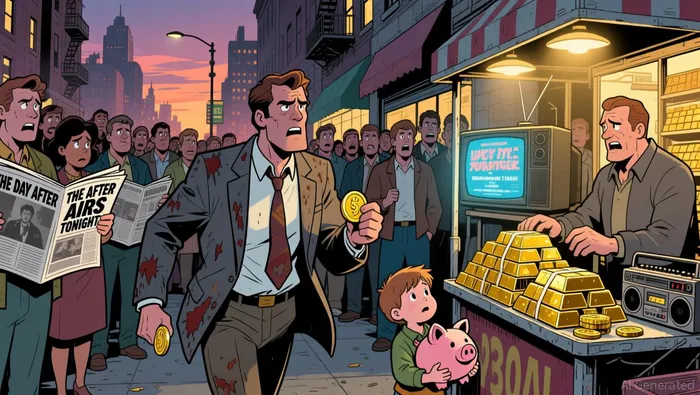 Analysts attributed this rise to geopolitical tensions, including the Soviet Union's false missile alarm and the broader Cold War climate. Similarly, Gallup polls indicated that 52% of Americans believed the likelihood of world war was 50% or higher by year-end 1983, a figure that dropped to 29% by 1989 as tensions eased. This correlation between public fear and asset preferences highlights how perceived geopolitical risks can drive shifts toward defensive holdings.
Lessons for Modern Defensive Portfolios
Today's geopolitical landscape-marked by nuclear proliferation, cyber threats, and great-power competition-echoes the uncertainties of the 1980s. Investors seeking resilience should consider sectors historically favored during periods of instability:
- Gold and Bonds: Gold's 1983 rally reaffirms its role as a hedge against geopolitical and macroeconomic shocks. Similarly, government bonds often attract capital during crises, as seen in the 1980s when U.S. Treasury yields fluctuated with Cold War tensions.
2. Energy and Infrastructure: The 1983 energy sector saw deflationary pressures due to global recession, but nuclear energy debates intensified amid public fears according to EIA data. Modern investors might prioritize energy transition assets (e.g., renewables) and infrastructure with high resilience to disruptions.
3. Healthcare: Rising healthcare costs and employer demand drove interest in health maintenance organizations (HMOs) in 1983. Today, demographic shifts and pandemic preparedness make healthcare a defensive pillar.
The Role of Public Perception in Shaping Markets
The 1983 experience also illustrates how public sentiment can indirectly influence markets. For example, heightened fear of nuclear war led to increased personal savings rates in the short term, as individuals prioritized immediate consumption over uncertain future gains. While such behavior may not directly translate to institutional investment strategies, it underscores the importance of monitoring societal risk perceptions. In today's context, this could mean factoring in public concerns about climate change, pandemics, or cyberattacks when allocating capital.
Conclusion: Preparing for the Unthinkable
The Day After reminds us that geopolitical risks, though often abstract, can crystallize into tangible market forces when amplified by media and public discourse. By studying historical precedents, investors can better anticipate shifts in risk perception and allocate capital to sectors that thrive in uncertain environments. As the world grapples with new forms of instability-from AI-driven conflicts to climate-induced resource wars-the lessons of the nuclear era remain strikingly relevant.







Comentarios
Aún no hay comentarios