
The DAX's Rally and the Looming Shadow of Economic Imbalances
The DAX index has surged to near-historic levels in 2025, driven by a confluence of accommodative monetary policies, fiscal stimulus, and global equity appetite. However, beneath this optimism lies a fragile equilibrium, as trade tensions, geopolitical risks, and structural economic imbalances threaten to derail the rally. For investors, the question is no longer whether the DAX can break its all-time high but whether the gains are sustainable in a world where policy-driven volatility is the new norm.
A Rally Built on Monetary and Fiscal Tailwinds
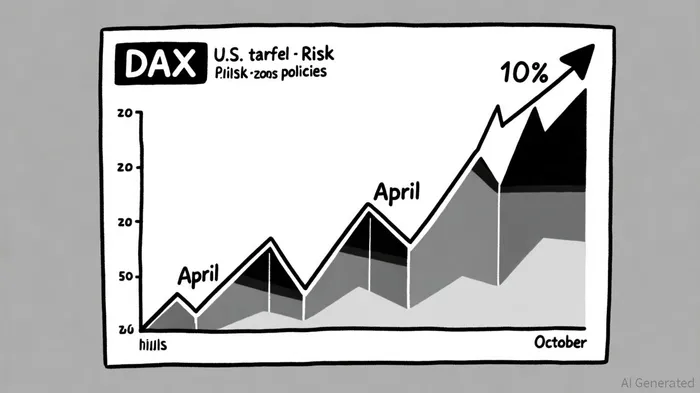
The DAX's 22-32% gain since April 2025, according to an Invezz analysis, reflects a perfect storm of supportive conditions. The European Central Bank (ECB) slashed rates to 2% in early 2025, as noted in a MarketMinute report, while the U.S. Federal Reserve began its easing cycle in September, creating a global "search for yield" that favored equities over bonds, as that MarketMinute report observed. Germany's €500 billion defense and infrastructure spending plan, according to a UNCTAD trade update, further bolstered corporate earnings, particularly in industrial and automotive sectors.
Investor sentiment has turned decisively bullish. Foreign inflows into eurozone assets hit €236 billion in May and June alone, according to the Invezz analysis, while the pan-European STOXX 600 reached record highs, as the MarketMinute report showed. Technically, the DAX has consolidated between key support and resistance levels, with analysts projecting a breakout above 24,500 points, according to the UNCTAD update. Berenberg Bank forecasts the index could hit 24,000-26,000 by year-end, a view echoed in an NBER working paper, with some bullish scenarios reaching 28,000, according to a Kapitalcheck outlook.
The Fragile Foundation: Trade Wars and Geopolitical Risks
Yet the rally's sustainability is clouded by external vulnerabilities. The U.S. trade policies-most notably the April 2025 "Liberation Day" tariffs-triggered a 10% DAX crash, as described in a Kapitalcheck analysis, exposing the index's sensitivity to global trade tensions. These tariffs, targeting Mexico, Canada, and China, are projected to reduce U.S. real income by 1% by 2028, a projection made in an NBER working paper, and drag global growth to 2.5% in 2025-2026, according to the MarketMinute report. For Germany, a trade-dependent economy, retaliatory measures and disrupted supply chains pose direct risks to automotive giants like Porsche and Daimler Trucks, as the Invezz analysis highlights.
Geopolitical optimism, such as the Trump–Putin meeting in August, was discussed in the NBER paper and has temporarily eased fears, but the Ukraine–Russia conflict remains unresolved. Structural challenges, including high energy prices and China's shifting trade dynamics, also weigh on traditional German industries, as the UNCTAD update notes. Meanwhile, the DAX's reliance on global technology sector growth introduces exposure to U.S. equity market corrections, a point raised in the MarketMinute report.
Investor Sentiment: Optimism vs. Prudence
Despite the risks, sentiment remains resilient. Easing inflation, lower energy costs, and dovish central bank signals have shifted risk appetites toward equities, the Invezz analysis finds. The DAX's current valuation, however, raises concerns. With the index near 24,400 points, some analysts warn of overbought conditions-especially if trade tensions escalate or the U.S. government shutdown threat materializes, a risk flagged by the Invezz piece.
Technical indicators suggest caution. While the DAX remains above key moving averages, as the UNCTAD update reports, volatility has moderated, hinting at potential exhaustion in the rally. "The index is dancing on a tightrope," notes one strategist, "with every rate cut from the ECB or Fed providing a lifeline, but trade policy shocks threatening to tip the balance."
Looking Ahead: A Delicate Balance
The DAX's path forward hinges on three factors: the pace of global trade policy normalization, the resilience of Germany's fiscal stimulus, and the ECB's ability to balance growth support with inflation control. If trade tensions abate and central banks continue easing, the DAX could test 26,000–28,000 levels, as suggested in the Kapitalcheck outlook. However, a renewed U.S.-led trade war or a slowdown in China's South–South trade growth, noted in the UNCTAD update, could trigger a reversal.
For investors, the key is hedging against both scenarios. Positions in DAX-listed tech and infrastructure stocks may benefit from the current tailwinds, while defensive sectors like utilities and healthcare could offer downside protection. As Jerome Powell himself has warned, "The risks of policy-driven inflation and economic fragmentation are real and require vigilance," a caution referenced in the Kapitalcheck analysis.






Comentarios
Aún no hay comentarios