
DATRON's ROCE: Navigating Declines and Reinvestment in a Competitive Machinery Sector
Return on Capital Employed (ROCE) is a critical metric for evaluating a company's efficiency in generating profits from its capital. For DATRON AG (ETR:DAR), a German industrial machinery firm specializing in CNC milling and automation solutions, ROCE trends and reinvestment strategies are pivotal in assessing its long-term investment potential. However, conflicting data points—ranging from a reported 13% ROCE to a recent 8.5% figure—require careful analysis to determine whether DATRON is a compelling bet in the Machinery sector.
ROCE: A Tale of Two Narratives
DATRON's ROCE has historically shown a mixed trajectory. In 2019, the company's ROCE stood at 8.4%, but by 2024, it had risen to 13%—a significant improvement relative to the Machinery industry average of 9.3%. This upward trend suggested effective capital allocation and reinvestment in high-margin areas like automation and precision engineering. However, the most recent Q2 2025 data reveals a ROCE of 8.5%, down from 14% in 2019, raising concerns about sustainability. The divergence likely stems from timing differences in data reporting: the 13% figure reflects mid-2024 performance, while the 8.5% figure captures Q2 2025 results, which may include short-term headwinds from sector-wide challenges or operational adjustments.
Reinvestment Strategy: Balancing Innovation and Shareholder Returns
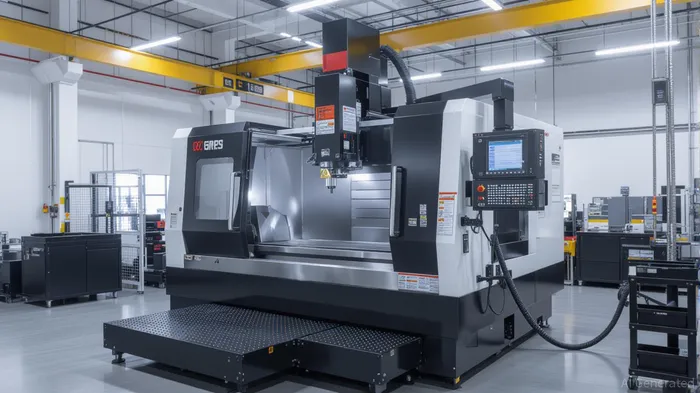
DATRON's reinvestment strategy has prioritized core competencies such as CNC milling, dental automation, and dispensing systems. The company has also allocated capital to R&D for advanced manufacturing technologies, including lightweight CNC machines and modular tooling systems. These initiatives align with the Machinery sector's shift toward Industry 4.0 and smart manufacturing, which demand higher precision and flexibility.
However, the return on these investments has been uneven. While sales grew to €32.05 million in H1 2024 (up from €28.58 million in H1 2022), net income rose only marginally to €2.2 million. This suggests that reinvestment costs are outpacing immediate profitability gains. DATRON has also returned value to shareholders through share buybacks, repurchasing up to 40,000 shares in early 2025. This dual approach—reinvesting in growth while managing shareholder returns—highlights a balanced capital allocation strategy but underscores the need for patience as the benefits of reinvestment materialize.
Industry Context: ROCE in the Machinery Sector
The Machinery sector's ROCE trends reveal a broader narrative of cautious optimism. The U.S. Machinery industry's ROCE has averaged 9.1% in 2025, with subsectors like Industrial Machinery showing strong earnings growth (13.8% CAGR projected over the next few years). DATRON's ROCE of 8.5% is slightly below this average but remains competitive given its niche focus on high-precision, low-volume applications.
The sector's long-term outlook is favorable, driven by electrification, AI integration, and policy-driven industrial modernization. DATRON's expertise in automation and modular design positions it to capitalize on these trends, particularly in aerospace, medical devices, and electronics—markets where precision and uptime are critical. However, the company must navigate near-term risks, including macroeconomic volatility and supply chain disruptions, which could pressure margins and ROCE.
Investment Implications: A Cautionary Case for Selective Investors
DATRON's ROCE trajectory reflects both strengths and vulnerabilities. The company's reinvestment in advanced manufacturing technologies and its strategic share buybacks demonstrate a commitment to long-term value creation. However, the decline in ROCE to 8.5%—despite industry-wide growth—raises questions about the efficiency of capital deployment. Investors should monitor key metrics:
- Margin Expansion: DATRON's EBIT margin improved to 7–8% in H1 2025, up from 5.6% in H1 2024. Sustaining this trend will require cost discipline and pricing power.
- International Growth: The company aims to reduce its reliance on the German domestic market by expanding into France, Austria, and the Americas. Success here could drive higher-margin sales and ROCE.
- Technological Leadership: The “next” control system and lightweight CNC designs are differentiators. Their adoption rates will determine DATRON's ability to capture market share in high-growth segments.
While DATRON's ROCE lags behind its 2024 peak, its alignment with Industry 4.0 trends and niche market positioning make it a compelling candidate for long-term investors. However, the stock's 21% decline over five years and the need for patience in realizing reinvestment gains suggest that this is not a high-conviction, short-term opportunity.
Conclusion: A Calculated Bet on Precision Engineering
DATRON AG occupies a unique position in the Machinery sector, combining innovation in high-speed milling with a balanced approach to capital allocation. While its ROCE has softened recently, the company's focus on automation, modular design, and international expansion provides a foundation for future growth. For investors willing to tolerate near-term volatility and prioritize long-term industrial transformation, DATRON offers a strategic play on the convergence of precision engineering and Industry 4.0. However, due diligence is essential: the path to ROCE recovery will depend on the company's ability to convert reinvestment into scalable, profitable operations.







Comentarios
Aún no hay comentarios