
Data Tokenization: A Strategic Imperative for Cybersecurity and Regulatory Compliance in 2026
In an era where data breaches cost enterprises an average of $4.44 million in 2025 and regulatory frameworks like PCI DSS, GDPR, and HIPAA grow increasingly complex, organizations must adopt technologies that align security with compliance. Data tokenization-a method of replacing sensitive data with non-sensitive tokens-has emerged as a linchpin for enterprises seeking to mitigate risk, reduce breach costs, and future-proof their operations. As we approach 2026, tokenization is no longer a niche solution but a strategic imperative for businesses navigating the intersection of cybersecurity and regulatory demands.
The Compliance Imperative: Tokenization as a Regulatory Enabler
Regulatory landscapes are tightening. The Payment Card Industry Data Security Standard (PCI DSS) 4.0.1, mandatory since March 2025, emphasizes a "customized approach" to compliance, requiring organizations to address all vulnerabilities, regardless of severity. Tokenization directly supports this by reducing the scope of cardholder data environments. For instance, tokens cannot be used to reconstruct original payment data, thereby minimizing the attack surface and simplifying PCI DSS audits.
Similarly, HIPAA compliance in healthcare faces renewed scrutiny as third-party vendor breaches accounted for a significant portion of 2025's 642 reported incidents. Tokenization ensures protected health information (PHI) is stored in non-readable formats, aligning with HIPAA's mandate to safeguard data from unauthorized access. For GDPR, which mandates data minimization and risk reduction, tokenization limits exposure by ensuring raw personal data is never transmitted or stored in vulnerable systems.
Quantified Risk Reduction: Breach Cost Savings and Operational Efficiency
The financial stakes are clear. In 2025, healthcare breaches averaged $7.42 million per incident, while financial sector breaches cost $6.08 million. Tokenization mitigates these costs by reducing the volume of sensitive data exposed during breaches. For example, organizations leveraging tokenization and AI-driven security tools identified and contained breaches 80 days faster, saving nearly $1.9 million.
Case studies underscore this impact. The 2025 Aflac breach, which exposed 22.65 million records, could have been mitigated with tokenization. 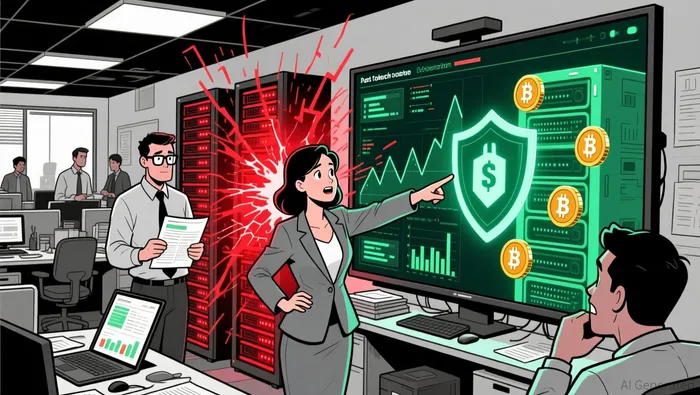 By replacing Social Security numbers and health insurance data with tokens, Aflac could have prevented unauthorized access to sensitive information. Similarly, the Conduent Business Services breach-impacting 10.52 million individuals-might have been less severe if tokenization had limited the exposure of protected health data.
Secure Data Utility: Balancing Protection and Functionality
A common misconception is that data security sacrifices usability. Tokenization, however, enables secure data utility by preserving the functional value of sensitive information. For instance, in hybrid cloud environments, tokenization allows enterprises to process and analyze data without exposing raw values. This is critical for industries like healthcare, where data must be shared across providers while maintaining privacy.
The 2025 surge in AI-enabled attacks further highlights the need for technologies that protect data at the source. Tokenization complements AI and automation by reducing the attack surface, ensuring that even if systems are compromised, the data remains unusable to attackers. Analysts predict that 80% of enterprises will adopt tokenization for payment data security by 2026, reflecting its scalability and adaptability across sectors.
Investment Rationale: Future-Proofing Enterprise Infrastructure
For investors, tokenization represents a high-conviction opportunity in the cybersecurity infrastructure sector. As regulatory enforcement intensifies- evidenced by landmark GDPR fines in 2026-enterprises will prioritize solutions that reduce compliance complexity. Tokenization's ability to streamline audits, lower breach costs, and adapt to evolving threats makes it a must-have for enterprise-grade data security.
Moreover, the shift toward hybrid cloud environments amplifies demand. Misconfigurations and shared responsibility model gaps in cloud workflows are prime attack vectors, and tokenization addresses these by securing data before transmission. With 82% of the global population now under statutory data protection laws, the market for tokenization solutions is poised for exponential growth.
Conclusion
Data tokenization is not merely a compliance tool but a foundational element of modern cybersecurity infrastructure. By aligning with PCI DSS 4.0.1's flexibility, HIPAA's privacy mandates, and GDPR's data minimization principles, tokenization reduces breach risks, lowers costs, and preserves data utility. As 2026 unfolds, enterprises that fail to adopt this technology risk falling behind in an increasingly regulated and threat-laden digital landscape. For investors, the message is clear: tokenization is a strategic imperative-and the time to act is now.







Comentarios
Aún no hay comentarios