
The Data-Driven Railway: How Lifecycle Needs Shape Investment Opportunities
The railway industry is undergoing a silent revolution, driven not by steel and steam but by data. From the meticulous planning of a new line to the renewal of aging infrastructure, data requirements evolve dynamically, creating unique investment opportunities. Understanding these lifecycle phases and their corresponding data demands can guide investors toward sectors poised for growth.
The Planning Phase: Precision as the Foundation
Railway projects begin with data that defines safety, efficiency, and adaptability. Track alignment, structural gauging, and environmental data must be precise to ensure compatibility with rolling stock and compliance with regulations. Traditional manual surveys, which were slow and hazardous, are now replaced by advanced technologies like train-borne LiDAR and 3D scanning systems. These tools, exemplified by solutions from firms like FugroUGRO--, enable real-time, high-resolution mapping without disrupting operations.
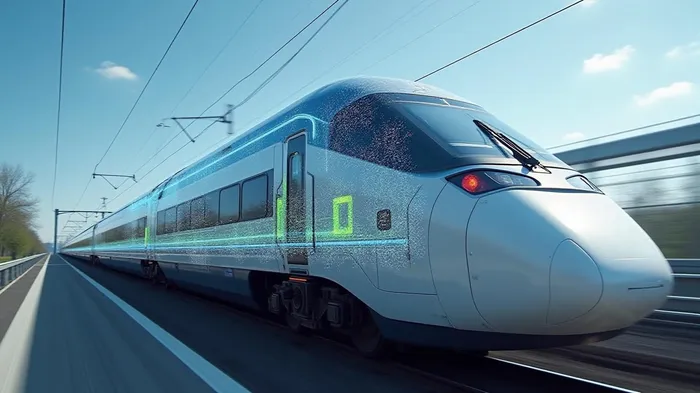
Investors should watch geospatial tech providers and railway engineering firms. Companies pioneering digital twin models—virtual replicas of infrastructure—could dominate this phase, as they enable scenario testing and cost optimization.
The Construction Phase: Managing Complexity with Data
During construction, data ensures that designs translate flawlessly into reality. Configuration Management Databases (CMDBs) track every component’s specifications and changes, while collaborative platforms unify stakeholders. Siloed workflows, a historical pain point, are now mitigated by tools like IBM’s Maximo or Oracle’s Primavera, which centralize project data and reduce errors.
The global railway construction market, projected to grow at a CAGR of 5.2% through 2030 (according to Grand View Research), hinges on firms that deliver precision and transparency. Investors might target IT infrastructure providers with railway-specific solutions or construction management software companies.
The Operational Phase: Predictive Maintenance and Safety
Once operational, railways rely on real-time data to prevent failures. Sensors embedded in tracks and rolling stock generate streams of information on wear, vibration, and thermal stress. AI analytics, as deployed by Siemens Mobility or Hitachi Rail, process this data to predict maintenance needs—reducing downtime by up to 20% compared to reactive approaches.
Safety is non-negotiable, and regulatory compliance demands constant data validation. Investors should follow predictive maintenance tech startups and AI-driven asset management firms, which are critical to sustaining operational efficiency.
Renewal and Modernization: Adapting to the Future
As railways age, data becomes a roadmap for modernization. Prioritizing projects—whether electrification or autonomous signaling—requires historical performance data and lifecycle cost analyses. Tools like requirements management software (e.g., PTC’s Integrity) ensure upgrades align with original safety and capacity goals.
The global railway modernization market, valued at $45 billion in 2022 (Statista), is a goldmine for firms offering legacy system integration solutions or smart infrastructure platforms. Investors may also benefit from trends like hydrogen-powered trains or 5G-enabled signaling systems, which demand advanced data infrastructure.
Conclusion: A Data-Driven Future for Railways
Railways that master their lifecycle data needs thrive—reducing costs, enhancing safety, and future-proofing assets. The $1.2 trillion global railway infrastructure market (2023 estimate) is ripe for disruption by companies leveraging AI, IoT, and geospatial tech.
Consider this: railways using predictive maintenance see a 20% reduction in operational costs and a 30% extension in asset lifespans (Railway Technology). Investors should prioritize firms driving innovation in digital twins, CMDB platforms, and AI analytics, as these sectors will shape the next decade of railway profitability.
In a world demanding sustainable, efficient transport, railways are no longer just about tracks and trains—they’re about data. The lifecycle of a railway is now a lifecycle of information, and those who harness it will lead the next era of mobility.







Comentarios
Aún no hay comentarios