
Data Darkness in the U.S. and Its Global Investment Implications: Navigating Systemic Risks and Resilient Alternatives
The rise of "data darkness"-the accumulation of unused, unstructured data in U.S. tech markets-has emerged as a critical systemic risk in 2025. Defined as data collected during business operations but left unanalyzed or unsecured, dark data now constitutes the majority of corporate information assets, according to Gartner[4]. This phenomenon, akin to dark matter in physics, poses significant threats to cybersecurity, compliance, and operational efficiency. As global tech-dependent markets become increasingly interconnected, the implications of data darkness extend beyond individual firms, creating cascading risks for entire industries and geographies.
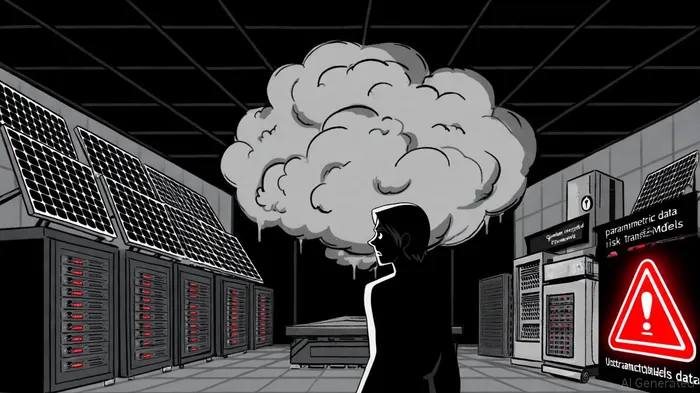
Systemic Risks in Tech-Dependent Markets
The vulnerabilities linked to data darkness are amplified by broader systemic challenges. For instance, trade tensions, such as the U.S.-China dispute, disrupt supply chains for critical data center infrastructure, exposing markets to operational fragility[2]. Climate change further exacerbates risks, with rising energy demands and extreme weather events straining power grids and cooling systems essential for data storage[2]. Meanwhile, the rapid digitization of financial systems-particularly in countries with advanced digital infrastructure-has created new vectors for systemic instability, as cyberattacks on unsecured dark data could trigger cascading failures in markets[3].
A 2025 case study by Baker McKenzie highlights the growing threat of AI-driven ransomware and zero-day exploits targeting dark data repositories in healthcare, government, and financial services[1]. These attacks leverage unstructured data as a foothold, exploiting outdated systems and regulatory gaps. For example, a severe malware outbreak could compromise 25% of global systems, with cloud outages costing critical providers up to 1% of annual revenue[4]. Such scenarios underscore the urgent need for proactive risk mitigation strategies.
Resilient Alternative Assets: A Path Forward
Investors and policymakers are increasingly turning to resilient alternative assets to counteract these risks. Three key areas-renewable energy, alternative risk transfer (ART), and quantum-safe technologies-have emerged as strategic solutions for building systemic resilience.
1. Renewable Energy: Powering Secure Infrastructure
Renewable energy investments reached $386 billion in the first half of 2025, driven by small-scale solar and onshore wind projects[1]. These investments not only reduce reliance on fossil fuels but also enhance the resilience of data centers against climate-related disruptions. For instance, solar PV is projected to account for 80% of global renewable power capacity growth between 2025 and 2030, offering decentralized energy solutions that mitigate grid vulnerabilities[1]. Deloitte notes that industrial policy and AI-driven grid optimization are further accelerating demand for clean energy in tech sectors[2].
2. Alternative Risk Transfer (ART): Mitigating Cyber and Geopolitical Risks
ART strategies, including structured insurance programs and parametric solutions, are gaining traction for managing systemic cyber risks. A 2025 report by WTW highlights how ART blends risk financing and transfer into multiyear, multiline policies, addressing gaps in traditional insurance markets[1]. For example, a global pharmaceutical company implemented a captive reinsurance solution covering 12 lines of business, including cyber risk, to stabilize earnings and reduce volatility[4]. Parametric solutions, which trigger payouts based on predefined metrics like outage duration, are particularly effective for cloud outages and AI-driven cyberattacks[1].
3. Quantum-Safe Technologies: Future-Proofing Data Security
As quantum computing advances, the urgency to adopt quantum-safe encryption has intensified. In 2025, global financial institutions and healthcare providers began transitioning to post-quantum cryptographic (PQC) algorithms to protect sensitive data from "harvest now, decrypt later" attacks[1]. Microsoft's Quantum Safe Program, aiming for full transition by 2033, and Palo Alto Networks' integration of Quantum Key Distribution (QKD) exemplify this shift[3]. These technologies not only secure dark data but also align with regulatory trends, such as the EU AI Act, which mandate robust data governance[1].
Investment Trends and Market Projections
The resilience of these alternative assets is reflected in their market performance. The cybersecurity sector, a cornerstone of systemic risk mitigation, is projected to grow to $298.5 billion by 2028 at a 9.4% CAGR[1]. Venture capital and private equity investments in cybersecurity hit $5.1 billion and $6.4 billion year-to-date in 2025, respectively, as firms consolidate niche players into comprehensive platforms[3]. Similarly, the quantum computing market saw stock price surges for firms like IonQ and Rigetti, driven by partnerships with governments and Fortune 500 companies[4].
Conclusion
Data darkness represents a profound challenge for U.S. and global tech markets, but it also presents an opportunity to redefine resilience. By investing in renewable energy, ART mechanisms, and quantum-safe technologies, stakeholders can mitigate systemic risks while capitalizing on emerging growth areas. As the lines between cyber, climate, and geopolitical risks blur, a diversified portfolio of resilient assets will be essential for navigating the uncertainties of 2025 and beyond.





Comentarios
Aún no hay comentarios