
Data Center Expansion and the Escalating Energy Cost Crisis: A Looming Bottleneck for Tech Growth?
The rapid expansion of artificial intelligence (AI) and cloud infrastructure has ignited a surge in global data center energy consumption, creating a critical juncture for investors. While these technologies promise transformative economic gains, they also pose unprecedented challenges to energy systems, regulatory frameworks, and financial sustainability. The interplay between surging demand and constrained supply is reshaping risk profiles for investors, necessitating a nuanced understanding of the evolving landscape.
The Energy Demand Tsunami
Global data center electricity consumption has already reached 415 terawatt-hours (TWh) in 2024, accounting for 1.5% of global electricity use, and is projected to double to 945 TWh by 2030 under a base-case scenario. In the United States, data centers consumed 176 TWh in 2023-4.4% of total electricity-and could account for 6.7–12% of national demand by 2028. This growth is driven by AI workloads, which are estimated to consume 10–20% of data center power. Hyperscale operators like AmazonAMZN--, MicrosoftMSFT--, and GoogleGOOGL-- are central to this trend, with their facilities expected to dominate 60–70% of U.S. data center electricity use by 2030.
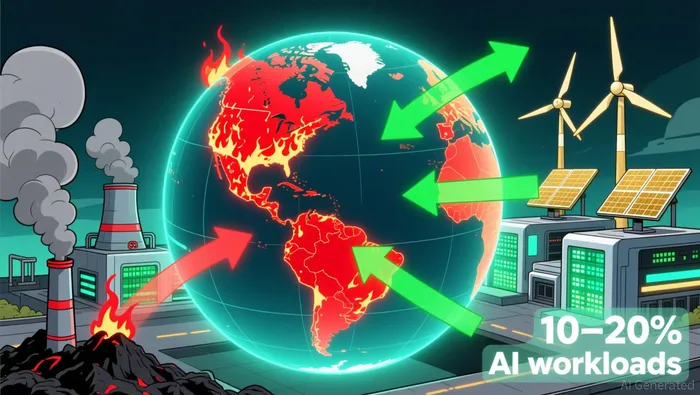 Cooling systems alone represent 30% of energy use in inefficient facilities, with AI-driven thermal loads further straining grids. The International Energy Agency (IEA) warns that AI adoption could drive a 30% annual increase in electricity demand for accelerated servers, far outpacing the 9% growth of conventional servers. This trajectory raises urgent questions about grid resilience, particularly in regions like Texas, where AI-driven data center growth could reduce reserve margins from 31.2% in 2025 to as low as 7% by 2030.
Financial Risks and Investor Priorities
For investors, the energy demands of AI infrastructure are compounding financial risks. Annual spending on data centers has exceeded $50 billion, with cumulative capital deployment projected to surpass $1 trillion by the early 2030s. This surge is straining energy markets, with U.S. natural gas production needing a 10–20% increase to meet immediate needs. Wholesale electricity costs near AI data centers have spiked by 267% compared to five years ago, while supply chain bottlenecks and permitting delays exacerbate operational uncertainties.
CFOs of SaaS and technology firms are increasingly treating cloud and AI infrastructure as a financial risk, with cloud costs averaging 10% of revenue for startups and peaking at 30–40% for AI-native companies. AI workloads alone account for 22% of total cloud spend, and cost volatility-ranging from 5–10% monthly variance-has eroded profitability for 89% of surveyed firms. Finance teams are now implementing governance policies to improve cost visibility, with 62% fully adopting cloud cost controls. However, 72% of CFOs remain willing to accept short-term margin compression if AI investments promise long-term competitive advantages.
Regulatory and Infrastructure Bottlenecks
Regulatory constraints further complicate the energy transition. Protracted permitting processes and state-level restrictions delay project timelines, while fragmented industry ecosystems hinder AI adoption in energy sectors. For example, 79% of U.S. data center and power executives in a 2025 Deloitte survey predict AI will increase power demand through 2035. Hyperscalers are constructing facilities requiring up to 5 gigawatts (GW) of power-enough for five million homes-raising concerns about grid capacity.
Investors are also navigating evolving regulatory expectations. Shareholder proposals at Amazon, Meta, and Alphabet now question whether expanding data centers can align with net-zero targets. This shift reflects a broader demand for credibility in climate strategies, with investors prioritizing real-time, location-specific data over mere disclosure.
Mitigation Strategies and Investor Actions
To address these challenges, cloud providers and investors are adopting multifaceted strategies. Major players like AWS, Google, and Microsoft are committing to 100% renewable energy by 2025–2030, while deploying AI-driven energy optimization tools to reduce consumption. Innovations such as immersion cooling and dynamic voltage scaling are critical to curbing thermal loads.
Investors are also leveraging ESG frameworks and green bonds to fund sustainable infrastructure. KKR and HASI's $1 billion co-investment in clean energy projects, and Vantage Data Centers' $5 billion green bond issuance, exemplify this trend. Meanwhile, firms like Macquarie Asset Management are acquiring energy-efficient data centers in South Korea and Australia, aligning with customer demands for sustainability.
Conclusion: Balancing Growth and Sustainability
The data center energy crisis underscores a pivotal challenge for investors: balancing the explosive growth of AI and cloud infrastructure with the realities of energy constraints and regulatory scrutiny. While technological and financial innovations offer pathways to mitigate risks, the scale of the challenge requires coordinated action across sectors. Investors must prioritize projects that align with both economic returns and sustainability goals, ensuring that the next phase of digital transformation does not come at the expense of energy security or environmental integrity.





Comentarios
Aún no hay comentarios