
Dassault's $200M Bet: Building the Embedded AI Infrastructure for the Next Combat Aviation Paradigm
Dassault's €200 million bet on Harmattan AI is a clear signal that the next paradigm in air combat is being built on embedded intelligence. This strategic partnership, which values the Paris-based startup at €1.4 billion and creates France's first defense unicorn, is a forward-looking wager on securing the fundamental infrastructure layer for controlled autonomy. It positions Dassault not just as an aircraft builder, but as a key architect of the exponential growth phase in collaborative air warfare.
The move is a direct response to the stalled momentum in European defense integration. While the Franco-German-Spanish Future Combat Air System (FCAS) project grapples with infighting and unresolved work-share disputes, Dassault is taking unilateral action to ensure its technological sovereignty. By embedding AI directly into its future systems, including the next-generation F5 Rafale, the company is building its own path to superiority. This is a classic first-mover play on the technological S-curve, betting that tightly integrated, certified AI will become the core design requirement for next-gen platforms, not an afterthought.
This setup aligns perfectly with the EU's new 'Apply AI Strategy,' which explicitly promotes sovereign AI and a 'buy European' approach for defense. The partnership fits an overarching strategy to integrate sovereign AI into combat systems, as stated by Dassault's CEO. In a world where data and algorithmic control are strategic assets, this deal ensures that the critical infrastructure for autonomous flight and coordination remains within a trusted, allied ecosystem. For Harmattan, the partnership provides industrial credibility and a fast track into major programs, scaling its manufacturing to meet rising international demand for its autonomous systems portfolio.
The bottom line is that Dassault is investing in the rails, not just the train. By securing a leading position in embedded AI for controlled autonomy, it is positioning itself at the exponential growth phase of a paradigm shift. This isn't about incremental upgrades; it's about building the foundational layer for the next generation of air combat, where human pilots command swarms of intelligent, coordinated drones.
Exponential Adoption Metrics and Scaling the Combat Drone S-Curve
The market trajectory for embedded AI in defense drones is on a steep exponential curve. The global AI in drone market is projected to grow at a CAGR of 17.3%, expanding from over $20 billion in 2025 to a staggering $61.6 billion by 2032. This isn't just growth; it's the acceleration phase of a technological paradigm shift where autonomous systems become the norm, not the exception. Dassault's partnership with Harmattan is a direct play on this S-curve, aiming to capture the inflection point.
Concrete delivery metrics show the initial scaling is already underway. Harmattan has secured a major UK order for 3,000 combat drones and has already delivered 1,000 by the end of 2025. This rapid deployment into a Program of Record provides a crucial industrial base and real-world validation of its technology. It demonstrates the ability to move from concept to certified, fielded systems at a pace that matches the projected market expansion.
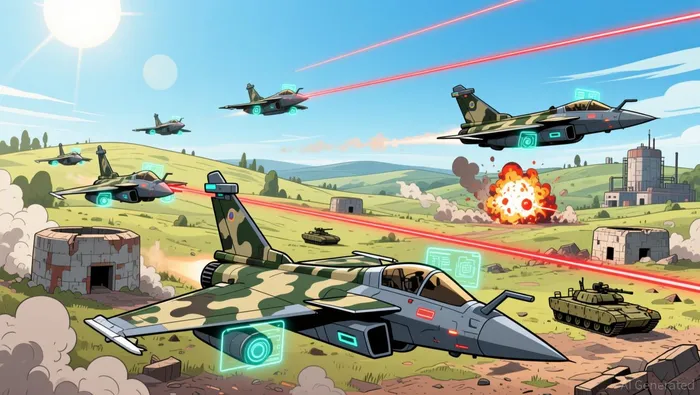
The $200 million investment will fund the next phase of this scaling, specifically targeting expansion into new operational domains. The capital will be used to expand AI-enabled missions into new operational theaters and extend Harmattan AI's platforms into additional domains, with key focus areas including intelligence, surveillance and reconnaissance (ISR), drone interception, and electronic warfare. This move beyond basic combat drones into specialized, high-value missions is critical for capturing a larger share of the growing market and deepening integration into allied defense ecosystems.
For Dassault, this partnership provides a fast track into these international demand streams. By combining Harmattan's agile AI innovation with Dassault's global defense network and expertise in complex system integration, the collaboration is designed to scale manufacturing and deployment far more rapidly than either entity could alone. The goal is to build the embedded AI infrastructure layer that will become the standard for collaborative air combat, ensuring that as the market explodes, the foundational technology remains sovereign and trusted.
Strategic Value Capture and Financial Impact
This deal is a masterclass in securing the high-value infrastructure layer. By leading a €200 million funding round and embedding Harmattan's AI directly into its future systems, Dassault is no longer just a customer-it is a co-developer and strategic owner of the core technology stack for the next generation of air combat. This partnership directly shapes the AI capabilities for the future F5 standard of the Rafale and its unmanned combat air system (UCAS), ensuring that the embedded intelligence becomes a proprietary, certified feature of its platforms from the outset.
The strategic value is twofold. First, it secures a key supplier for autonomous systems, reducing dependency on external or potentially less-aligned vendors. Second, it captures a larger share of the future combat air system value chain. Instead of merely manufacturing the platform and integrating third-party autonomy later, Dassault is now positioned to define and control the AI layer that enables its unmanned wingmen. This moves the company from a pure platform manufacturer into the higher-margin, high-growth infrastructure layer of combat aviation, where the exponential adoption of AI-driven systems will drive the next wave of defense spending.
Financially, the impact is a long-term bet on technological sovereignty and market leadership. The investment provides Harmattan with the capital to scale manufacturing and expand into new domains like ISR and electronic warfare, directly feeding Dassault's global programs. In return, Dassault gains exclusive access to cutting-edge, sovereign AI for its critical systems, a strategic asset that is becoming a core design requirement. This setup allows Dassault to reinforce its technological superiority and sovereignty, as highlighted by French President Emmanuel Macron, while also accelerating the deployment of its own autonomous wingman programs.
The bottom line is that Dassault is building the rails for the next paradigm. By securing a leading position in embedded AI for controlled autonomy, it is positioning itself to capture the majority of the value as the market for collaborative air combat explodes. This isn't just a partnership; it's a strategic lock-in that ensures the company's future platforms are powered by its own sovereign infrastructure, not an add-on.
Catalysts, Risks, and the Path to Exponential Growth
The path forward hinges on two key catalysts: integration and new contracts. The primary near-term signal will be the timeline for integrating Harmattan's AI into Dassault's programs, particularly the future F5 Rafale and its unmanned combat air system. Success here will demonstrate the technical and certification feasibility of embedded autonomy, validating the partnership's core premise. Simultaneously, watch for new defense contracts awarded to the partnership. Harmattan's recent major UK order for 3,000 combat drones and its scaling into ISR and electronic warfare domains provide a strong foundation. Any follow-on or expanded orders from European or allied nations would be a direct catalyst for scaling the embedded AI infrastructure layer.
The most significant risk is the pace of European defense integration. If the stalled Future Combat Air System (FCAS) project between France, Germany, and Spain advances decisively, it could reduce the perceived urgency of Dassault's sovereign AI bet. A unified European program might develop its own AI stack, potentially sidelining a Dassault-led, independent solution. The partnership's value is magnified in a fragmented landscape; its strategic importance diminishes if a pan-European platform emerges. For now, the lack of progress on FCAS work-share disputes creates a window for Dassault to lock in its technology.
On the regulatory front, a potential tailwind could come from the EU's Apply AI Strategy, which promotes a 'buy European' approach and strengthens technological sovereignty. This policy framework creates a favorable environment for sovereign defense AI. While not a direct funding source, the strategy's emphasis on sectoral flagships and support measures could indirectly bolster the partnership's position, especially if the EU's proposed Data Union Strategy includes public funding or regulatory sandboxes for defense AI. Monitoring these initiatives will be key to assessing the policy tailwind.
The bottom line is that Dassault is navigating a high-stakes race. It is betting that the exponential growth in embedded AI for defense will outpace the political and industrial integration of European programs. The catalysts are clear, but the path to capturing the majority of the value in the next combat aviation paradigm depends on both technical execution and the continued fragmentation of European defense planning.







Comentarios
Aún no hay comentarios