
DASH Expands Platform Utility and Integrates Digital Tools in Key Partnerships
DoorDash (DASH) has expanded its delivery offerings to include Family Dollar, a major U.S. discount retailer, to better serve price-sensitive and lower-income customers. This partnership aims to position the platform as a provider of everyday essentials, not just restaurant meals.
The collaboration includes over 7,000 Family Dollar stores nationwide, emphasizing DoorDash's goal to increase order frequency and broaden its utility as a delivery platform.
In parallel, DoorDashDASH-- is set to announce its fourth-quarter and full-year 2025 financial results on February 18, 2026, with a call scheduled to discuss performance and future guidance.
What Drives the Strategic Shift in DoorDash's Delivery Model?
The Family Dollar delivery initiative aligns with DoorDash's focus on addressing affordability concerns, particularly among its 33% of users with an annual income under $50,000 according to investor analysis. By incorporating discount retail delivery, the company aims to retain users amid inflationary pressures while reducing fees for non-DashPass users by 12%. The move also supports broader efforts to position itself as an everyday essentials platform, with plans to offer SNAP/EBT payment options.
DoorDash has also expanded beyond food delivery, offering groceries and convenience goods through other partners, such as Dollar General. The company reported 776 million orders and $25 billion in total order value in 2025.
How Is Amazon Enhancing the DashDASH-- Cart Experience at Whole Foods?
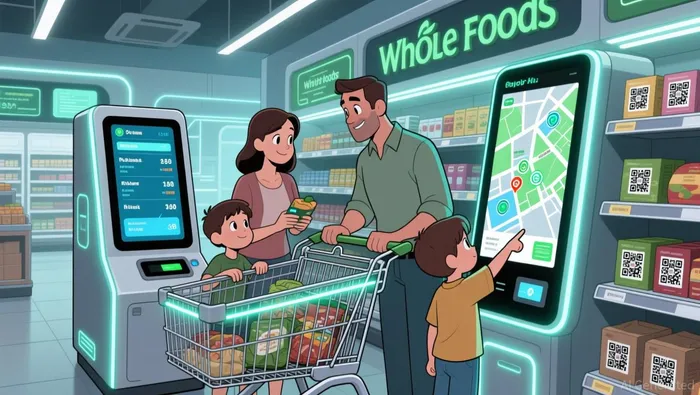
Amazon has redesigned its Dash Cart, a key component of its in-store grocery technology, and plans to deploy it in over 25 Whole Foods locations by 2026. The updated cart is 25% lighter, 40% larger in capacity, and includes a real-time spending tracker and store map.
The redesign integrates NFC payments, an improved scanner, and a scale for accurate pricing, responding to customer feedback and enhancing the overall shopping experience. Amazon is also testing a micro-fulfillment center at a Whole Foods location in Pennsylvania to enable in-store purchases of Amazon-sold items via QR codes.
The rollout includes initial deployments at three Whole Foods locations in Texas, Virginia, and Massachusetts, with plans to expand further. These enhancements reflect Amazon's broader strategy to integrate digital innovation into physical retail and improve customer convenience.
What Risks and Limitations Should Investors Consider?
While the expanded delivery capabilities for DoorDash and the Dash Cart upgrades for Amazon are promising, investors should consider operational complexity and scalability risks. DoorDash must ensure it can manage increased order volume without compromising its earnings trajectory. For Amazon, the success of the Dash Cart depends on customer adoption and seamless integration into existing store operations.
DoorDash's strategic investments in AI and autonomous delivery technologies, including its DotDOT-- robot, also present long-term growth opportunities. However, competition in the delivery and grocery space remains intense, with Amazon's physical and digital integration posing a unique challenge to traditional delivery models.







Comentarios
Aún no hay comentarios