
The Darkening Consumer Mood in China: Implications for Retail and Consumer Goods Sectors
China's consumer market in 2025 is a study in contrasts. While the economy edges toward a 5.2% GDP growth in Q2, consumer sentiment remains shrouded in caution. The consumer confidence index, at 88 points, lingers below the neutral threshold of 100, a shadow of its 2021 peak of 127. This “darkening mood” reflects a broader recalibration of priorities: consumers are trading luxury for essentials, status symbols for experiences, and speculative spending for financial prudence. For investors, this shift creates both risks and opportunities, particularly in sub-sectors and business models that align with the new reality.
The Urban-Rural Spending Divide: A Tale of Two Markets
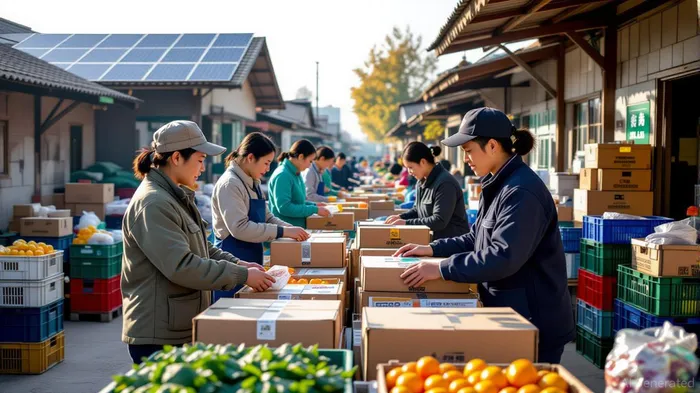
The most striking feature of China's consumer landscape is the widening urban-rural spending gap. Rural areas, bolstered by government-led rural revitalization policies and faster income growth, have outpaced urban centers in retail sales growth (4.3% in 2024). Meanwhile, urban consumers—especially in Tier 1 and Tier 2 cities—remain wary. Affluent but anxious, they are prioritizing savings over discretionary spending, with household savings rates remaining stubbornly high.
This divide is not just geographic but generational. Urban Gen Z and middle-income households in smaller cities near megacities are driving optimism, while millennials in top-tier cities grapple with job insecurity and rising costs. Rural consumers, on the other hand, are embracing digital services, telemedicine, and vocational training, creating a fertile ground for startups.
Undervalued Sub-Sectors: Rural Revitalization and Adaptive Real Estate
Amid the uncertainty, two sub-sectors stand out for their resilience and undervaluation: rural revitalization and adaptive real estate.
- Rural Revitalization: A Goldmine for Niche Players
Government policies have unlocked demand for healthcare, education, and digital services in rural areas. Startups offering telemedicine, mobile banking, and vocational training are well-positioned to capitalize on this trend. For instance, rural e-commerce retail sales reached USD 0.35 trillion in 2023, with growth projections remaining robust.
Valuation metrics for rural-focused companies suggest undervaluation. While P/E ratios for the broader real estate sector hover near 51.5x, rural revitalization sub-sectors benefit from lower entry costs and scalable digital infrastructure. The China live e-commerce market, a key driver of rural sales, is growing at a compound annual rate that outpaces urban equivalents.
- Adaptive Real Estate: Reimagining Urban Spaces
The real estate sector's contraction has spurred innovation. Adaptive reuse projects—converting industrial sites into creative hubs or co-living spaces—are gaining traction. These models align with urban consumers' desire for flexible, experience-driven living.
Despite the sector's negative earnings (-CN¥95.3 billion in 2025), forward-looking metrics are promising. The Diversified Real Estate sub-sector trades at a P/E of 51.5x but is projected to see 20.2% annual earnings growth. Companies like Shanghai Zhangjiang Hi-Tech Park Development, up 16.9% in a week, exemplify the potential of hybrid models blending physical and digital experiences.
Resilient Business Models: Value-For-Money and Experiential Offerings
The shift in consumer priorities has elevated companies that balance affordability with quality. Domestic brands like Luckin Coffee and Mixue Bingcheng have mastered this equation, leveraging efficient supply chains and digital convenience to attract urban Gen Z and middle-income consumers.
In the real estate space, adaptive models are thriving. Co-living spaces and mixed-use developments are redefining urban living, while rural logistics networks expand access to essential goods. These models are not just surviving—they're reshaping the sector's DNA.
Investment Advice: Targeting the New Normal
For investors, the key is to focus on structural trends rather than cyclical fluctuations. Here's how to position a portfolio:
- Rural Revitalization: Prioritize companies with strong digital infrastructure and government partnerships. Look for firms in telemedicine, vocational training, and rural logistics.
- Adaptive Real Estate: Bet on sub-sectors with clear growth trajectories, such as multifamily housing and logistics. The Real Estate Services sub-sector, projected to grow by 47% over five years, is a prime candidate.
- Digital Retail: Hong Kong's IPO market has seen 1,700x oversubscription for consumer offerings. Consider exposure to platforms enabling rural e-commerce or social commerce.
The Road Ahead: Caution and Opportunity
China's consumer mood remains darkened by macroeconomic uncertainty and deflationary pressures. Yet, within this caution lies opportunity. The urban-rural divide and the shift toward experiential spending are not temporary blips—they are structural shifts. Investors who align with these trends—whether in rural revitalization, adaptive real estate, or digital retail—stand to benefit from the next phase of China's consumer evolution.
As the market navigates this complex landscape, the mantra for success is clear: adapt, localize, and focus on value. The winners will be those who recognize that China's consumer story in 2025 is not about luxury, but about resilience.







Comentarios
Aún no hay comentarios