
The Dangers of Excessive Leverage in Crypto Derivatives Markets
The Leverage Arms Race and Systemic Vulnerabilities
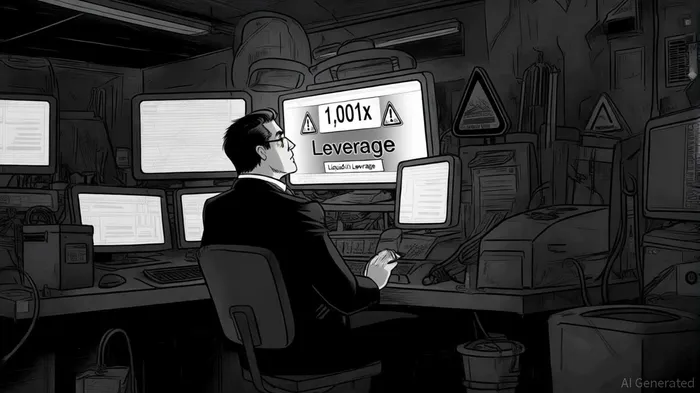
Crypto derivatives markets have long been a playground for high-risk speculation, but the post-FTX era has amplified these dangers. By 2025, decentralized exchanges (DEXs) like Hyperliquid and AsterASTER-- were offering leverage of up to 1,001x with minimal barriers to entry, attracting retail traders with little understanding of the risks, according to a Yahoo analysis. This hyper-leveraged environment culminated in a catastrophic liquidation event in 2025, where over $19 billion in positions were wiped out within 24 hours. Such volatility not only erodes individual wealth but also threatens broader market stability, as cascading liquidations drain liquidity and trigger panic selling, the Yahoo analysis noted.
The lack of safeguards on these platforms-such as Know-Your-Customer (KYC) checks or risk-education requirements-has exacerbated the problem. Unlike traditional markets, where leverage is tightly regulated, crypto derivatives have operated in a gray zone, allowing unqualified investors to take on positions they cannot afford to lose. As Carlos Guzman of GSR notes, "High leverage in crypto derivatives isn't just a retail problem; it's a systemic risk waiting to materialize when the next shock hits," a point highlighted in the Yahoo analysis.
Regulatory Responses: A Mixed Bag of Progress and Gaps
Post-FTX, regulatory scrutiny has intensified, but enforcement remains uneven. In 2025, the U.S. Securities and Exchange Commission (SEC) and Commodity Futures Trading Commission (CFTC) issued a landmark joint statement clarifying that registered exchanges can list leveraged crypto assets, provided they comply with federal rules on surveillance and investor protection, according to a Baker McKenzie briefing. This move aimed to bring clarity to a market long plagued by regulatory ambiguity.
However, gaps persist. While centralized exchanges like Binance and Kraken have adopted stricter compliance measures-such as Binance's $4.3 billion legal settlement over money-laundering violations-DEXs remain a regulatory blind spot, as noted in a FinanceFeeds report. These platforms, which operate without central oversight, continue to offer extreme leverage to users who bypass KYC requirements entirely. Meanwhile, state-level regulations, such as those in New York and Illinois, have introduced capital and cybersecurity mandates for exchanges, as described in a Consumer Finance Insights piece, but conflicting rules across jurisdictions create compliance challenges.
International efforts, like the International Organisation of Securities Commissions' (IOSCO) 2023 policy recommendations, have sought to address cross-border risks, including custody of client assets and operational vulnerabilities, as outlined in IOSCO policy recommendations. Yet, implementation remains fragmented, leaving room for arbitrage and risk-shifting.
Investor Protection: Beyond Leverage Caps
Addressing systemic risk requires more than regulatory statements-it demands structural reforms. One promising development is the rise of multisignature (multisig) lending models, such as Sygnum Bank's MultiSYG product, which allows borrowers to retain shared control of their collateral, described in Sygnum's MultiSYG plan. By distributing key management among the borrower, the bank, and a third party, such models reduce the risk of rehypothecation and enhance transparency.
Similarly, institutional players like Charles Schwab have recalibrated their risk profiles. By 2025, Schwab's Tier 1 leverage ratio had climbed to 7.3%, up from 4.9% in 2023, reflecting a broader industry shift toward conservative balance-sheet management, according to an Investing.com report. These adjustments, while incremental, signal a growing recognition of the need for prudence in an asset class prone to extreme volatility.
Yet, retail investor education remains a critical missing piece. Platforms like Hyperliquid offer no risk quizzes or educational resources, leaving users to navigate complex derivatives with little guidance, as the Yahoo analysis observed. As Kraken CEO Dave Ripley emphasized post-FTX in a CNBC interview, "Proof of reserves and transparency are table stakes, but we also need to empower users to understand the risks they're taking."
The Path Forward: Balancing Innovation and Stability
The crypto derivatives market stands at a crossroads. On one hand, innovation in decentralized finance (DeFi) and cross-chain liquidity solutions promises to democratize access to global markets. On the other, unchecked leverage and weak safeguards threaten to undermine trust, particularly as institutional investors remain cautious.
Regulators must close the gaps between centralized and decentralized platforms, ensuring that leverage caps, margin requirements, and KYC mandates apply uniformly. At the same time, market participants must prioritize investor education and risk management tools, such as stress-testing and liquidity aggregators-the Yahoo analysis recommended similar measures.
For investors, the lesson from FTX is clear: Leverage is a double-edged sword. While it can amplify gains, it also magnifies losses-and in a market where volatility is the norm, the margin for error is razor-thin.
Conclusion
The post-FTX era has forced the crypto derivatives market to confront its most dangerous tendencies. While regulatory progress and industry innovations offer hope, the risks of excessive leverage remain acute. As the market matures, the challenge will be to foster innovation without sacrificing stability-a balance that will define the next chapter of crypto's evolution.







Comentarios
Aún no hay comentarios