
Danaher Corporation (DHR): A Strategic Biotech Play in an Oversold Position
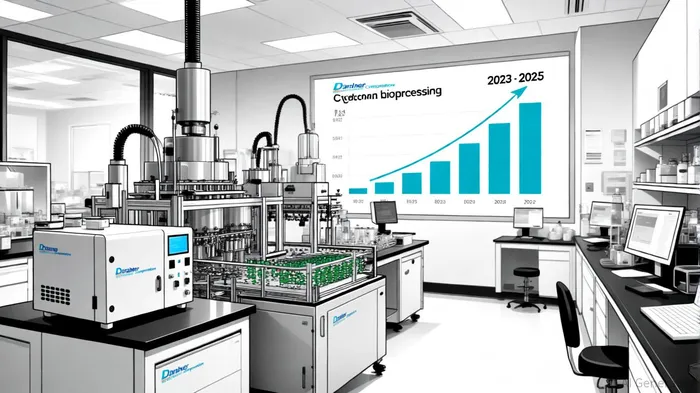
In the volatile landscape of industrial conglomerates, Danaher CorporationDHR-- (DHR) stands out as a paradox: a company whose biotech segment is defying market headwinds while its broader business faces short-term challenges. For contrarian investors, this divergence presents a compelling opportunity. Danaher's Biotechnology segment, led by Cytiva, has delivered robust performance in Q2 2025, with core revenue growing 6% year-over-year and adjusted operating margins expanding by 150 basis points to 41.0%[1]. Meanwhile, the Life Sciences segment, which includes research tools and lab automation, has underperformed, with core revenue declining 2.5% in the same period[1]. This asymmetry suggests that the market may be overselling DHR's long-term potential, particularly in its biotech innovation engine.
Biotech Segment: A Contrarian's Goldmine
Danaher's Biotechnology segment is a testament to the power of operational discipline and niche specialization. In Q2 2025, the segment generated $1.85 billion in revenue, driven by sustained demand for monoclonal antibodies and bioprocessing consumables[3]. This growth is underpinned by a structural shift in the pharmaceutical industry, where biologics now account for over 20% of global drug sales. Cytiva's leadership in bioprocessing—particularly its ability to scale production for large Pharma CDMO customers—positions it as a critical enabler of this trend[3].
The segment's margin expansion is equally noteworthy. By leveraging automation and cost discipline, DanaherDHR-- has transformed Cytiva into a high-margin asset, with adjusted operating profits now exceeding 40%[1]. This operational leverage contrasts sharply with the Life Sciences segment, which has seen margins pressured by reduced venture capital funding and slower academic research spending[2]. For investors, this divergence highlights a key insight: Danaher's biotech business is not merely resilient—it is structurally advantaged in a capital-efficient, innovation-driven sector.
Navigating Headwinds with Strategic Agility
While the Biotechnology segment thrives, Danaher's broader portfolio faces near-term challenges. The Life Sciences segment, for instance, has been hit by a 4% year-over-year revenue decline, driven by reduced demand for equipment in life science research[2]. This reflects broader macroeconomic pressures, including tighter biotech funding and regulatory delays in molecular diagnostics. Yet, Danaher's response has been proactive. The company has recalibrated its R&D focus, prioritizing high-growth areas like automated multiplex diagnostic platforms. Recent product launches, such as the FDA-cleared Xpert Xpress GBS test, demonstrate its ability to align public health needs with commercial viability[1].
The molecular diagnostics market itself is a tailwind worth noting. Forecasted to grow at a 13.7% CAGR through 2029, reaching $17.78 billion, this sector is being reshaped by advancements in PCR and next-generation sequencing[1]. Danaher's early investments in these technologies—coupled with its strong regulatory partnerships—position it to capture a disproportionate share of this growth.
Long-Term Growth: Innovation as a Moat
Danaher's appeal lies in its dual strength: a disciplined capital allocation framework and a relentless focus on innovation. The company's 2025 guidance—projecting 6–7% core revenue growth in the Biotechnology segment—reflects confidence in its recurring demand model[4]. This is particularly significant given the cyclical nature of life sciences spending. While the discovery and medical business within the Biotechnology segment has seen low-single-digit declines, the bioprocessing arm's stability ensures a floor for long-term growth[1].
Moreover, Danaher's R&D investments are paying dividends. In 2025, the company has allocated over $1.2 billion to innovation, with a focus on expanding its automated testing platforms and enhancing bioprocessing efficiency[1]. These efforts are not just about incremental improvements—they are about redefining industry standards. For example, Cytiva's single-use bioreactors have reduced contamination risks and shortened production cycles for biopharma clients, creating a defensible competitive edge[3].
A Case for Strategic Buy-In
For contrarian investors, the case for Danaher is clear. The company's Biotechnology segment is a high-margin, innovation-driven asset operating in a $17.78 billion growth market by 2029[1]. While the Life Sciences segment's struggles may drag on short-term earnings, they also create a buying opportunity for those who recognize the long-term value of Danaher's biotech engine. The stock's current valuation—trading at a discount to its historical average—further enhances the risk-reward asymmetry[4].
Conclusion
Danaher Corporation is a masterclass in industrial reinvention. By doubling down on its Biotechnology segment while navigating near-term headwinds in Life Sciences, the company is positioning itself as a leader in the next phase of biotech innovation. For investors willing to look beyond short-term volatility, DHRDHR-- offers a rare combination of operational excellence, margin resilience, and long-term growth potential. In an oversold market, this is precisely the kind of strategic play that rewards patience and conviction.







Comentarios
Aún no hay comentarios