
DAC8 and the Future of Global Crypto Compliance: Strategic Opportunities for Firms Preparing for EU Tax Transparency
The European Union's DAC8 directive, a cornerstone of its efforts to enforce tax transparency in the crypto sector, is set to redefine the landscape for crypto-asset service providers (CASPs) and institutional players alike. As the implementation deadline of 1 January 2026 approaches according to Coindesk, firms that proactively adapt to DAC8's stringent reporting requirements are poised to gain a first-mover advantage in a rapidly evolving market. This article explores the strategic opportunities emerging from DAC8's rollout, the competitive advantages of early compliance, and the broader implications for global crypto compliance.
DAC8's Implementation Timeline and Compliance Requirements
DAC8 mandates the automatic exchange of information on crypto transactions between EU member states, extending tax transparency to activities such as crypto-fiat exchanges, stablecoin transactions, and NFT trades as reported by Coincub. Key milestones include:
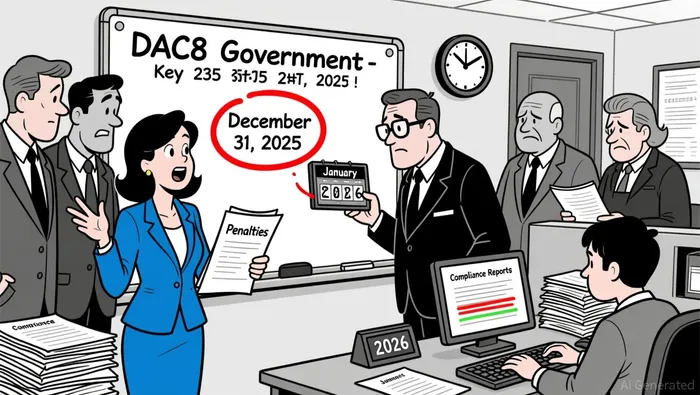
- 31 December 2025: EU member states must transpose DAC8 into national law according to EU tax authorities.
- 1 January 2026: Reporting Crypto-Asset Service Providers (RCASPs) begin collecting user and transaction data according to Global Ledger.
- July 1, 2026: CASPs must fully implement reporting systems as detailed by Arabic Trader.
- 30 September 2027: The first comprehensive exchange of information occurs as reported by Finance Magnates.
Non-compliance risks severe penalties, including operational restrictions and fines according to Trmlabs. Notably, DAC8 applies to both regulated and unregulated entities, including non-EU platforms serving EU residents as reported by Ambcrypto. This universal scope ensures that geographic arbitrage is no longer a viable strategy for evading oversight.
Strategic Opportunities in Compliance-Driven Innovation
DAC8's implementation is not merely a regulatory burden but a catalyst for innovation. Firms that align with its requirements can leverage compliance as a competitive differentiator.
Institutional Adoption and Legitimacy
The dual enforcement of DAC8 and the Markets in Crypto-Assets (MiCA) regulation in Spain by July 1, 2026, signals a shift toward institutional-grade compliance standards according to Chainalysis. By meeting these requirements, firms can attract institutional investors who prioritize regulatory clarity. For example, Spain's enforcement of MiCA and DAC8 is expected to reduce the "regulatory grey area" that previously deterred institutional participation according to Taxbit.Technology-Driven Compliance Solutions
The urgency of DAC8's timeline has spurred demand for compliance technologies. Firms like Taxbit have already enabled companies such as Munch and NYDIG to scale DAC7/MiCA reporting, demonstrating how automation can streamline data collection and verification as detailed in case studies. Similarly, PayPal and Uphold have used compliance solutions to expand their digital asset offerings, reinforcing customer trust according to McKinsey.Global Alignment with Standards
DAC8 complements the OECD's Crypto-Asset Reporting Framework (CARF), fostering cross-border cooperation and reducing fragmentation in global crypto compliance as reported by CIAT. This alignment creates opportunities for firms to position themselves as leaders in harmonizing standards, particularly as jurisdictions like Luxembourg integrate DAC8 with MiCA to build cohesive frameworks as detailed by EY.
Case Studies: Compliance as a Competitive Edge
Real-world examples underscore the strategic value of DAC8 readiness:
- Luxembourg's Proactive Approach: By committing to full DAC8 implementation by 31 December 2025, Luxembourg has positioned itself as a hub for compliant crypto firms, attracting institutional capital ahead of the 2026 reporting deadline as reported by Taxbit.
- Taxbit's Scalable Solutions: Taxbit's partnerships with firms like NYDIG highlight how compliance platforms can reduce operational friction while enhancing transparency, a critical factor in retaining users amid heightened scrutiny as detailed in case studies.
Challenges and Mitigation Strategies
While DAC8 presents opportunities, challenges such as operational complexity and user experience trade-offs persist. For instance, stringent onboarding requirements may deter retail users according to Taxbit. To mitigate this, firms should:
- Leverage Technology: Automate data collection and verification to reduce manual errors and costs according to Global Ledger.
- Engage Regulators: Direct collaboration with tax authorities can clarify ambiguities and preempt enforcement risks according to Taxbit.
- Balance Compliance with UX: Streamline KYC processes without compromising transparency, ensuring a seamless user experience according to McKinsey.
Conclusion: The Road Ahead
DAC8's implementation marks a pivotal moment in the crypto industry's journey toward mainstream adoption. Firms that view compliance not as a cost center but as a strategic asset will thrive in this new era. By investing in technology, aligning with global standards, and prioritizing institutional trust, forward-thinking players can turn regulatory demands into enduring competitive advantages. As the EU's tax transparency agenda gains momentum, the winners will be those who embrace the future-rather than resist it.







Comentarios
Aún no hay comentarios