
CZECH REPUBLIC'S CEZ UTILITY: A STATE-DRIVEN NUCLEAR PLAY FOR ENERGY SECURITY INVESTORS
The Czech Republic's state-owned energy giant CEZ is on the cusp of a transformative shift. Recent government actions—most notably its 80% stake acquisition in the Elektrárna Dukovany II nuclear project—signal a bold pivot toward energy sovereignty and decarbonization. For investors, this is no mere bureaucratic tweak: it's a strategic revaluation catalyst for a utility positioned at the intersection of geopolitical necessity, EU climate targets, and capital-intensive infrastructure.
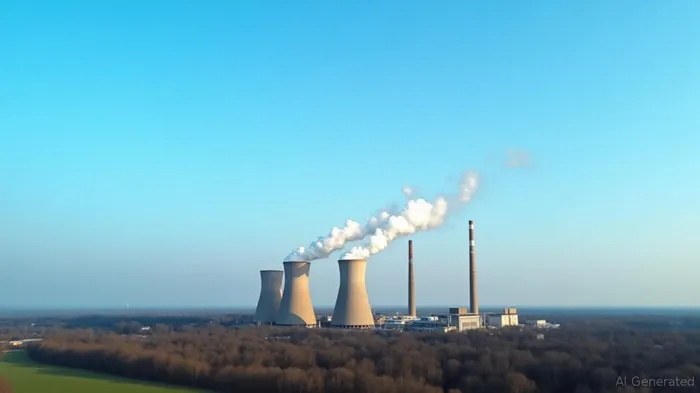
The State's Play for Control: Why the Buyout Matters
The Czech government's April 30 decision to boost its stake in Dukovany II to 80%—from its already majority 70% share in CEZ—marks a decisive move to lock in control of the €18.6 billion project to build two 1,055 MWe reactors. This isn't just about energy; it's about geopolitical survival. With Russia's invasion of Ukraine destabilizing the region, Prague's push to replace Russian gas imports with domestically backed nuclear power is existential.
The buyout shields CEZ from construction risks: the government will absorb 70% of project costs via a 30-year loan, with repayment tied to reactor operations starting in 2036. This removes a critical overhang for investors, as CEZ's balance sheet now faces minimal exposure to delays or cost overruns.
Strategic Implications: A Bridge to 2040 and Beyond
The buyout isn't an isolated event. It's the linchpin of a broader strategy to:
1. Secure 50% nuclear power by 2040: The reactors at Dukovany II will supplement existing plants, ensuring Czechia meets EU decarbonization mandates while reducing reliance on volatile gas markets.
2. Anchor geopolitical stability: By partnering with South Korea's KHNP—a first for the firm in Europe—the project bypasses Russian and Chinese vendors, aligning with NATO's energy security priorities.
3. Unlock SMR potential: The government's Small Modular Reactor (SMR) roadmap, targeting 45 sites by 2038, positions CEZ to dominate next-gen nuclear tech.
Moody's recent upgrade of CEZ's outlook to “positive” underscores this: state guarantees now make its nuclear projects as safe as government bonds.
The Risk Landscape: Navigating Volatility
Investors shouldn't ignore risks. Legal battles—such as EDF's ongoing challenge to KHNP's selection—could delay the May 7 contract signing, pushing timelines beyond 2036. Additionally:
- Inflation and demand: Wholesale energy prices could dip, testing the Power Purchase Agreement (PPA) model.
- EU regulatory hurdles: The state loan's approval by Brussels, expected by 2026, remains a wildcard.
Yet these risks are mitigated by the project's strategic necessity. The Czech government will bend regulations to protect this cornerstone of its energy policy.
The Investment Case: A Play on Geopolitical Energy Security
CEZ is now a proxy for two megatrends:
1. State-backed infrastructure: In an era of fiscal austerity, governments are prioritizing energy sovereignty. CEZ's 80% state-backed Dukovany II project is a template for how utilities can thrive under public-private partnerships.
2. Nuclear's renaissance: As Europe races to replace fossil fuels, nuclear's role is expanding. CEZ's 40% current nuclear share and 2040 targets make it a pure play on this shift.
For investors, the buyout creates a “two-tier” opportunity:
- Near-term: The removal of construction risk could trigger a rerating, especially if the KHNP contract is finalized post-election (Czech general elections are in October 2025).
- Long-term: A 30-year PPA framework and SMR expansion provide steady cash flows, insulated from market swings.
Conclusion: CEZ as a Geopolitical Safe Haven
CEZ's valuation is now inextricably tied to Czechia's state ambitions. The buyout transforms it from a utility into a strategic asset—a bridge between energy security and climate goals. While short-term volatility remains, the long-term trajectory is clear: a government-backed monopoly on nuclear expansion in one of Europe's most energy-vulnerable markets.
Investors seeking exposure to the EU's energy transition should act now. CEZ's stock is a discount to its strategic worth—a buy for those willing to look past quarterly noise and into the 2040 horizon.
Action Item: Consider a position in CEZ while its valuation lag persists. Monitor EU regulatory approvals and the KHNP contract signing as catalysts for upward momentum.
Disclaimer: This analysis is for informational purposes only. Always conduct independent research or consult a financial advisor before making investment decisions.







Comentarios
Aún no hay comentarios