
Czech Political Shifts and Market Implications: Navigating Geopolitical Risk and Equity Valuations in Central Europe
The Czech Republic stands at a pivotal crossroads in 2025, with its parliamentary elections scheduled for October 3–4 poised to redefine the nation's political and economic trajectory. As the country grapples with inflation, energy insecurity, and debates over EU integration, investors must weigh the interplay between domestic political shifts and broader Central European market dynamics. This analysis examines how the Czech Republic's evolving political landscape-coupled with its robust equity market performance-shapes geopolitical risk and investment opportunities in the region.
Political Uncertainty and Policy Priorities
The 2025 elections have emerged as a critical inflection point, with former Prime Minister Andrej Babiš's populist ANO movement leading polls at 32% and Prime Minister Petr Fiala's center-right Spolu coalition trailing at 21%, according to Allianz Global's outlook. The outcome will determine the pace of regulatory reforms, fiscal conservatism, and the Czech Republic's alignment with EU priorities. ANO's nationalist agenda, which includes skepticism toward EU migration policies and agricultural subsidies, contrasts sharply with Spolu's pro-European stance, which emphasizes leveraging EU recovery funds for infrastructure and green energy, as highlighted in Datasurfr's analysis.
Key issues driving voter sentiment include energy security, inflation, and labor reforms. With energy costs straining households and businesses, parties are proposing divergent strategies to balance decarbonization goals with affordability. For instance, ANO and the Social Democratic Party (SPD) advocate for stricter immigration controls, while the STAN party proposes digitalizing residence permits and introducing start-up visas to attract talent - a set of contrasting approaches noted in Datasurfr's analysis. Meanwhile, debates over minimum wage increases and the ratification of the Istanbul Convention-aimed at protecting LGBTQ+ rights-highlight societal divisions that could delay legislative progress, as also outlined by Datasurfr.
Economic Resilience and Market Optimism
Despite these challenges, the Czech economy has shown resilience. The OECD projections foresee GDP growth of 1.9% in 2025 and 2.2% in 2026, driven by robust household consumption and recovering disposable income. This optimism is reflected in the Prague Stock Exchange (PX), which surged 41.21% year-over-year as of August 2025, reaching an all-time high of 2,259.27 points, according to a Capitralis article (https://capitralis.com/2025/08/04/europe-surges-ahead-why-greek-polish-and-czech-stocks-are-outperforming-the-world-in-2025/). The banking sector, in particular, has outperformed, with Komercní banka and MONETA Money Bank posting gains of 30.2% and 38.5%, respectively, attributed to improved credit quality and risk management, as reported by the same Capitralis article.
However, external headwinds persist. The U.S. announcement of sweeping tariffs in April 2025 initially triggered a selloff in European secondary loan markets, though prices rebounded as policy uncertainty eased, a dynamic covered by Capitralis. For the Czech Republic, trade restrictions-particularly in the automotive sector-pose a significant risk to export-driven growth. Analysts caution that a fragmented post-election coalition government could exacerbate policy delays, compounding these vulnerabilities, a scenario explored in Datasurfr's analysis.
Geopolitical Risk and Strategic Positioning
The Czech Republic's geopolitical risk profile remains relatively low, with a Political Risk Index (PRI) score of 87 in 2025 and a political stability index of 0.97 in 2023, according to World Population Review. Its status as a NATO and EU member, coupled with strong international relations, insulates it from acute instability. Yet, internal polarization-driven by overlapping crises such as energy insecurity and the Ukraine war-could test governance cohesion. Pro-European parties emphasize leveraging EU funding for infrastructure and green transitions, while nationalist factions resist Brussels' influence on migration and fiscal oversight, as discussed in Datasurfr's analysis.
For investors, the election outcome will shape access to EU recovery funds, regulatory alignment, and supply chain stability. A pro-EU government could accelerate infrastructure projects and attract foreign direct investment, whereas a nationalist-led administration might prioritize domestic industries at the expense of multilateral cooperation. These dynamics will influence equity valuations, particularly in sectors like automotive, energy, and banking, which are sensitive to policy shifts and trade policies, as outlined in Datasurfr.
Market Implications and Investment Strategy
Central European equities, including the Czech Republic, trade at a valuation discount to U.S. markets, with the MSCI Europe index at 15x forward earnings compared to the S&P 500's 22x as of Q3 2025, a gap noted in Allianz Global's outlook. This gap reflects both undervaluation and lingering concerns about global tariff risks. However, the region's resilience-evidenced by the PX's outperformance and modest earnings growth projections-suggests opportunities for long-term investors.
A defensive strategy is prudent given the uncertainty. Sectors vulnerable to trade restrictions, such as automotive and apparel, warrant caution, while utilities and financials-benefiting from stable domestic demand and policy continuity-appear more resilient, per Allianz Global's outlook. Additionally, the projected acceleration in European earnings growth to 12% in 2026, driven by easing tariff pressures, could further narrow valuation gaps, as highlighted by Allianz Global.
Conclusion
The Czech Republic's 2025 elections will serve as a litmus test for the country's ability to balance domestic priorities with European integration. While political fragmentation and external shocks pose risks, the nation's economic resilience and strategic positioning in Central Europe offer a compelling backdrop for investors. By monitoring policy developments and sector-specific vulnerabilities, stakeholders can navigate this pivotal period with a nuanced understanding of both geopolitical risk and market potential.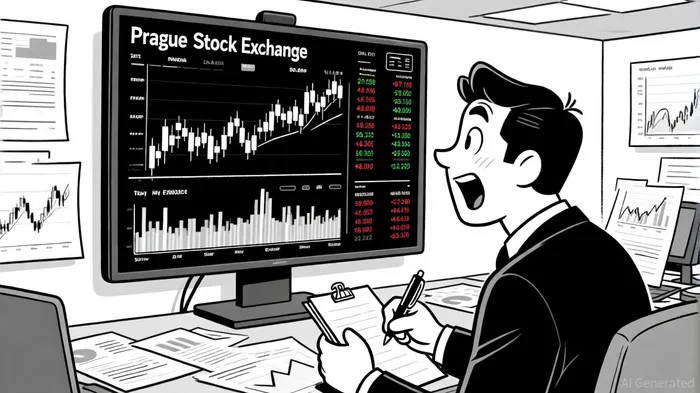







Comentarios
Aún no hay comentarios