
CZ-USA's Position in the Premium Firearms Market vs. Tech Giants in Capital Intensity and Scalability
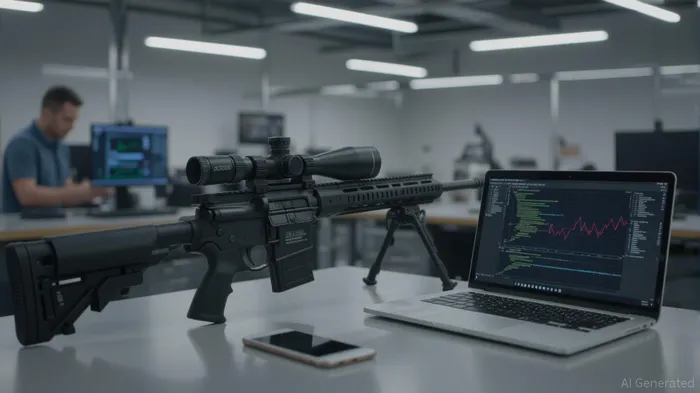
In the evolving landscape of global markets, the interplay between niche industries and high-growth tech sectors offers a compelling lens for investors. CZ-USA, the American subsidiary of Czech firearms manufacturer Česká Zbrojovka (CZ), operates in a sector defined by physical capital intensity and specialized demand. By contrast, tech giants—dominated by software-driven scalability and network effects—have redefined market capitalization benchmarks. This analysis explores how CZ-USA's position in the premium firearms market stacks up against these titans, focusing on capital intensity, scalability, and growth potential.
Capital Intensity: Physical vs. Digital Foundations
The firearms industry, particularly the premium segment, is inherently capital-intensive. Manufacturing high-quality rifles and pistols requires significant investment in machinery, materials, and precision engineering. CZ-USA, as a subsidiary of a publicly traded Czech firm[1], likely inherits these capital demands. In contrast, tech companies often achieve scalability with lower marginal costs once foundational R&D is complete. For example, a software update for a SaaS platform costs the same to deploy for 1,000 or 1 million users.
While firearms manufacturers face ongoing costs for production, compliance, and inventory, tech firms benefit from amortizing R&D expenses over vast user bases. This dynamic creates a stark divergence in capital efficiency. However, the premium firearms market's reliance on craftsmanship and brand equity—such as CZ's legacy in competitive shooting—can generate loyal customer bases willing to pay premium prices, offsetting some capital burdens[1].
Scalability: Niche Loyalty vs. Global Networks
Scalability in the tech sector is often exponential. Platforms like AmazonAMZN-- or MetaMETA-- leverage network effects: each new user enhances the value of the service for all participants. This creates a self-reinforcing cycle that drives market caps into the trillions. By contrast, CZ-USA's scalability is constrained by physical production limits and niche demand. The premium firearms market, while profitable, caters to a specific demographic—collectors, competitive shooters, and high-net-worth individuals—limiting its addressable audience compared to global tech platforms.
Yet, this niche focus has its advantages. Firearms brands like CZ can command premium margins through brand loyalty and product differentiation. For instance, CZ's line of competition-grade rifles benefits from decades of engineering expertise, creating a moat against mass-market competitors. Tech firms, meanwhile, face relentless innovation cycles and regulatory scrutiny, which can erode margins and market share.
Growth Potential: Stability vs. Disruption
The premium firearms sector's growth is influenced by macroeconomic and geopolitical factors. In times of uncertainty, demand for firearms often rises, as seen during the 2020 pandemic. CZ-USA's parent company, Česká Zbrojovka, has historically capitalized on such trends, leveraging its European heritage to penetrate U.S. markets. However, regulatory risks—such as potential U.S. firearm restrictions—pose a wildcard for long-term growth.
Tech giants, by contrast, operate in sectors prone to rapid disruption. While this drives innovation, it also creates volatility. A company like NVIDIANVDA--, for example, thrives on AI-driven demand but must continuously reinvent its offerings to stay ahead. CZ-USA's sector, though less dynamic, offers more predictable cash flows, appealing to investors seeking stability over speculative growth.
Market Cap Potential: Niche vs. Mass Appeal
Market capitalization is a function of growth expectations and sector dynamics. Tech giants like AppleAAPL-- or MicrosoftMSFT-- have market caps exceeding $3 trillion due to their ability to scale revenue globally with minimal incremental costs. CZ-USA, even if it captured a significant share of the premium firearms market, would struggle to reach such heights. The sector's physical constraints and smaller customer base inherently limit top-line potential.
However, niche markets can deliver outsized returns when demand is inelastic. The luxury goods sector, for example, generates billions through exclusivity and brand power. If CZ-USA successfully positions itself as a premium brand akin to Rolex or Patek Philippe in firearms, it could command a premium valuation relative to its industry peers. This hinges on maintaining product quality, brand prestige, and navigating regulatory challenges.
Conclusion: Strategic Considerations for Investors
For investors weighing CZ-USA against tech giants, the choice hinges on risk tolerance and growth horizons. Tech stocks offer high scalability and disruptive potential but come with volatility and regulatory risks. CZ-USA, while operating in a less scalable sector, benefits from stable demand and premium pricing in a niche market.
The key question is whether the premium firearms sector can sustain its growth trajectory amid shifting political and economic landscapes. If CZ-USA continues to leverage its heritage and innovation in precision engineering, it may carve out a unique position in a market where “premium” translates to both performance and profitability.







Comentarios
Aún no hay comentarios