
CZ's Advisory Altcoin Faces Major Setback as DeFiLlama Removal Sparks Market Doubt
The recent delisting of Aster DEX's perpetual futures trading volume data by DeFiLlama has sent shockwaves through the decentralized finance (DeFi) ecosystem, particularly for projects tied to high-profile advisors. The ASTER token, linked to Binance co-founder Changpeng "CZ" Zhao, plummeted over 10% in 24 hours after the analytics platform cited concerns over data integrity and suspected wash trading, according to a Cryptopolitan report. This incident raises critical questions about the long-term investment viability of altcoins reliant on celebrity endorsements, especially in a DeFi landscape increasingly prioritizing transparency and verifiable fundamentals.
The Immediate Fallout: Data Integrity and Market Sentiment
DeFiLlama's decision to remove Aster's data stemmed from a near-perfect 1:1 correlation between Aster's and Binance's trading volumes for pairs like XRP/USDT and ETH/USDT, as detailed in a CoinCentral article. The platform's pseudonymous co-founder, 0xngmi, emphasized that Aster's failure to provide granular maker/taker order data rendered its trading activity unverifiable, according to a Cointelegraph report. This lack of transparency, coupled with Aster's association with CZ, amplified skepticism about the legitimacy of its metrics. The price drop to $1.83 from a recent high of $2.27 underscored the market's sensitivity to credibility crises, as noted in a LiveBitcoinNews report.
The timing of the delisting further exacerbated concerns. Aster's Phase 2 token airdrop on October 10, 2025, and an upcoming token unlock on October 14, 2025, could compound downward pressure on the ASTER token, analysts observed in a CoinDesk piece. Investors are now scrutinizing whether the project can rebuild trust through improved data disclosure or if the reputational damage will persist.
Historical Parallels: Advisor Influence vs. Project Fundamentals
Aster's predicament mirrors past credibility crises involving high-profile advisors. Ripple (XRP), for instance, faced prolonged SEC litigation, which initially stifled institutional adoption. However, the 2023 court ruling deeming XRPXRP-- non-secular when sold to the public catalyzed a rebound, with the token surging in late 2024, as noted in a Blockchain Council roundup. Similarly, SolanaSOL-- (SOL) weathered network outages and volatility but retained its appeal due to its speed and cost-efficiency, attracting both developers and traditional financial institutions.
These cases highlight a recurring theme: while advisor influence can amplify a project's visibility, long-term success hinges on robust fundamentals. EthereumETH-- (ETH), for example, has thrived through institutional adoption and Ethereum 2.0 upgrades, demonstrating that technological innovation and real-world utility often outweigh short-term advisor-driven hype.
The Role of Advisors in DeFi: Catalyst or Crutch?
Expert analysis underscores that advisors contribute strategic guidance and industry connections but cannot substitute for solid project foundations. A 2025 study revealed that 87% of failed crypto projects exhibited red flags in team credibility, emphasizing that verifiable expertise in blockchain development and economics is a key predictor of success, according to a DefiCoinInvesting guide. Projects like AaveAAVE-- and PendlePENDLE--, with $63 billion and $8.3 billion in total value locked (TVL) respectively, exemplify how infrastructure innovation and sustainable capital flows drive resilience, as highlighted in a PinkBrains list.
Conversely, advisor-driven recovery post-crisis often relies on governance models and tokenomics. SparkSPK-- and Lido, for instance, stabilized their ecosystems through airdrops, staking incentives, and liquid staking solutions. However, these strategies require continuous innovation to avoid complacency.
Investor Implications: Balancing Risk and Reward
For investors, the Aster incident underscores the need to critically evaluate both advisor influence and project fundamentals. While CZ's endorsement initially boosted Aster's profile, the lack of transparent data eroded trust-a critical asset in DeFi. As noted by DeFiLlama, platforms must provide verifiable liquidity sources and on-chain provenance to maintain credibility.
AI-driven detection systems, leveraging machine learning algorithms like Transformers, are emerging as tools to identify manipulative trading patterns, as described in a Johal article. Such technologies could level the playing field, forcing projects to prioritize transparency over short-term gains.
Conclusion: A Shifting DeFi Landscape
The DeFi space is evolving toward a model where data integrity and technical robustness take precedence over celebrity endorsements. While advisors like CZ can catalyze growth, they cannot mitigate risks stemming from poor governance or opaque operations. For altcoins like Aster, the path to recovery lies in addressing these foundational issues-a challenge that will test their long-term viability in an increasingly discerning market. 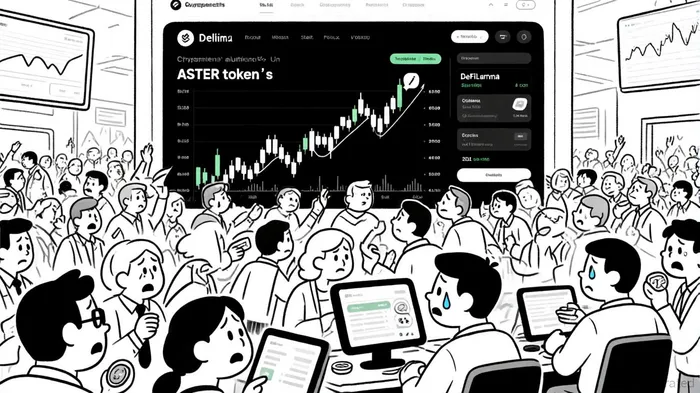






Comentarios
Aún no hay comentarios