
The Cyclical Shift: Why Altcoins Outperformed Bitcoin in 2025 and What It Means for 2026
In 2025, the cryptocurrency market witnessed a seismic shift in institutional capital flows, with altcoins outperforming BitcoinBTC-- for the first time in years. This reallocation was driven by a confluence of regulatory clarity, ETF innovation, and macroeconomic dynamics that reshaped investor priorities. As institutional investors sought higher-growth opportunities amid a maturing crypto ecosystem, the narrative of Bitcoin as the sole "digital gold" began to fragment. Understanding this shift-and its implications for 2026-requires a closer look at the forces behind institutional reallocation and the role of exchange-traded products (ETPs) in amplifying altcoin momentum.
The 2025 Reallocation: Altcoins as High-Growth Satellites
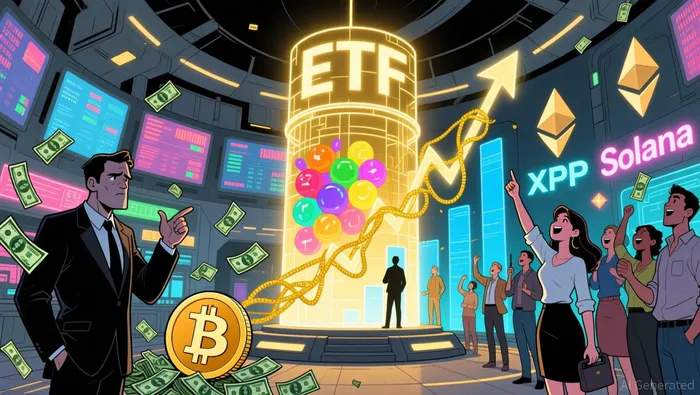
According to a report by CoinShares, institutional inflows into Bitcoin investment products fell by 31% year-over-year in 2025, totaling $26.98 billion, while EthereumETH-- saw a 137% surge in capital, reaching $12.69 billion. XRPXRP-- and SolanaSOL-- experienced even more dramatic growth, with inflows increasing by approximately 500% and 1,000%, respectively. This divergence marked a strategic pivot by institutions toward altcoins perceived as high-growth "satellites" in diversified portfolios, rather than viewing Bitcoin as the sole core asset.
The rise of altcoin ETFs was central to this shift. While Ethereum ETFs attracted record inflows-including $1 billion in a single day-other altcoin ETFs, such as those for Solana and XRP, leveraged regulatory frameworks like the U.S. GENIUS stablecoin law to gain traction. These products provided institutional investors with a regulated onramp to access altcoins, which were increasingly seen as vehicles for innovation in blockchain scalability and decentralized finance (DeFi). However, much of this demand was driven by narrative momentum rather than fundamental improvements in network performance, highlighting the speculative nature of ETF-driven capital flows.
Bitcoin's Macroeconomic Reorientation
Simultaneously, Bitcoin's role in institutional portfolios evolved. Data from 2025 revealed a growing correlation between Bitcoin and the Nasdaq 100, with a beta coefficient of 0.52. This shift signaled that Bitcoin was becoming a high-beta asset, mirroring the volatility of tech stocks rather than serving as an independent macro hedge. Institutional investors began treating Bitcoin as a core holding with lower growth expectations, while allocating capital to altcoins for their perceived upside potential.
Regulatory developments further cemented this dynamic. The passage of the CLARITY Act and the GENIUS stablecoin law in the U.S. provided a legal framework for integrating crypto into traditional finance, reducing compliance risks for institutions. These policies, combined with the maturation of Bitcoin ETFs, allowed investors to balance their portfolios between Bitcoin's stability and altcoins' growth prospects.
2026 Outlook: ETF-Driven Momentum and Systemic Risks
As 2026 approaches, the institutional crypto landscape is poised for further transformation. The Grayscale 2026 Digital Asset Outlook predicts that Bitcoin could reach a new all-time high in the first half of the year, driven by surging institutional demand and regulatory clarity. However, the focus on altcoins is expected to persist, particularly for high-throughput chains like Solana and SUISUI--, which are attracting interest through emerging altcoin trusts.
 The EU's Markets in Crypto-Assets (MiCA) regulation and the U.S. GENIUS Act will play pivotal roles in shaping 2026 strategies. These frameworks are likely to encourage traditional financial institutions-such as pension funds and sovereign wealth funds-to allocate a portion of their portfolios to crypto assets. Analysts project that Bitcoin ETF assets under management could reach $180–$220 billion by year-end 2026, with altcoin ETFs capturing a growing share of institutional capital.
Yet, this concentration of capital in a narrow set of top-tier assets raises systemic risks. In 2025, the broader altcoin market (excluding Ethereum, XRP, and Solana) saw inflows decline by 30%, reflecting a "winner-takes-all" dynamic driven by ETF liquidity and regulatory favor. If market sentiment or regulatory conditions shift, the rapid inflows into altcoins could reverse, triggering volatility and destabilizing the broader crypto ecosystem.
Conclusion: A New Equilibrium in Institutional Crypto Allocation
The 2025 reallocation from Bitcoin to altcoins underscores a maturing market where institutional investors are prioritizing growth, regulatory clarity, and diversification. While Bitcoin remains a cornerstone of crypto portfolios, its role is increasingly defined by macroeconomic correlations rather than standalone value. For 2026, the interplay between ETF-driven momentum and regulatory innovation will likely determine whether altcoins maintain their dominance or cede ground to a rebalanced market.
Investors must remain vigilant to the risks of overconcentration, as the health of the broader crypto ecosystem becomes increasingly tied to the performance of a few key networks. As the industry navigates this cyclical shift, the ability to adapt to evolving regulatory and macroeconomic conditions will be critical for both institutional and retail participants.







Comentarios
Aún no hay comentarios