
Cyclical Resilience in Traditional Media: The Enduring Value of Heritage Brands Amid Digital Disruption
The media landscape is in flux. As regional newspapers shutter and digital platforms redefine engagement, a paradox emerges: heritage brands like continue to thrive, even as their peers falter. This tension between obsolescence and resilience raises critical questions for investors. How do traditional media entities adapt to digital disruption? What strategies enable heritage brands to outlast the tides of technological and economic change? And what does this mean for the long-term value of such assets in an era of declining local journalism?
The Almanac's Secret Sauce: Core Values and Adaptation
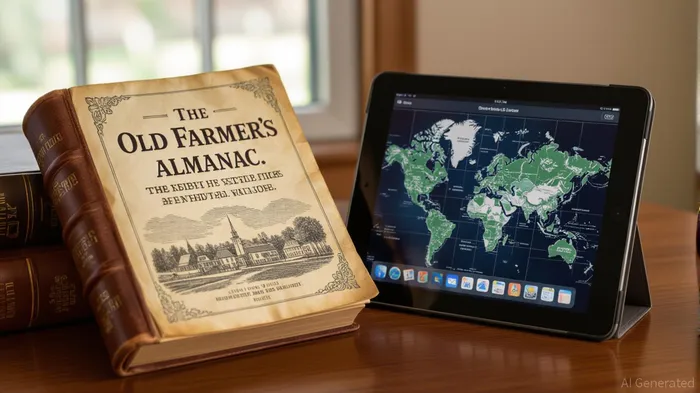
The Old Farmer's Almanac, first published in 1792, has defied the odds. Despite the 2025 edition's availability on digital platforms like Amazon and its own website, the publication has retained its core identity: practical advice, weather forecasts, and a connection to rural traditions, according to the
Almanac's 2025 edition. Its 2025 edition, released on August 27, 2024, reflects a blend of time-tested wisdom and modern convenience, as noted in the
Almanac's 2025 edition.
This duality-staying rooted in tradition while embracing digital tools-has been key to its resilience. According to a report by the Almanac's editorial team, the publication has expanded its offerings to include seasonal weather forecasts and gardening tips tailored to contemporary audiences, as detailed in the
Almanac's 233-year history. By maintaining its "folksy charm" while adapting to new distribution channels, the Almanac has preserved its relevance in a fragmented media ecosystem, as noted in the
Almanac's 2025 edition.
In contrast, the , a similar publication based in Lewiston, Maine, announced in 2024 that its 2026 edition would be its final one, citing financial pressures and rising production costs, according to a
NewsCenter Maine report. This closure underscores the fragility of regional media brands that fail to balance heritage with innovation.
Regional Closures and the Cost of Disruption
New Hampshire and Maine have seen a wave of regional newspaper closures between 2023 and 2025, compounding the loss of the Farmers' Almanac, as noted in the
NewsCenter Maine report. These closures are not merely economic setbacks; they represent a cultural erosion. Local publications have historically served as trusted sources of weather forecasts, gardening advice, and community news-functions now increasingly outsourced to national or digital platforms, as reported in the
Northwest report.
The political ramifications are also significant. In New Hampshire, where the 2026 Senate race has drawn national attention, the decline of local media has altered the dynamics of public discourse. As former Senator John E. Sununu's campaign gains traction, the absence of robust regional journalism leaves a void in nuanced coverage of state-specific issues, according to an
NBC News article. This trend mirrors broader national patterns, where digital platforms prioritize scale over local specificity, further marginalizing regional voices.
The Investment Thesis: Heritage as a Competitive Advantage
For investors, the contrast between The Old Farmer's Almanac and its regional counterparts highlights a critical insight: heritage is not a liability but a strategic asset. The Almanac's 233-year history provides a unique value proposition-trust, consistency, and a deep connection to its audience-that digital-native competitors struggle to replicate, as detailed in the
Almanac's 233-year history.
Moreover, the Almanac's ability to pivot to digital formats without sacrificing its core identity demonstrates a rare adaptability. While the Farmers' Almanac succumbed to financial pressures, The Old Farmer's Almanac has leveraged its brand equity to expand into e-commerce and online subscriptions, as noted in the
Almanac's 2025 edition. This dual focus on tradition and innovation positions it as a model for sustainable growth in the media sector.
Challenges and the Road Ahead
The Almanac is not immune to industry-wide challenges. Its 2026 discontinuation announcement-though not its own-signals a broader vulnerability in the almanac publishing space, according to a
Yahoo article. Rising printing costs, shifting consumer habits, and the dominance of free digital content all pose risks. Yet, the Almanac's proactive approach-such as its early adoption of online sales and digital tools-suggests a capacity to navigate these headwinds, as noted in the
Almanac's 2025 edition.
For investors, the key question is whether this model can scale. Can other heritage brands replicate the Almanac's success by marrying tradition with digital agility? Or is the Almanac an outlier in an industry increasingly defined by consolidation and decline?
Conclusion: The Long Game in Media
The story of The Old Farmer's Almanac is not just about survival-it's about redefining what it means to be relevant in the digital age. Its continued success, amid the collapse of regional competitors, underscores the enduring value of heritage brands that prioritize authenticity and adaptability. For investors, this offers a compelling case study: in an era of rapid disruption, the most resilient media assets are those that honor their roots while embracing the future.







Comentarios
Aún no hay comentarios