
Cyclerion Therapeutics' Strategic Medsteer Partnership: A Game Changer in Precision-Based TRD Treatment
Cyclerion Therapeutics' collaboration with Medsteer represents a pivotal step in advancing precision-based therapies for treatment-resistant depression (TRD), a condition affecting an estimated 30% of individuals with depression and associated with higher healthcare costs and suicide risk. By integrating Medsteer's EEG-guided closed-loop anesthetic delivery technology into its lead program, CYC-126, CyclerionCYCN-- is positioning itself at the forefront of neuropsychiatric innovation. This partnership not only addresses a significant unmet medical need but also aligns with a rapidly expanding market, projected to grow from $3.1 billion in 2022 to over $X billion by 2032.
A Precision-Driven Approach to TRD
The core of Cyclerion's strategy lies in leveraging Medsteer's proprietary algorithms and datasets from over 9,000 patients across 25 clinical settings to develop CYC-126 as an individualized treatment. This therapy combines anesthetic agents with real-time EEG monitoring and algorithm-guided dosing to target specific brain states linked to antidepressant effects. Unlike traditional pharmacological or nonpharmacological treatments such as electroconvulsive therapy (ECT) or esketamine (SPRAVATO), CYC-126's closed-loop system adapts dynamically to patient feedback, potentially improving efficacy while minimizing side effects.
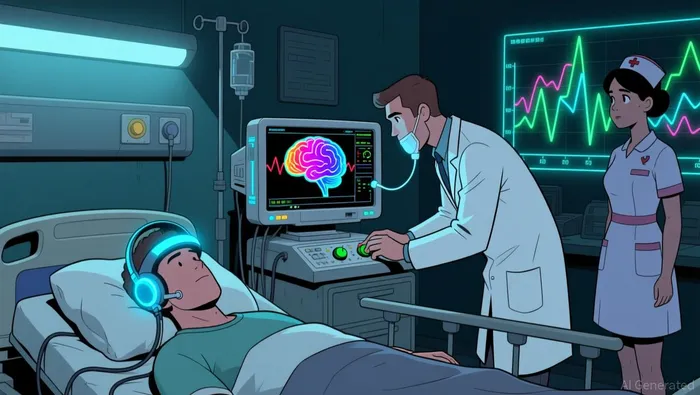
The partnership's application-specific focus reduces technical and execution risks, accelerating Cyclerion's development timeline. The company plans to initiate a multinational Phase 2 proof-of-concept study in late 2026, with first patient enrollment in Australia via the CTN/HREC pathway. If successful, this trial could serve as a critical catalyst, providing early evidence of CYC-126's potential to restore functional brain connectivity in TRD patients.
Market Potential and Competitive Landscape
The TRD market is highly competitive, with nonpharmacological therapies like repetitive transcranial magnetic stimulation (rTMS) and pharmacological innovations such as Novartis' MIJ821 and Navitor Pharmaceuticals' NV-5138 vying for market share. However, Cyclerion's precision-based approach differentiates it by addressing the heterogeneity of TRD through real-time, data-driven dosing. This aligns with the broader shift toward personalized medicine in psychiatry, a trend underscored by the $3.1 billion market size in 2022 and its projected growth.
Moreover, Cyclerion's collaboration with Medsteer leverages existing FDA-cleared device components and a licensing agreement with MIT, potentially streamlining regulatory pathways. While CYC-126 has not yet received fast-track or orphan drug designations, the company's prior success with an orphan drug designation for zagociguat in mitochondrial diseases demonstrates its regulatory acumen. A U.S. IND submission following the Phase 2 trial could open doors to accelerated approvals if the data supports robust efficacy.
Clinical and Commercial Catalysts
The Phase 2 trial, expected to deliver data in 2027, is the most immediate catalyst. Positive results could validate the closed-loop model's potential, attracting partnerships or investment. Additionally, Cyclerion's integration of Medsteer's technology- validated in over 9,000 patients-reduces the risk of algorithmic failures, a common hurdle in digital therapeutics.
From a commercial standpoint, the U.S. market alone is projected to exceed $2.4 billion in 2022, with growth driven by rising demand for alternatives to ECT and the high cost of TRD management. If CYC-126 demonstrates superiority over existing treatments, it could capture a significant share of this market, particularly in settings where rapid antidepressant effects are critical.
Conclusion
Cyclerion's partnership with Medsteer is more than a technological collaboration-it is a strategic bet on the future of precision psychiatry. By combining anesthetic agents with real-time EEG monitoring, the company is addressing TRD's complex pathophysiology in a way that aligns with both clinical and commercial trends. With a Phase 2 trial on the horizon and a growing market hungry for innovation, CYC-126 has the potential to redefine TRD treatment while delivering substantial value to investors.





Comentarios
Aún no hay comentarios