
Cybersecurity Risks in the UK Retail Sector: Assessing Operational Resilience and Financial Impact
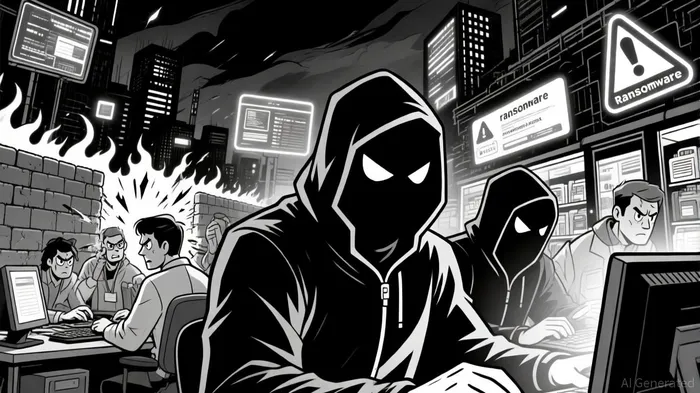
The UK retail sector has emerged as a prime battleground in the escalating war against cybercrime. In 2025, a wave of sophisticated attacks—targeting giants like Marks & Spencer (M&S), Co-op, and Harrods—exposed systemic vulnerabilities in operational resilience and underscored the financial toll of digital breaches. As investors scrutinize the sector, understanding the interplay between cybersecurity preparedness and profitability is critical.
The 2025 Cybersecurity Crisis: A Wake-Up Call
The year 2025 marked a turning point for UK retailers, as a decentralized hacking collective known as Scattered Spider leveraged advanced tactics such as SIM-swap fraud, phishing, and ransomware-as-a-service (RaaS) platforms like DragonForce to cripple operations. According to a report by PureCyber, M&S suffered an estimated £300 million in lost profits and a £700 million erosion in market value after a ransomware attack paralyzed online services and in-store payment systems for weeks [2]. The breach exploited weak authentication practices and third-party supplier vulnerabilities, highlighting the sector's overreliance on legacy systems and fragmented supply chains [1].
Co-op and Harrods also faced disruptions, though Co-op's robust incident response plan allowed it to contain damage more effectively [2]. The British Retail Consortium (BRC) 2024 Crime Survey noted a 57% increase in cyberattacks in 2024, a trend that intensified in 2025 [3]. These incidents reveal a broader pattern: attackers are increasingly targeting human and technological weaknesses, with ransomware payments often made to expedite recovery in a sector where uptime is synonymous with revenue [1].
Operational Resilience: From Reactive to Proactive
The crisis has accelerated a shift toward operational resilience frameworks, driven by regulatory mandates like the EU's Digital Operational Resilience Act (DORA) and the UK's FCA/PRA/Bank of England requirements [1]. Retailers are now prioritizing zero-trust architectures, impact tolerance testing, and third-party risk management to mitigate cascading failures. For instance, M&S's post-attack strategy includes overhauling supplier contracts to enforce stricter cybersecurity protocols and investing in cloud-based automation to reduce dependency on legacy systems [1].
However, progress remains uneven. While forward-thinking firms like the Very Group have returned to profitability through high-margin product strategies and automation [1], others lag in addressing systemic gaps. A 2025 Capgemini analysis emphasized that sustainability and resilience are now intertwined, with retailers like M&S embedding circular design and carbon-efficient logistics to bolster both profitability and customer trust [1].
Financial Impacts and Investment Implications
The financial fallout from cyberattacks extends beyond immediate losses. M&S's suspended online orders, recruitment freezes, and stock shortages illustrate how operational disruptions ripple through supply chains and brand reputation [2]. For investors, the key question is: How prepared is a retailer to absorb and recover from such shocks?
Data from The British Cyber Institute (BCI) suggests that firms with mature resilience programs—such as Co-op's rapid containment protocols—experience 30-40% lower financial exposure during breaches compared to peers [1]. This aligns with lessons from the banking sector, where stress testing and dependency mapping have long been standard practice .
The Road Ahead: Strategic Priorities for Investors
As the retail sector navigates a volatile landscape, investors should prioritize companies that:
1. Adopt zero-trust models and advanced identity authentication to counter social engineering.
2. Integrate cross-departmental resilience strategies, including third-party audits and impact tolerance testing.
3. Leverage automation and cloud infrastructure to reduce reliance on outdated systems.
4. Align cybersecurity with sustainability goals, as seen in M&S's circular design initiatives [1].
Conversely, firms with fragmented digital ecosystems and weak supplier oversight remain high-risk. The 2025 crisis has made one thing clear: operational resilience is no longer optional—it is a non-negotiable component of long-term profitability in an era where cyberattacks can erase years of value in days.







Comentarios
Aún no hay comentarios