
Cybersecurity Risks in the Automotive Sector: Evaluating Stellantis' 2025 Data Breach and Its Financial and Reputational Fallout
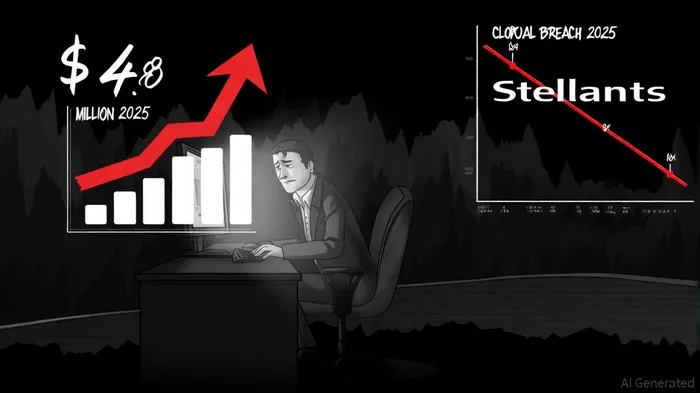
The automotive industry's rapid digitization has made it a prime target for cyberattacks, with data breaches posing existential risks to automakers' financial stability and brand equity. StellantisSTLA--, the multinational automaker behind brands like Jeep, Ram, and Citroën, has become a cautionary tale in this evolving landscape. In September 2025, the company disclosed a significant data breach affecting its North American customer service operations, exposing basic contact information of millions of customers[1]. While no financial data was compromised, the incident has compounded Stellantis' existing financial and reputational vulnerabilities, offering a stark case study for investors evaluating cybersecurity risks in the sector.
The 2025 Breach: A Third-Party Vulnerability
The breach originated from a third-party service provider supporting Stellantis' customer service operations, a common attack vector in an industry increasingly reliant on digital ecosystems[2]. According to a report by Reuters, the incident exposed customer names, addresses, phone numbers, and email addresses but spared sensitive data like credit card information or Social Security numbers[3]. Stellantis responded swiftly, activating incident response protocols, notifying affected customers, and urging vigilance against phishing attempts[4]. However, the lack of transparency around the breach's financial costs—such as incident response expenses or regulatory fines—leaves gaps in understanding its direct impact.
Financial Fallout: Beyond the Breach Itself
While Stellantis has not disclosed specific costs tied to the breach, the broader financial context is alarming. The company reported a €2.3 billion net loss in the first half of 2025, exacerbated by U.S. tariffs, rising inventories, and operational inefficiencies[5]. The breach coincided with a shareholder lawsuit alleging financial misrepresentation, which contributed to a -5.31% stock price drop in February 2025[6]. According to Timothy Sykes, a financial analyst, the lawsuit accused Stellantis of misleading investors about its profitability, artificially inflating stock prices before a 40% earnings shortfall in July 2024[7].
Indirect costs of the breach are harder to quantify but equally significant. IBM's 2025 report notes that the global average cost of a data breach reached $4.88 million, with reputational damage and customer churn accounting for nearly 40% of total costs[8]. For Stellantis, this aligns with a broader trust crisis: a Kerrigan Advisors survey revealed that 72% of U.S. dealers expressed “no trust” in the automaker, citing cost-cutting measures and undervalued partnerships[9]. This erosion of trust could deter long-term investments from dealers and suppliers, further straining Stellantis' financial resilience.
Reputational Damage: A Trust Deficit with Lasting Consequences
Reputational harm often lingers long after technical breaches are resolved. Stellantis' 2025 incident has intensified scrutiny of its cybersecurity practices, particularly its reliance on third-party vendors. A Plante Moran survey ranked Stellantis at the bottom of the 2025 North American Automotive OEM-Supplier Working Relations Index, highlighting poor communication and responsiveness with partners[10]. Meanwhile, customer trust has plummeted: the automaker's brands occupied the bottom four spots in the 2025 American Customer Satisfaction Index (ACSI), with Ram scoring a dismal 69 out of 100[11].
Legal disputes have further amplified the reputational toll. Stellantis' recent settlement with supplier Yanfeng over a cyberattack-related production disruption underscores the fragility of its vendor relationships[12]. These challenges are compounded by media sentiment, with outlets like The Detroit News framing the breach as part of a “risk pile-up” for the automaker[13]. For investors, the combination of legal, operational, and reputational risks paints a grim picture of Stellantis' ability to maintain market leadership in an increasingly digital world.
Broader Implications for the Automotive Sector
Stellantis' experience reflects a growing trend: cyberattacks are no longer isolated incidents but systemic threats to the automotive industry. The 2025 breach follows similar incidents at Jaguar Land Rover and underscores the vulnerability of third-party supply chains[14]. Forrester analysts predict that class-action lawsuit costs will surpass regulatory fines by 50% in 2025, a trend Stellantis may soon face if customers or dealers pursue legal action[15].
Investors must also consider the regulatory landscape. While Stellantis has not yet been fined under GDPR or CCPA for the 2025 breach, the European Commission reported cumulative GDPR fines exceeding €5.88 billion by May 2025[16]. As data protection laws tighten, automakers lacking robust cybersecurity frameworks will face escalating compliance costs.
Conclusion: A Call for Cyber Resilience
Stellantis' 2025 data breach is a microcosm of the automotive sector's cybersecurity challenges. While the automaker's swift response mitigated immediate risks, the incident has exacerbated pre-existing financial and reputational vulnerabilities. For investors, the lesson is clear: cybersecurity is no longer a technical issue but a strategic imperative. Automakers must prioritize third-party vendor audits, incident response planning, and transparent communication to rebuild trust and avoid the cascading costs of breaches. In an industry where digital transformation is non-negotiable, resilience against cyber threats will define the next era of automotive leadership.





Comentarios
Aún no hay comentarios