
Cybersecurity Risk in Tech Platforms: Assessing Investment Resilience After Discord's 2025 Breaches
In 2025, cybersecurity has emerged as a defining factor in evaluating the resilience of tech platforms, particularly as third-party breaches and AI-driven attacks escalate. The recent security lapses at Discord-a platform with over 150 million monthly active users-offer a stark case study for investors. Two distinct breaches in October 2025 exposed vulnerabilities in third-party integrations and customer service systems, prompting urgent questions about how investors should assess risk and recovery in an era of increasingly sophisticated cyber threats.
Discord's 2025 Security Lapses: A Dual Crisis
Discord's first breach involved a third-party customer service provider compromised by an unauthorized party seeking ransom. While the company emphasized that full credit card numbers and passwords were not exposed, the breach revealed names, usernames, email addresses, and partial payment details for users who had contacted support teams. A second incident, linked to RestoreCord-a server backup service-exposed usernames, timestamps, and IP addresses for nearly 1 million users, though, as a Tom's Guide report noted, the company disputed the scale of the leak.
These incidents underscore the growing risks of third-party dependencies. According to the 2025 Third-Party Breach Report, 35% of all breaches in 2024 were vendor-related, with ransomware groups and state-sponsored actors exploiting supply chains as entry points. For Discord, the financial impact was indirect, but the reputational damage was profound. Delayed and inconsistent communication exacerbated user anxiety, eroding trust in the platform's data protection practices, as noted in the Tom's Guide report.
Investor Priorities: Beyond Financial Metrics
Investors are now scrutinizing cybersecurity resilience through a multidimensional lens. The 2025 Midyear Cyber Risk Report highlights a 70% increase in average ransomware claim costs, reaching $1.18 million, while AI-powered phishing achieves a 54% success rate-far outpacing traditional methods. These trends force investors to weigh not just financial exposure but also operational continuity and brand equity.
For Discord, the breaches highlight the importance of frameworks like the Return on Security Investment (ROSI), which quantifies the value of avoided losses relative to security costs. A $50,000 firewall investment preventing $200,000 in breach-related losses yields a ROSI of 3, demonstrating tangible ROI, as explained in the Post-Breach Recovery guide. However, ROSI alone is insufficient. Investors must also evaluate incident response times, cost per incident, and reputation impact scores (RIS), which combine financial volatility, investor trust, and sentiment analysis to gauge reputational harm, as described in the Post-Breach Recovery guide.
Case Studies: Lessons from the Frontlines
The 2024 Federal Trade Commission (FTC) settlement with Marriott International-$52 million for systemic security failures-illustrates the consequences of delayed response. Equifax's 2017 breach, which led to a 30% stock drop, further emphasizes the 72-hour window critical for containment and communication, as noted in the Post-Breach Recovery guide. In contrast, companies like the unnamed retail firm that geo-targeted customer notifications and collaborated with law enforcement post-breach saw reduced churn and restored investor confidence, according to the same Post-Breach Recovery guide.
Discord's post-breach actions-revoking third-party access, enhancing vendor security controls, and engaging law enforcement-align with best practices. Yet, the delayed communication and inconsistent messaging highlight a gap in crisis management, a concern echoed in the 2025 EY Cybersecurity Study. The report notes a 10-point gap between CISOs and the C-suite in prioritizing cybersecurity budgets, with 67% of CISOs reporting seven-figure budgets versus 45% of other executives, according to the Midyear Cyber Risk Report. This disconnect risks underinvestment in resilience, particularly as AI-driven threats evolve.
Strategic Recommendations for Investors
To assess resilience in tech platforms, investors should prioritize:
1. Third-Party Risk Monitoring: Platforms reliant on external services must demonstrate real-time vendor risk assessments and contractual safeguards.
2. Adoption of Advanced Frameworks: Zero-trust models, ISO 27001 compliance, and AI-driven threat detection are now table stakes.
3. Transparent Communication: Post-breach transparency, including clear explanations of vulnerabilities and remediation steps, is critical for retaining trust.
4. ESG Integration: Cybersecurity is now a core ESG metric. Weak postures can trigger debt-rating downgrades and higher borrowing costs, as the Midyear Cyber Risk Report highlights.
Conclusion
Discord's 2025 breaches serve as a cautionary tale for investors. While the platform's financial exposure was limited, the reputational and operational fallout underscores the need for robust, adaptive cybersecurity strategies. As AI-driven attacks and third-party risks dominate the threat landscape, investors must move beyond traditional financial metrics to evaluate resilience through ROSI, RIS, and ESG-aligned frameworks. In an era where trust is a currency, the ability to recover from cyber incidents will define the long-term viability of tech platforms.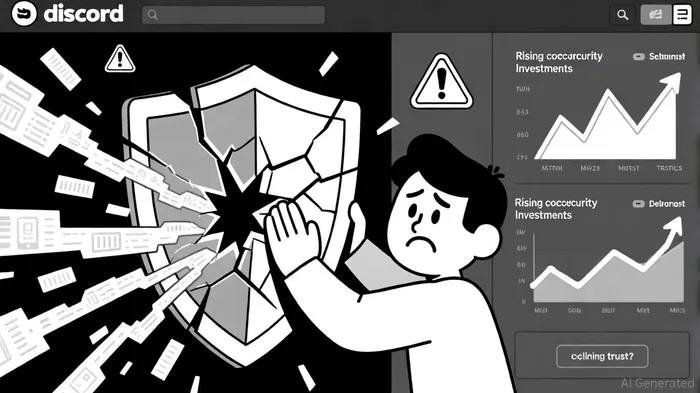







Comentarios
Aún no hay comentarios