
Cybersecurity Risk and Stock Resilience in Automotive and Consumer Industries: A Governance-Centric Investment Analysis
The automotive and consumer-facing industries are undergoing a seismic shift in risk profiles as cyberattacks evolve in scale and sophistication. From ransomware disruptions to supply chain breaches, the financial and reputational toll on companies has become a critical factor for investors assessing long-term stock resilience. This analysis examines how robust cybersecurity governance frameworks-such as ISO/SAE 21434 and UNECE R155-can mitigate these risks and influence market outcomes, drawing on recent incidents and regulatory trends.
The Rising Cost of Cyberattacks: Financial and Stock Market Impacts
Recent years have seen a sharp increase in high-impact cyber incidents. In 2024, a ransomware attack on a dealership management software provider disrupted 15,000 dealerships, causing $1 billion in economic damage and a $25 million ransom demand, as reported in a Forbes article. Similarly, Jaguar Land Rover's 2025 production halt due to a cyberattack resulted in hundreds of millions of dollars in lost revenue and required a $2 billion UK government loan guarantee, according to an MSCI analysis. These events underscore a broader trend: public companies suffering cyber incidents typically experience an average 5.3% share price decline within days of disclosure, with long-term underperformance against sector benchmarks reaching up to 15%, according to a Westbourne analysis.
The automotive industry's shift toward software-defined vehicles and connected infrastructure has expanded attack surfaces. For instance, the 2024 surge in "massive-scale" cyberattacks-those affecting millions of vehicles-tripled from 5% in 2023 to 19% in 2024 (as reported in the Forbes article). Such breaches not only disrupt operations but also expose sensitive customer data, as seen in the 22GB data theft from a U.S. automaker's systems (also noted by Forbes). For investors, these incidents highlight the dual risks of operational downtime and eroded consumer trust, both of which directly impact valuation.
Governance Safeguards: Compliance as a Resilience Indicator
Amid these threats, companies with robust cybersecurity governance frameworks demonstrate stronger resilience. Standards like ISO/SAE 21434 (cybersecurity engineering for road vehicles) and UNECE R155 (Cybersecurity Management Systems) mandate lifecycle risk management, including Threat Analysis and Risk Assessment (TARA), secure software updates, and board-level oversight, as detailed in NCC Group research. Compliance with these frameworks is no longer optional; it is a regulatory and market access requirement in key regions like the EU and China, according to a Diconium blog.
Board-level engagement is critical. Industry analysts emphasize that boards must treat cybersecurity as a strategic imperative, not an operational afterthought. Companies embedding cybersecurity metrics into executive performance evaluations and ensuring board access to real-time threat intelligence recover faster post-incident (as noted in the MSCIMSCI-- analysis). For example, firms adhering to ISO/SAE 21434's structured risk management processes are better positioned to implement rapid, coordinated responses, minimizing downtime and reputational damage (see NCC Group research).
Conversely, non-compliant companies face heightened exposure. The 2023 MGM Resorts cyberattack, while in a different sector, exemplifies the consequences of inadequate oversight: a 7.5% average stock decline in financial services post-breach (reported by Westbourne). In automotive, non-compliance with UNECE R155 could lead to sales bans in UNECE member countries, compounding financial losses (as discussed in the Diconium blog).
Stock Resilience: The Compliance Dividend
While direct case studies comparing compliant vs. non-compliant automotive firms post-cyberattack remain scarce, an EInfochips blog highlights gaps in public evidence and methodology. Indirect evidence supports the link between governance and stock resilience: companies with proactive frameworks recover valuation parity approximately 46 days post-incident, compared to prolonged declines for those lacking structured programs (Westbourne). For instance, automakers investing in AI-driven threat detection and zero-trust architectures-aligned with ISO/SAE 21434-report shorter recovery times and reduced ransomware payouts (NCC Group research).
Investors should also consider regional regulatory tailwinds. The EU's Cyber Resilience Act (CRA) and NIS2 Directive impose stringent real-time vulnerability monitoring requirements (as described in the Diconium blog), pushing laggards to catch up or face market exclusion. Firms already compliant with ISO/SAE 21434 and UNECE R155 are better positioned to navigate these transitions without operational shocks.
Conclusion: Governance as a Strategic Investment
For investors, the takeaway is clear: cybersecurity governance is a core driver of enterprise value. Companies prioritizing compliance with ISO/SAE 21434, UNECE R155, and regional regulations not only mitigate operational risks but also signal resilience to capital markets. As cyber threats grow in complexity-from ShinyHunters' supply chain campaigns to AI-enabled attacks-the divide between well-governed and vulnerable firms will widen.
In this evolving landscape, boards must treat cybersecurity as a boardroom priority, integrating it into capital allocation and innovation strategies. For shareholders, supporting companies with proactive governance frameworks is no longer just prudent-it is essential for long-term value preservation.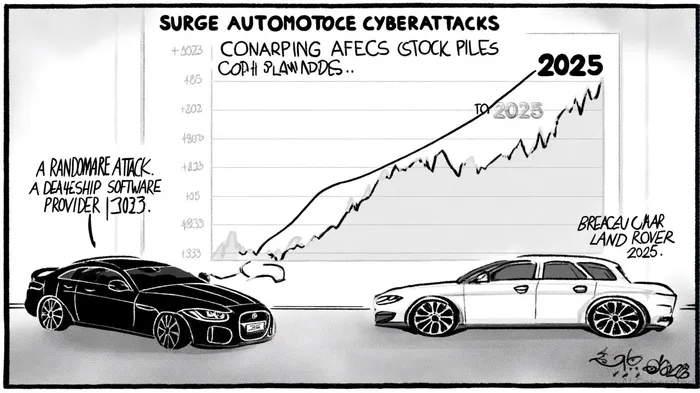





Comentarios
Aún no hay comentarios