
Cybersecurity Risk Exposure and Shareholder Value: The Ransomware Threat to Multinational Conglomerates
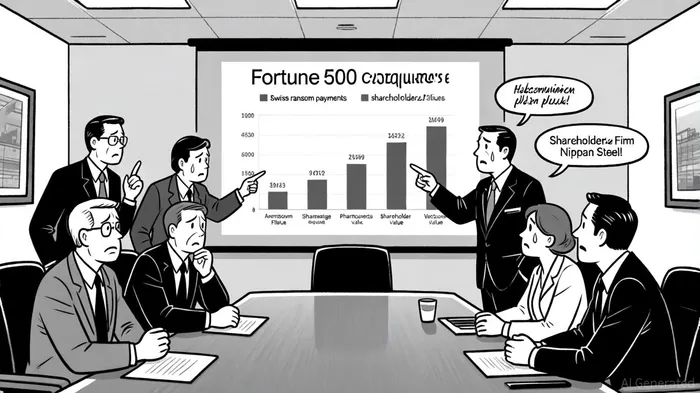
In the ever-evolving landscape of global business, cybersecurity has emerged as a critical determinant of long-term shareholder value. Nowhere is this more evident than in the escalating threat of ransomware attacks, which have evolved from opportunistic strikes to highly targeted campaigns against high-revenue multinational corporations (MNCs). The 2025 data paints a stark picture: ransomware gangs are no longer content with small-scale disruptions. They are now weaponizing advanced tactics, including AI-driven payloads and double extortion strategies, to cripple operations, exfiltrate sensitive data, and extract exorbitant ransoms. For investors, the question is no longer if a company will face a ransomware breach, but how prepared it is to mitigate the cascading financial and reputational fallout.
The Financial and Reputational Toll of Ransomware
The immediate costs of a ransomware attack-ransom payments, operational downtime, and remediation-pale in comparison to the long-term erosion of shareholder value. According to an Aon report, cyber incidents that trigger reputational damage can lead to an average 27% decline in shareholder value, with ransomware attacks being the most damaging despite accounting for only 45% of total cyber events. This is a sharp increase from Aon's 2023 findings, which noted a 9% average decline. The disparity underscores a growing investor sensitivity to cybersecurity risks, particularly as ransomware gangs increasingly target Fortune 500 companies with annual revenues exceeding $50 billion.
For example, in March 2025, a Swiss pharmaceutical firm fell victim to a splinter group of the Black Basta ransomware gang. The attackers demanded $15.2 million in Monero and exfiltrated 9TB of data, including early-stage drug formulations. When the company refused to pay, the data was leaked online, triggering lawsuits and a 30% drop in its stock value within two weeks, as outlined in an ACSMI blog post. This case exemplifies how ransomware attacks can devastate a company's market capitalization through a combination of operational disruption, intellectual property loss, and reputational harm.
Case Studies: The 2025 Ransomware Surge
The first quarter of 2025 alone saw 2,028 ransomware victims, a 101.8% increase compared to Q1 2024, according to a CyberNews analysis. Among the most prominent targets were HCA Healthcare, HP, and Nippon Steel, all of which represent critical sectors-healthcare, technology, and manufacturing. Nippon Steel's experience is particularly instructive. In February 2025, the BianLian ransomware group claimed to have stolen 500GB of data from the company's U.S. division, including accounting records and production data. A subsequent zero-day attack in July further exposed customer and employee information, compounding investor concerns. Despite the company's efforts to contain the breaches, the timing-coinciding with its controversial $15 million merger with U.S. Steel-likely exacerbated market volatility, as reported by CyberNews.
Meanwhile, HCA Healthcare, a Fortune 500 healthcare provider, reported Q1 2025 earnings of $6.45 per share, a 20% year-over-year increase, while simultaneously navigating a surge in ransomware threats, as stated in HCA's earnings release. The company's ability to maintain profitability despite these challenges highlights the importance of robust incident response plans and shareholder-focused strategies, such as its $6 billion share buyback program. However, the broader healthcare sector saw a 32% increase in ransomware attacks in Q1 2025, with an average ransom demand of $608,000, according to HIPAA Guide. These trends suggest that while some firms can weather the immediate storm, the long-term reputational and operational costs remain a wildcard.
Long-Term Shareholder Value: A Sector-Specific Analysis
The impact of ransomware on shareholder value varies by industry. A study by Westbourne & Partners found that breaches lead to an average 5.3% share price decline within days of disclosure and long-term underperformance against sector benchmarks of up to 15%. The financial services sector, in particular, has seen the most severe downturns, underperforming the market by 24.3% six months post-attack. This is partly due to the sector's reliance on trust and data integrity-both of which are irrevocably damaged by breaches.
For instance, the ransomware attack on Slovakia's Geodesy, Cartography, and Cadastre Office in 2025 disrupted property transactions nationwide, indirectly affecting related companies and organizations. While no ransom was paid, the political and economic uncertainty stemming from the attack likely contributed to broader market skepticism, noted in RiskSight's roundup. Similarly, the healthcare sector's $21.9 billion in downtime costs over six years-averaging $1.9 million per day-has made investors increasingly wary of companies lacking robust cybersecurity frameworks, per an HFMA report.
Market Response and Mitigation Strategies
As ransomware attacks become more sophisticated, the market is responding with a surge in demand for cybersecurity solutions. The global ransomware protection market is projected to reach $28.69 billion in 2025 and $54.82 billion by 2029, Mordor Intelligence projects. However, investors must also consider a company's governance and crisis management capabilities. Firms that prioritize transparency, rapid incident response, and stakeholder communication-such as HCA Healthcare's emphasis on share buybacks and dividends-are better positioned to recover investor confidence.
Conclusion: Investing in Resilience
For investors, the key takeaway is clear: cybersecurity risk exposure must be evaluated as rigorously as financial or operational metrics. Ransomware attacks are no longer isolated incidents; they are existential threats that can erode decades of value in weeks. Companies that fail to invest in advanced threat detection, employee training, and incident response plans will face not only regulatory penalties but also a loss of trust from shareholders and customers alike.
As the 2025 data demonstrates, the cost of inaction far outweighs the cost of prevention. In an era where cybercriminals are leveraging AI and zero-day exploits to target Fortune 500 giants, resilience is no longer optional-it is a competitive necessity.





Comentarios
Aún no hay comentarios