
Cybersecurity Resilience in Aviation: Assessing RTX's Operational and Reputational Risks
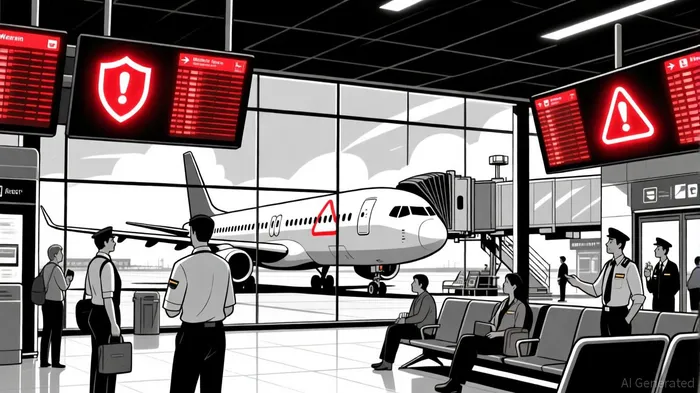
The aviation sector's reliance on interconnected digital systems has made it a prime target for cyber threats, with 2025 witnessing a 131% surge in cyberattacks compared to previous years[1]. For investors, understanding how companies like Raytheon Technologies (RTX) navigate these risks is critical. RTXRTX--, through its subsidiary Collins Aerospace, has faced significant challenges in 2025, including a high-profile cyberattack in September that disrupted operations at major European airports. This analysis evaluates RTX's operational and reputational risks, its cybersecurity strategies, and the broader implications for the aviation industry.
RTX's Cybersecurity Posture: Strengths and Vulnerabilities
RTX has long emphasized a robust cybersecurity framework, aligning with NIST standards and implementing enterprise-wide measures such as employee training, vulnerability management, and third-party risk assessments[2]. Its 2025 10-K filing underscores a commitment to “continuous monitoring and incident response protocols” to safeguard sensitive systems[2]. However, the September 2025 cyberattack on Collins Aerospace exposed vulnerabilities in its infrastructure. The attack disabled automated check-in and boarding systems at Heathrow, Brussels, and Berlin airports, forcing manual operations and causing widespread delays and cancellations[3].
The incident highlights a critical gap: even with advanced protocols, supply chain dependencies and legacy systems remain exposed. For instance, the attack targeted Collins Aerospace's MUSE software, a critical component in global airports[3]. While RTX's supplier cybersecurity policies mandate encryption and incident reporting[4], the attack suggests that third-party systems or human error could still create entry points for adversaries.
Operational and Financial Impact of the September 2025 Incident
The September cyberattack caused immediate operational chaos. Brussels Airport canceled 50% of flights between 0400-1200 UTC, affecting ~35,000 passengers[3]. Heathrow and Berlin airports reported similar disruptions, with Eurocontrol advising airlines to cancel half their services during peak hours[5]. While RTX has not disclosed direct financial losses, the incident compounded existing pressures. In 2025, RTX faced a $850 million cost impact from tariffs and a four-week strike at Pratt & Whitney, which disrupted F135 and Geared Turbofan engine production[6].
The outage also strained RTX's maintenance, repair, and overhaul (MRO) network. For example, the GTF engine recall program—costing $6-7 billion—requires 600-700 engines to be inspected by 2026[7]. A cyberattack on Collins Aerospace's systems could delay these efforts, exacerbating downtime for airlines and eroding customer trust.
Reputational Risks and Customer Trust
Reputational damage from cyber incidents can be severe, particularly in sectors where reliability is paramount. The September attack raised questions about RTX's ability to protect critical infrastructure. As one industry analyst noted, “Aerospace companies must not only secure their own systems but also assure clients that their partners are equally resilient”[8].
Customer statements post-attack were not publicly detailed, but reputational erosion is evident in broader trends. For example, the 2024 CrowdStrikeCRWD-- outage, which grounded 8.5 million Windows devices, led to a 12% drop in its stock price[9]. If RTX's cybersecurity lapses become frequent, investors could face similar volatility. Additionally, the attack may strain relationships with defense clients, where trust in secure systems is non-negotiable[10].
Broader Industry Trends and RTX's Strategic Response
The aviation sector's cybersecurity landscape is evolving rapidly. In 2025, AI-powered threats, ransomware, and supply chain attacks became more sophisticated[1]. For example, the “Great NPM Heist” weaponized JavaScript packages to target cryptocurrency transactions[11], while ransomware groups like Qilin focused on precision strikes against critical systems[12]. RTX's response includes adopting AI-based anomaly detection and digital twin technologies to simulate cyber scenarios[13]. However, these measures require time to mature, and the company's reliance on legacy systems remains a risk.
RTX's supplier cybersecurity mandates—requiring encryption, access controls, and incident reporting—are a step forward[4]. Yet, the September attack underscores the need for real-time threat intelligence sharing and stricter oversight of third-party vendors.
Mitigation Strategies and Future Outlook
To mitigate risks, RTX must accelerate its shift from legacy systems to unified, observable IT infrastructures[14]. This includes:
1. Enhanced Supply Chain Security: Expanding audits of third-party providers and integrating zero-trust frameworks.
2. AI-Driven Resilience: Scaling AI-based anomaly detection to preemptively identify threats.
3. Transparent Communication: Proactively addressing incidents to rebuild customer trust.
For investors, the key question is whether RTX can balance its cost-cutting initiatives (e.g., $1 billion in 2025 savings[2]) with increased cybersecurity investments. While the company's 2025 restructuring plans aim to streamline operations, underfunding cybersecurity could lead to more costly disruptions in the future.
Conclusion
RTX's September 2025 cyberattack serves as a cautionary tale for the aviation sector. While the company's cybersecurity governance is robust, the incident highlights vulnerabilities in supply chain dependencies and legacy systems. For investors, the challenge lies in assessing whether RTX can adapt to an increasingly hostile threat landscape without compromising operational efficiency. As cyberattacks become more frequent and sophisticated, resilience will be a defining factor in RTX's long-term success—and a critical consideration for its shareholders.





Comentarios
Aún no hay comentarios