
U.S. Cyber Sanctions and the Reshaping of Fintech Cybersecurity: A Geopolitical Investment Play
The U.S. government's aggressive campaign against cybercriminals since 2023 has catalyzed a seismic shift in fintech's approach to cybersecurity and compliance. By targeting not just individual hackers but entire ecosystems-including cryptocurrency exchanges, bulletproof hosting services, and transnational fraud networks-the Treasury Department has forced fintech firms to rethink their risk management strategies. These sanctions, underpinned by Executive Order 13694, have exposed vulnerabilities in digital finance, prompting a surge in investments to counter both cyber threats and the geopolitical risks of sanctions evasion.
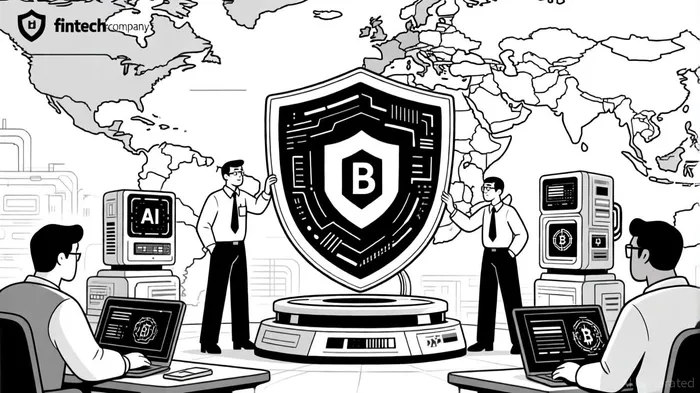
The Sanctions-Driven Cybersecurity Surge
The U.S. has weaponized its regulatory authority to disrupt cybercrime's financial lifelines. In March 2025, the Treasury's Office of Foreign Assets Control (OFAC) sanctioned Garantex, a cryptocurrency exchange that laundered over $100 million for ransomware actors, and its successor, Grinex. Similarly, the October 2025 takedown of the Prince Group Transnational Criminal Organization (TCO)-a Cambodia-based network responsible for $4 billion in scams-highlighted how cybercriminals exploit fintech infrastructure to evade detection. These actions have sent a clear message: fintech platforms must now treat cybersecurity as a core operational function, not an afterthought.
The financial sector's response has been swift. According to the State of Fintech 2024 Report, while overall fintech funding declined in 2024, M&A activity in cybersecurity-focused firms surged by 24% quarter-over-quarter. Companies like Stripe and Mastercard have made strategic acquisitions-Stripe's purchase of Effectiv to enhance fraud detection and Mastercard's $2.65 billion acquisition of Recorded Future-to fortify their defenses. Meanwhile, global cybersecurity spending is projected to grow from $172.5 billion in 2022 to $267.3 billion by 2026, driven by fears of ransomware, deepfakes, and AI-powered phishing.
Geopolitical Fractures and Regulatory Divergence
The ripple effects of U.S. sanctions extend beyond American shores, creating a fragmented global regulatory landscape. The European Union, for instance, has extended its cyber sanctions regime until 2028, aligning with U.S. efforts to penalize cyberattacks on critical infrastructure. However, divergences are emerging. The EU's Digital Services Act (DSA), which mandates stringent content moderation and data localization rules, has clashed with U.S. norms around free speech and encryption. This regulatory tug-of-war complicates compliance for fintech firms operating across jurisdictions, particularly as the U.S. pressures tech companies to avoid "compromising constitutional principles" to meet EU demands.
In Asia-Pacific, the stakes are equally high. Sanctions evasion via virtual currencies-exemplified by North Korean and Iranian cybercriminals-has pushed regulators to tighten oversight of cross-border transactions. Countries like Japan and Singapore are adopting blockchain analytics tools to trace illicit flows, while China's crackdown on decentralized finance (DeFi) underscores its desire to control digital financial innovation. These measures reflect a broader trend: as cybercrime becomes increasingly geopolitical, so too does the regulatory response.
The Future of Fintech Cybersecurity: Innovation vs. Compliance
Fintech's next frontier lies in balancing cutting-edge innovation with compliance. Quantum-resistant cryptography, behavioral analytics, and decentralized identity solutions are gaining traction as firms anticipate threats from AI-driven cyberattacks. Yet, these technologies require substantial capital. For example, the integration of AI for real-time fraud detection-a priority for companies like Robinhood and Square-demands not only technical expertise but also adherence to evolving standards like the EU's General Data Protection Regulation (GDPR) and the U.S. SEC's cybersecurity disclosure rules.
The challenge is compounded by supply chain risks. As U.S. sanctions now target cloud hosting providers and embedded APIs (e.g., OFAC's 2025 designations of white-label payment processors), fintechs must audit their third-party vendors rigorously. This has spurred demand for tools like geolocation controls and automated IP screening, which help firms avoid inadvertently facilitating transactions with sanctioned entities.
Conclusion: A High-Stakes Investment Landscape
For investors, the interplay of U.S. sanctions, geopolitical tensions, and fintech innovation presents both risks and opportunities. Firms that successfully navigate this landscape-by adopting zero-trust architectures, leveraging AI for threat intelligence, and aligning with global regulatory trends-will likely outperform peers. However, the cost of compliance is rising, and regulatory fragmentation could stifle cross-border collaboration. As the World Economic Forum notes, the "cybersecurity clock is ticking". Fintech's ability to adapt will determine not just its resilience to cyber threats but its role in shaping the future of global finance.







Comentarios
Aún no hay comentarios