
Cyber Resilience in the Automotive Sector: Implications for UK Manufacturing and Auto Equity Valuations
Cyber Resilience in the Automotive Sector: Implications for UK Manufacturing and Auto Equity Valuations
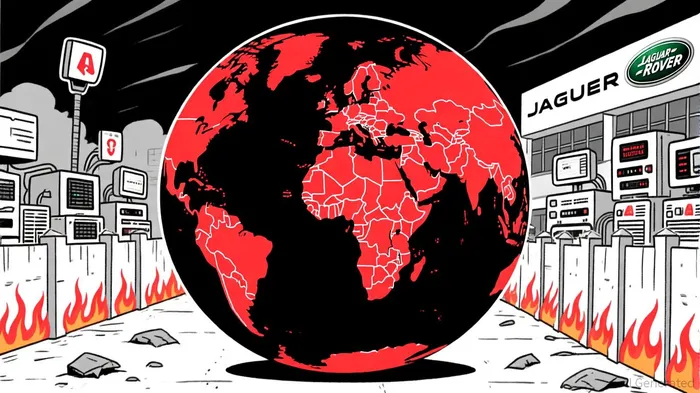
The 2025 cyberattack on Jaguar Land Rover (JLR) has become a defining case study in the automotive sector's struggle to balance digital innovation with operational resilience. The incident, attributed to the hacker group Scattered Lapsus$ Hunters, triggered a month-long production shutdown, exposing systemic vulnerabilities in JLR's IT infrastructure and supply chain. According to a Cyfirma report, the attack crippled internal systems like jlrint.com, disrupted vehicle development, and forced employees into remote work or idleness, with production resuming only after a forensic investigation concluded on September 24, 2025. The financial toll was staggering: JLR's losses ranged between $1.2 billion and $1.9 billion, surpassing half of its 2024 net profit, while daily revenue losses hit $26 million, according to a Safe Security analysis.
The UK government's response-a $1.6 billion loan to stabilize JLR's supply chain-underscored the fragility of just-in-time manufacturing systems. This intervention, as noted by Bloomberg analysts, raises critical questions about whether such bailouts disincentivize companies from investing in robust cybersecurity. Meanwhile, the ripple effects on smaller suppliers were devastating. Over 104,000 UK jobs were at risk, with many firms facing insolvency as JLR's orders evaporated, as noted in the Cyfirma report. The crisis has forced policymakers and industry leaders to confront a harsh reality: in an era of software-defined vehicles and interconnected supply chains, cyber resilience is no longer optional-it's existential.
For investors, the JLR incident has rewritten the rules of risk assessment. The automotive sector's equity valuations have taken a hit, with European automakers collectively losing €71 billion in market value since 2015, as McKinsey notes, due to struggles with digitalization and AI adoption. Yet, this crisis also reveals golden opportunities. The push for cyber resilience is accelerating investments in areas like Zero Trust Architecture, AI-driven threat detection, and secure-by-design software development. According to the ETAS report, companies with high cyber maturity are adopting generative AI to automate threat responses and secure software lifecycles, creating a competitive edge.
The UK's Cyber Growth Action Plan 2025, which positions cybersecurity as a "frontier technology," is already spurring policy-driven growth. Initiatives like loan guarantees for SMEs and regional collaboration hubs are fostering a more resilient supply chain ecosystem. For equity investors, this means prioritizing firms that integrate cyber resilience into their core strategies. EY analysis highlights emerging megapools in EV batteries, software-defined vehicles, and circular business models, projecting $660 billion in revenue by 2030 for companies that adapt.
However, the road ahead is fraught with challenges. JLR's lack of cyber insurance and reliance on centralized IT systems without manual contingency plans amplified its losses, the Cyfirma report found. This serves as a cautionary tale: investors must scrutinize companies' preparedness for cyber threats, favoring those that stress-test systems and adopt proactive continuity planning. The automotive sector's shift toward electrification and AI also expands attack surfaces, as the VicOne report warns of rising risks in EV charging infrastructure and third-party integrations.
In conclusion, the JLR cyberattack is a wake-up call for UK manufacturing and global automakers. While the incident exposed vulnerabilities, it also illuminated a clear path forward: cyber resilience is now a cornerstone of operational and financial health. Investors who act swiftly-targeting firms leading in secure-by-design innovation, supply chain automation, and AI-driven security-will be well-positioned to capitalize on the sector's transformation. As the automotive industry shifts gears, the winners will be those who treat cybersecurity not as a cost center, but as a strategic asset.







Comentarios
Aún no hay comentarios