
Custodial vs Non-Custodial Browser Wallets: Assessing Security Risks and Financial Implications for Crypto Portfolios
In the rapidly evolving crypto landscape, the choice between custodial and non-custodial browser wallets has become a critical decision for investors. This analysis evaluates the security risks and financial implications of each model, drawing on 2025 data to provide actionable insights for portfolio risk management.
Custodial Wallets: Convenience at the Cost of Counterparty Risk
Custodial browser wallets, operated by centralized exchanges or third-party custodians, prioritize user convenience by eliminating the need for private key management. These platforms offer features like automated backups, insurance coverage, and compliance-driven safeguards, making them ideal for novice users or those prioritizing accessibility according to research. However, this convenience introduces counterparty risk: users must trust custodians to maintain operational integrity and protect assets.
The 2025 Bybit breach, where $1.5 billion was stolen, exemplifies the vulnerabilities of custodial models. Centralized custodians remain prime targets for large-scale attacks, as data shows a single point of failure can compromise vast sums. Additionally, regulatory compliance requirements (e.g., KYC/AML) expose users to potential asset freezes or restrictions, further complicating risk profiles according to reports.
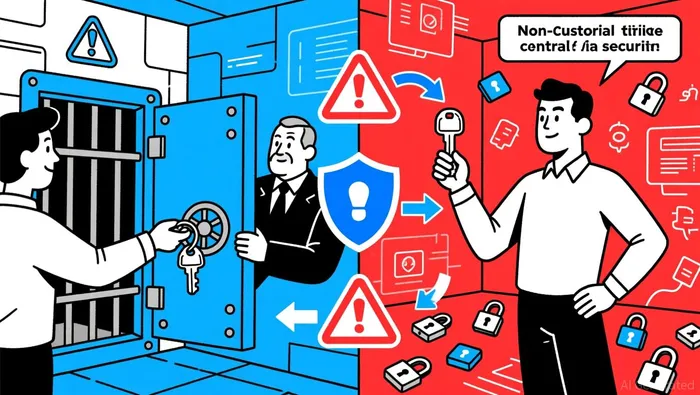
Non-Custodial Wallets: Control vs. User Error
Non-custodial browser wallets, such as Trust Wallet, grant users full control over private keys and digital assets, aligning with the decentralized ethos of crypto. This model mitigates risks from exchange hacks and regulatory interference but shifts responsibility to users. A 2025 Trust Wallet breach highlighted the dangers of software vulnerabilities: attackers exploited a malicious update to drain user funds, underscoring the importance of secure development practices according to findings.
Financially, non-custodial wallets face unique challenges. Chainalysis reported that 44% of $3.4 billion in 2025 crypto thefts stemmed from personal wallet compromises, often due to user error (e.g., lost seed phrases, phishing) according to Chainalysis data. While the non-custodial wallet market is projected to grow at a 25% CAGR through 2025, driven by DeFi adoption, this growth is tempered by the steep learning curve required for secure self-custody according to market analysis.
Financial Implications and Risk Mitigation Strategies
The financial impact of breaches varies significantly between models. Custodial breaches, like Bybit's, result in systemic losses affecting thousands of users simultaneously. Non-custodial breaches, however, often involve smaller, dispersed thefts, reflecting a shift in attacker strategies according to analysis. For investors, the key lies in balancing accessibility and control:
- Hybrid Portfolios: A common strategy involves using custodial wallets for active trading (leveraging custodian insurance and compliance) while storing long-term holdings in non-custodial wallets according to best practices.
- Multi-Layered Security: Non-custodial users should adopt hardware backups, multi-signature wallets, and phishing-resistant recovery methods to mitigate user error risks according to security guidelines.
- Due Diligence: Investors must vet custodians for robust security protocols (e.g., cold storage, insurance) and audit non-custodial wallet providers for software vulnerabilities according to research.
Conclusion
The choice between custodial and non-custodial browser wallets hinges on risk tolerance and technical expertise. While custodial models offer convenience and institutional-grade security, they expose portfolios to counterparty and regulatory risks. Non-custodial wallets, though aligned with decentralization principles, demand rigorous user discipline. A hybrid approach, supported by 2025 market trends and breach data, provides a pragmatic path to balancing security and accessibility in crypto portfolios.







Comentarios
Aún no hay comentarios