
Cultural Capital: How Landmark Art Exhibitions Fuel Institutional Growth and Investment Returns
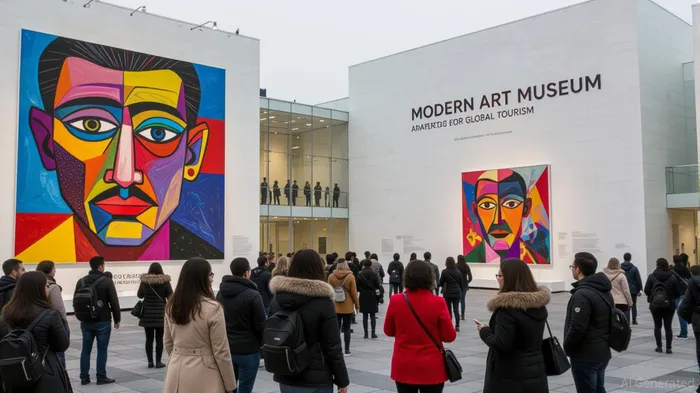
In an era where cultural assets are increasingly recognized as engines of economic growth, major art exhibitions are emerging as strategic investments for institutions seeking to build long-term value. While the financial impact of specific shows like Mark Bradford: Keep Walking at the Museum of Contemporary Art Chicago (MCA) remains opaque, broader research into the mechanics of art exhibition brand equity offers a compelling blueprint for understanding how cultural institutions can unlock revenue, strengthen institutional identity, and attract global audiences.
The key lies in four pillars of brand equity: brand image, brand values, perceived quality, and loyalty. A 2025 study on the Ages of Mankind exhibition in Castilla y León, Spain, reveals how these elements interact to drive institutional success. By analyzing 406 visitors across 14 editions of the itinerant exhibition, researchers found that external visitors—those from outside the region—prioritize brand image, while internal visitors focus on brand values. This distinction is critical: it underscores the need for cultural institutions to tailor their messaging and experiences to resonate with both local and international audiences.
For example, a museum hosting a high-profile exhibition like Mark Bradford: Keep Walking can amplify brand image through global media coverage and social media campaigns, while reinforcing brand values by emphasizing community engagement or educational programs. Such dual strategies not only attract tourists but also foster loyalty among repeat visitors, a demographic that often translates into sustained revenue streams.
The financial benefits are tangible. Institutions that master brand equity can command higher ticket prices, secure lucrative corporate sponsorships, and qualify for public funding. The Ages of Mankind exhibition, for instance, leveraged its regional heritage to secure corporate partnerships and government support, generating over €20 million in direct economic impact across its 20-year run. This model suggests that cultural investments are not just about artistic merit—they are about creating ecosystems where tourism, sponsorships, and institutional growth coalesce.
Investors and institutional leaders should take note of the growing role of strategic partnerships. Companies like LVMH, Google, and AmazonAMZN-- have increasingly funded art exhibitions as a means to enhance their own brand equity, recognizing that cultural patronage aligns with modern consumers' demand for ethical and socially conscious corporate behavior. For museums, this translates into diversified revenue streams less reliant on volatile public funding or ticket sales.
Moreover, the rise of global tourism as a revenue driver cannot be ignored. A landmark exhibition can transform a city into a cultural destination, as seen in the case of the Louvre Abu Dhabi or the Guggenheim Bilbao. These institutions have demonstrated that the economic multiplier effect of tourism—hotel bookings, restaurant sales, and transportation services—can dwarf the direct revenue from exhibitions themselves.
For investors, the implications are clear. Cultural institutions that strategically curate high-impact exhibitions and build strong brand equity are positioned to outperform traditional cultural assets in terms of financial resilience and growth. This is not merely a niche opportunity; it is a sector poised for expansion as global audiences increasingly seek experiential and culturally rich destinations.
However, success requires more than a single blockbuster show. Institutions must commit to long-term brand-building, leveraging data analytics to understand visitor demographics and preferences. The Ages of Mankind study, for example, used Partial Least Squares (PLS) analysis to refine its visitor engagement strategies—a method that could be replicated by other institutions to optimize their marketing and sponsorship approaches.
In conclusion, cultural investments in the arts are no longer about altruism alone. They are about creating value through brand equity, tourism, and corporate alignment. For institutions like the MCA, exhibitions such as Mark Bradford: Keep Walking represent not just artistic milestones but strategic assets in a broader financial and institutional growth strategy. As the sector evolves, investors who recognize the power of cultural capital will find themselves well-positioned to capitalize on a market where art and economics converge.







Comentarios
Aún no hay comentarios