
Cultural Capital and Art Market Growth in South Korea: Strategic Opportunities in Museum-Driven Tourism and Real Estate
South Korea's cultural sector is emerging as a compelling arena for investment, driven by a confluence of art market resilience, institutional innovation, and the globalizing appeal of its creative industries. At the forefront of this transformation is the Amorepacific Museum of Art (APMA), whose 2026 exhibition program-featuring high-profile U.S. artists like Mark Bradford and Jonas Wood-signals a strategic pivot toward art-driven cultural tourism and cross-border collaboration. These initiatives not only elevate Korea's position in the global art ecosystem but also present tangible opportunities for real estate, institutional, and tourism-related investments.
APMA's 2026 Exhibitions: A Magnet for Global Audiences
APMA's 2026 calendar includes two landmark exhibitions: Mark Bradford: Keep Walking (August 2025–January 2026) and the first institutional survey of Jonas Wood in Asia (September 2026). Bradford's exhibition, which spans 40 works over two decades, includes interactive installations like Float, a sprawling piece that invites physical engagement. This aligns with APMA's mission to merge artistic innovation with social commentary, a strategy that resonates with both local and international audiences. Similarly, Wood's survey-featuring 50 paintings and 30 works on paper-highlights his signature use of color and pattern, positioning him as a bridge between American and Korean contemporary art traditions.
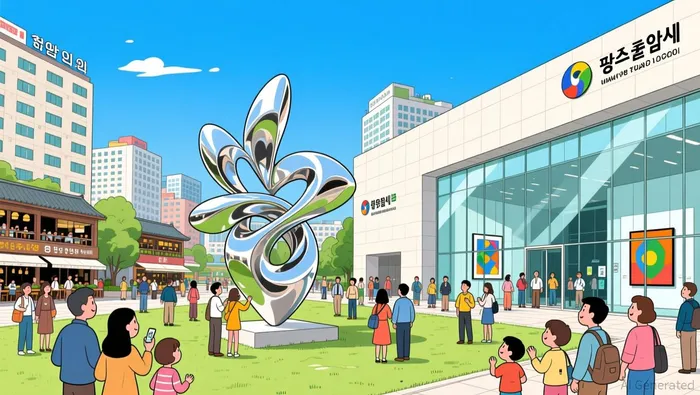
The economic implications of these exhibitions are significant. For context, Frieze Seoul 2025 attracted 70,000 visitors from 48 countries, with VIP attendance surging by 30% year-on-year. While APMA has not disclosed specific attendance projections, its exhibitions are expected to draw comparable crowds, particularly given the high market value of works by artists like Bradford (whose piece sold for $4.5 million at Frieze 2025). This influx of visitors could stimulate demand for nearby accommodations, dining, and retail, creating a ripple effect on local economies.
Cross-Border Collaborations and Cultural Tourism
APMA's 2026 program extends beyond solo exhibitions to include cross-border collaborations that amplify its cultural tourism appeal. A notable example is The Sky Becomes a Theater and the Theater Is in the Sky (June 2025–May 2026), a joint project with Mexican-Canadian artist Christian Hidaka. This exhibition, which blends Korean and international artistic traditions, exemplifies APMA's role as a cultural bridge. Such initiatives align with broader trends: the global art tourism market is projected to grow from $46.96 billion in 2025 to $54.89 billion by 2030, with Asia-Pacific as the fastest-growing region.
APMA's collaborations also extend to institutional partnerships, such as its 2023 alliance with the Metropolitan Museum of Art in New York. These relationships not only enhance APMA's global credibility but also position it as a hub for cultural exchange, attracting both art enthusiasts and investors seeking exposure to Korea's creative economy.
Real Estate and Economic Impact: A Strategic Nexus
The museum's programming is poised to catalyze real estate investment in Seoul's cultural districts. Historical precedents, such as APMA's 2019 apmap jeju project, demonstrate how art-driven tourism can stimulate property demand. The Jeju initiative, which reinterpreted local culture through contemporary art, drew international visitors and spurred interest in nearby accommodations. Similarly, APMA's 2026 exhibitions are likely to enhance the desirability of Seoul's Gangnam and Gangdong districts, where the museum is located, as cultural and residential hubs.
While specific economic impact studies for APMA's 2026 exhibitions remain unpublished, broader market trends suggest substantial potential. The global museums market, valued at $55.14 billion in 2024, is projected to reach $78.54 billion by 2029, driven by immersive experiences and international collaborations. APMA's focus on interactive installations and cross-border projects positions it to capitalize on this growth, making its surrounding real estate a strategic asset for investors.
Challenges and Resilience in the Korean Art Market
Despite a downturn in Korea's art market-where market value fell from 800 billion won in 2022 to 500 billion won in 2025-cultural institutions like APMA are demonstrating resilience. High-profile events such as Frieze Seoul and Kiaf continue to draw global attention, underscoring the enduring appeal of Korea's art scene. APMA's 2026 exhibitions, with their emphasis on international artists and collaborative programming, further reinforce this resilience, offering a counterbalance to market volatility.
Conclusion: A Call for Diversified Investment
The Amorepacific Museum of Art's 2026 exhibitions represent more than cultural milestones-they are catalysts for economic diversification. By attracting global audiences, fostering cross-border collaborations, and stimulating real estate demand, APMA is redefining the role of art institutions in Korea's economic landscape. For investors, this signals an opportunity to align with a sector that combines cultural capital with tangible returns, positioning South Korea as a key player in the global art and tourism economy.







Comentarios
Aún no hay comentarios