
Cryptocurrency Risk Exposure in High-Crime Jurisdictions: A 2025 Investment Analysis
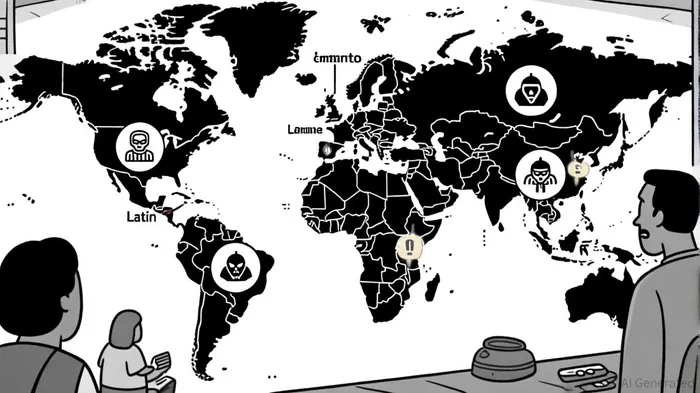
In 2025, the intersection of cryptocurrency and crime has reached a boiling point. The Toronto abduction case, where a woman was kidnapped, tortured, and forced to surrender a $1 million BitcoinBTC-- ransom, epitomizes the growing threat of "wrench attacks"—a term derived from XKCD's comic illustrating physical coercion to extract digital assets [1]. Such incidents are no longer isolated but part of a global trend where criminals exploit the anonymity and unregulated nature of cryptocurrencies to commit violent crimes. For Bitcoin investors, the implications are stark: digital wealth is increasingly vulnerable to physical threats, and traditional security measures are insufficient.
The Rise of Wrench Attacks: From Toronto to Global Hotspots
The Toronto case, involving Keyron Moore's 13-year prison sentence for abducting and torturing victim A.T. in 2022, underscores the brutality of crypto-fueled crime [2]. Moore and his accomplice demanded Bitcoin and cash, subjecting the victim to fentanyl threats and physical abuse. Similarly, in 2024, Dean Skurka, CEO of Toronto-based crypto firm WonderFi, was kidnapped and released unharmed after a $1 million ransom was paid [3]. These cases highlight a disturbing pattern: criminals are no longer content with digital theft alone. They now employ violence to extract private keys, leveraging the decentralized nature of Bitcoin to move stolen assets beyond traditional financial systems.
Globally, wrench attacks have escalated. In France, Ledger co-founder David Balland was kidnapped, and a finger was severed to pressure him into revealing wallet details [4]. In the U.S., an Italian man was allegedly held hostage for weeks in Manhattan to access his Bitcoin holdings [5]. Sub-Saharan Africa, plagued by terrorism and political instability, has seen extremist groups like Boko Haram and ISIL-K use cryptocurrency for fundraising, further blurring the line between digital assets and physical coercion [6].
Regulatory Responses: Canada vs. Global Trends
Canada's approach to mitigating crypto crime has evolved. Law enforcement agencies like the Ontario Provincial Police have launched initiatives such as Project Atlas to combat cryptocurrency fraud and extortion [7]. The country's updated national cybersecurity strategy emphasizes collaboration with private sector partners and public education on digital asset security [8]. However, these measures face challenges. For instance, the Toronto abduction case revealed gaps in tracing ransom payments, as Bitcoin's pseudonymity allows criminals to evade detection.
In contrast, the European Union's Markets in Crypto-Assets (MiCA) regulation, fully implemented in 2025, mandates strict licensing and transparency for crypto service providers, indirectly enhancing security by reducing fraud [9]. The U.S. Department of Justice (DOJ) has shifted from a "regulation by prosecution" approach to targeted enforcement, prioritizing criminal misuse of crypto while avoiding overreach against compliant platforms [10]. Meanwhile, high-crime jurisdictions like Nigeria and Vietnam are under pressure to adopt FATF's Travel Rule and strengthen AML/KYC frameworks to combat illicit flows [11].
Investor Risks and Mitigation Strategies
For Bitcoin investors, the risks are twofold: digital vulnerabilities and physical threats. Data breaches from centralized exchanges have exposed over 80 million user identities, including home addresses, making high-net-worth individuals prime targets [12]. To mitigate these risks, experts recommend:
1. Multi-signature wallets to prevent single-point access.
2. Operational security (opsec), such as avoiding public displays of wealth on social media.
3. Physical security measures, including private protection and secure home environments [13].
However, these strategies are not foolproof. The Ledger kidnapping case demonstrated that even hardware wallet users are vulnerable if personal information is compromised. Investors must also consider jurisdictional risks. For example, while Canada enforces AML compliance for virtual asset service providers (VASPs), countries like Argentina and Brazil have fragmented regulatory frameworks, creating loopholes for criminal exploitation [14].
Conclusion: A Call for Proactive Risk Management
The Toronto abduction case and global wrench attacks signal a new era of crypto crime, where digital wealth is weaponized through physical violence. For investors, the lesson is clear: Bitcoin's decentralization is both a strength and a vulnerability. Regulatory frameworks are improving, but they lag behind the pace of criminal innovation. In 2025, proactive risk management—combining digital security, physical safeguards, and geopolitical awareness—is no longer optional. As the line between crypto and crime blurs, the question is not if but how investors will adapt to survive.






Comentarios
Aún no hay comentarios