
Cryptocurrency Regulation Risks in Entertainment and Finance: Lessons from Hwang Jung-eum's Case
The convergence of cryptocurrency and high-profile industries like entertainment has created a volatile landscape where legal, reputational, and financial risks collide. South Korea's recent enforcement actions and regulatory reforms underscore this tension, exemplified by the case of actress Hwang Jung-eum, whose embezzlement scandal highlights the perils of speculative crypto investments and inadequate corporate governance.
Hwang Jung-eum's Case: A Cautionary Tale
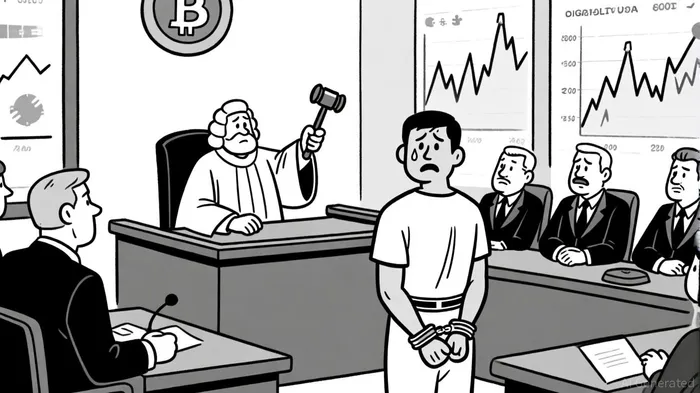
In 2025, Hwang Jung-eum, a prominent South Korean actress, was sentenced to two years in prison, suspended for four years, for embezzling approximately ₩4.2 billion ($3.1 million) from her family-owned agency to invest in cryptocurrency[1]. Prosecutors had initially sought a three-year term, but the court's leniency was influenced by her full repayment of the funds and status as a first-time offender[2]. Hwang admitted to acting on the advice of an acquaintance, believing the agency's funds—derived from her personal earnings—could be used for crypto investments without harming third parties[3].
This case reveals critical vulnerabilities in corporate financial management, particularly in entertainment companies where personal and business assets may blur. Hwang's legal team argued that the agency lacked professional financial oversight, as it operated as a one-person entity[4]. However, the court's ruling emphasized accountability, noting that unauthorized use of company funds—even for speculative ventures—constitutes a breach of trust. The reputational fallout was immediate: TV networks edited her out of episodes, and advertisers distanced themselves[5].
South Korea's Regulatory Crackdown on Crypto Risks
Hwang's case did not occur in a vacuum. South Korea has intensified its regulatory scrutiny of cryptocurrency since 2023, driven by a surge in illicit activities. According to the Financial Intelligence Unit (FIU), suspicious crypto transactions in the first eight months of 2025 alone reached 36,684, surpassing the combined total for 2023 and 2024[6]. Stablecoins like TetherUSDT-- (USDT) have been central to schemes such as hwanchigi, where funds are converted offshore and reconverted domestically to evade foreign exchange controls[7].
The government's response has been multifaceted. The VirtualCYBER-- Asset User Protection Act (VAUPA), enacted in July 2024, mandates stringent Know Your Customer (KYC) and Anti-Money Laundering (AML) protocols for virtual asset service providers (VASPs), requiring cold storage of 80% of assets and real-time transaction monitoring[8]. Enforcement has been aggressive: 14 non-compliant exchanges, including KuCoin and MEXC, were blocked in 2025, while Upbit faced partial suspensions for KYC violations[9].
Investor Due Diligence in a High-Risk Environment
For investors, Hwang's case and South Korea's regulatory trajectory highlight the necessity of rigorous due diligence. Key considerations include:
1. Corporate Governance: Entities in entertainment or finance must establish clear financial boundaries and professional oversight to avoid conflicts of interest.
2. Regulatory Compliance: Adherence to VAUPA and similar frameworks is non-negotiable. Investors should verify that platforms and projects meet KYC/AML standards[10].
3. Risk Assessment: Cryptocurrency's volatility demands conservative allocation strategies. Speculative ventures, as seen in Hwang's case, should be avoided without robust risk mitigation.
Conclusion
Hwang Jung-eum's suspended sentence serves as a microcosm of broader challenges in digital asset markets: the allure of high returns clashes with the reality of stringent regulation and reputational fragility. For investors, the lesson is clear—due diligence must extend beyond financial analysis to encompass legal and ethical scrutiny. As South Korea's regulatory framework evolves, staying informed and proactive will be paramount to navigating the volatile intersection of cryptocurrency, entertainment, and finance.






Comentarios
Aún no hay comentarios