
Cryptocurrency Market Volatility in Late 2025: Contrarian Opportunities Amid Post-Sell-Off Recovery
Cryptocurrency Market Volatility in Late 2025: Contrarian Opportunities Amid Post-Sell-Off Recovery
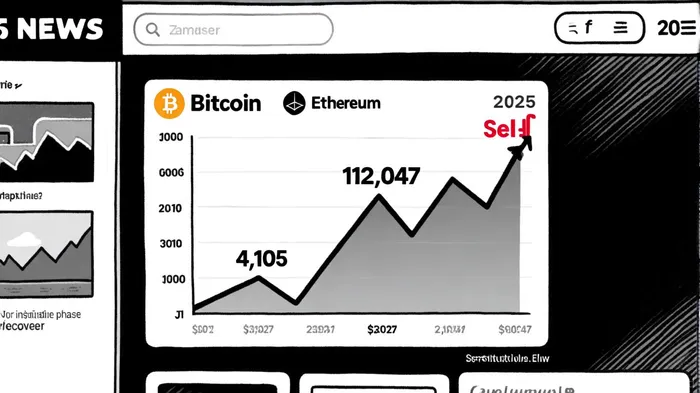
The cryptocurrency market in late 2025 has navigated a volatile landscape, marked by a short-lived but severe sell-off in September that erased billions in market value. However, the subsequent recovery-driven by macroeconomic shifts, regulatory clarity, and institutional adoption-has created a fertile ground for contrarian investors. This analysis examines the structural forces underpinning the market's rebound and identifies high-conviction opportunities for those willing to navigate the risks.
Institutional Adoption and ETF Inflows: A Catalyst for Recovery
The post-sell-off rebound has been anchored by unprecedented institutional inflows into U.S. spot BitcoinBTC-- and EthereumETH-- ETFs. According to a report by Binance Research, these ETFs attracted over $28 billion in capital during 2025 alone, signaling a paradigm shift in how institutional investors perceive digital assets. This trend is particularly evident in Bitcoin's price action: after hitting a critical support level in mid-September, the asset rebounded 2.5% to $112,047, while Ethereum gained 2.8% to $4,105, driven by sustained buying from institutional portfolios, according to Analytics Insight.
Historical data from 2022 to 2025 reveals that Bitcoin's support-level bounces have historically delivered a short-term momentum boost. Specifically, 44 support-level events were identified during this period, with the first week after a support touch showing a statistically positive edge: +2.8% cumulative return at Day-5 with a 66% win rate. While the effect tapers off over time, the Analytics Insight analysis suggests that institutional buying during such events has historically reinforced Bitcoin's recovery trajectories.
The Federal Reserve's anticipated rate cuts in late 2025 have further amplified risk-on sentiment. As stated by Coinbase Institutional in its 2025 market outlook, declining interest rates reduce the opportunity cost of holding high-volatility assets like crypto, incentivizing capital reallocation from traditional markets. This dynamic is particularly relevant for Bitcoin, which has historically outperformed equities during rate-cut cycles.
Regulatory Clarity and Technological Upgrades: A Dual Tailwind
Regulatory developments have played a pivotal role in stabilizing market sentiment. In the U.S., the SEC and CFTC's harmonization of digital asset regulations-including the approval of new listing standards for crypto ETFs-has reduced legal ambiguity for market participants, according to Binance Research. Meanwhile, the EU's Markets in Crypto-Assets (MiCA) framework has provided a clear operational blueprint for exchanges and custodians, boosting institutional confidence as noted in the CoinbaseCOIN-- Institutional outlook.
Ethereum's Layer-2 upgrades have also positioned it as a compelling long-term play. Data from RiskWhale indicates that these upgrades have reduced transaction costs by over 70%, enhancing scalability and attracting enterprise-grade adoption. With Ethereum's total value locked (TVL) in DeFi reaching $79.8 billion, the network is increasingly serving as a backbone for institutional liquidity provision and yield strategies, per RiskWhale's analysis.
Notably, Ethereum's historical performance during support-level bounces has been less consistent. Backtesting from 2022 to 2025 shows that 61 support-level events yielded largely flat to negative returns, with a 30-day cumulative event return of –2.7% significantly below the benchmark. This suggests that while Ethereum's technical upgrades are promising, its price action during support bounces has not historically provided a reliable edge for buy-and-hold strategies (RiskWhale).
Contrarian Opportunities: Altcoins, Stablecoins, and Derivatives
While Bitcoin and Ethereum dominate headlines, the post-sell-off environment has created asymmetric opportunities in altcoins and stablecoins. Despite September's double-digit losses for many altcoins, on-chain data reveals persistent whale accumulation and inflows into Ethereum-based tokens, according to CryptoSlate. For instance, entities like Sharplink and BitMine have increased Ethereum holdings by 15% and 22%, respectively, suggesting a strategic rebalancing toward undervalued assets (CryptoSlate).
Stablecoins, now exceeding $278 billion in supply, have emerged as critical liquidity instruments. The U.S. GENIUS Act's regulatory clarity has accelerated their integration into payment systems, with stablecoin transaction volumes rising 40% year-to-date, as reported by Binance Research. For contrarian investors, stablecoin-pegged derivatives and tokenized collateral in derivatives markets offer a way to hedge volatility while capitalizing on yield opportunities (CryptoSlate).
Risks and Strategic Positioning
Despite these positives, risks remain. The Fear and Greed Index, currently at 39, underscores lingering investor caution amid macroeconomic headwinds, including the potential for a U.S. government shutdown, a point highlighted by Analytics Insight. Additionally, while Ethereum's open interest dominance suggests bullish positioning, the market remains vulnerable to further liquidations if macroeconomic conditions deteriorate, according to Coinbase Institutional.
To mitigate these risks, investors should prioritize metrics like ETF inflow velocity, Layer-2 transaction volumes, and regulatory updates. For example, the normalization of Ethereum's liquidity in September-averaging $19 million per side in spot market depth-indicates improved resilience to sudden shocks (Coinbase Institutional).
Conclusion: A Q4 Bull Case with Caution
The convergence of rate cuts, regulatory progress, and technological innovation positions late 2025 as a pivotal inflection point for crypto. While the market's volatility remains a double-edged sword, contrarian investors who focus on institutional-grade assets (e.g., Bitcoin ETFs, Ethereum Layer-2s, and stablecoin derivatives) may capture outsized returns. As Analytics Insight notes, the "Uptober" phenomenon-historically bullish for digital assets-could amplify this trend, provided macroeconomic and regulatory risks are closely monitored.





Comentarios
Aún no hay comentarios