
Cryptocurrency Market Stability: Navigating Macroeconomic Resilience and Long-Term Value Retention
The cryptocurrency market has increasingly become a barometer for macroeconomic shifts, with BitcoinBTC-- (BTC) and EthereumETH-- (ETH) exhibiting distinct behaviors under varying economic conditions. As global financial systems grapple with inflation, currency devaluation, and geopolitical tensions, understanding the interplay between macroeconomic resilience and long-term value retention in crypto assets is critical for investors.
Bitcoin's Dual Role: Store of Value and Macro-Sensitive Asset
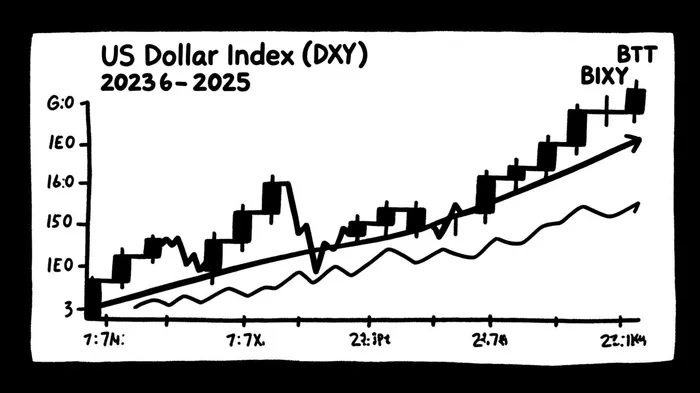
Bitcoin's emergence as a "digital gold" has been bolstered by its fixed supply and decentralized nature, yet its price dynamics remain deeply intertwined with macroeconomic indicators. A 2025 Frontiers study reveals that the U.S. Dollar Index (DXY) exerts a significantly stronger negative influence on BTC prices than gold-ranging from 21 to 27 times greater. This sensitivity underscores Bitcoin's role as a hedge against fiat currency devaluation but also highlights its vulnerability to dollar strength. For instance, in Q3 2025, a potential rebound in the DXY could pressure Bitcoin further, as a stronger dollar typically reduces demand for risk-on assets, as that study notes.
However, Bitcoin's resilience during financial instability is not absolute. While it historically strengthens when the DXY weakens, early 2025 saw a 9% decline in the DXY paired with a 6% drop in Bitcoin, signaling a decoupling, according to an FXStreet analysis. Analysts attribute this divergence to shifting investor behavior amid a global trade war, where Bitcoin's perceived risk profile has increasingly aligned with equities rather than traditional safe-haven assets, that analysis argues. This evolution complicates its role as a long-term store of value, as macroeconomic stability no longer guarantees price retention.
Ethereum's Context-Dependent Volatility
Ethereum's macroeconomic resilience is more nuanced. Unlike Bitcoin, ETH's relationship with inflation is context-dependent, and it becomes particularly vulnerable during financial downturns, according to a ScienceDirect study. For example, high inflation rates have historically driven Bitcoin's price upward, but Ethereum's response is less predictable. This volatility stems from Ethereum's utility-driven demand-its role in decentralized finance (DeFi) and smart contracts makes it more susceptible to shifts in investor sentiment and technological adoption. During bearish markets, Ethereum's price often lags behind Bitcoin's, reflecting its dual exposure to macroeconomic risks and network-specific challenges, that study finds.
Macroeconomic Indicators: Inflation, Yields, and Global Stability
Inflation remains a pivotal factor shaping crypto markets. Empirical data shows that rising Treasury yields have a positive effect on cryptocurrency returns, as they attract investors seeking higher-yield alternatives, according to the Frontiers study. Conversely, disinflationary periods tend to boost Bitcoin and Ethereum, aligning with traditional safe-haven dynamics, per a Dapp.Expert analysis. The Consumer Price Index (CPI) has historically driven downward trends for cryptocurrencies during inflation spikes, yet recent data suggests this correlation is softening as institutional investors treat Bitcoin more like a stock than a commodity, the FXStreet analysis suggests.
The U.S. dollar's dominance also plays a critical role. A 2025 analysis found that Bitcoin's inverse correlation with the DXY has weakened, with BTC now responding more to equity market trends than gold or fiat devaluation, according to the FXStreet analysis. This shift implies that macroeconomic stability alone may not safeguard Bitcoin's long-term value retention, as its price increasingly reflects broader financial system risks.
Long-Term Value Retention: A Balancing Act
While Bitcoin's fixed supply and decentralized network support its long-term value proposition, macroeconomic factors continue to dominate short-term price movements. Studies indicate that cryptocurrency price shocks contribute to 18–27% of financial market spillovers, influencing equities and commodities, the FXStreet analysis notes. This integration into global financial systems raises questions about crypto's ability to retain value independently of macroeconomic cycles.
For investors, the key lies in diversification and macroeconomic awareness. Bitcoin's sensitivity to the DXY and Treasury yields, coupled with Ethereum's context-dependent volatility, necessitates a strategic approach that accounts for both inflationary pressures and global economic stability, as noted by the ScienceDirect study and the Frontiers study.
Conclusion
The cryptocurrency market's stability and long-term value retention are inextricably linked to macroeconomic dynamics. While Bitcoin's role as a digital store of value remains intact, its price is increasingly influenced by factors beyond inflation and dollar strength, such as equity market trends and geopolitical risks. Ethereum's volatility further complicates the landscape, requiring investors to adopt a nuanced understanding of macroeconomic indicators. As the financial system evolves, so too must investment strategies to navigate the interplay between crypto assets and global economic forces.






Comentarios
Aún no hay comentarios