
Cryptocurrency Market at a Potential Bottom? Decoding Fear and Greed in a Volatile Landscape
The cryptocurrency market has long been a theater of emotional extremes, where fear and greed drive price action more decisively than fundamentals. As of November 2025, the Cryptocurrency Fear & Greed Index stands at 26, firmly in the "Fear" category according to the Fear & Greed Meter, with some platforms reporting even lower readings, such as 15, classified as "Extreme Fear" as reported by Weex. This stark sentiment, coupled with historical patterns, raises a critical question for long-term investors: Is this a strategic entry point, or merely another bearish capitulation?
The Mechanics of Fear: What the Index Reveals
The Fear & Greed Index synthesizes multiple metrics-volatility, market momentum, social media trends, BitcoinBTC-- dominance, and derivatives activity-to gauge investor psychology. When the index plunges below 30, it signals a market dominated by panic selling and risk aversion. For instance, in mid-November 2025, the index hit 11, its lowest since the FTX collapse in 2022, coinciding with a $2 billion liquidation event and Bitcoin breaching $85,000 support. Such extremes often reflect overcorrections, where retail and institutional investors alike abandon positions, creating a vacuum for contrarian buyers.
Historically, extreme fear has preceded significant rallies, but not without caveats. Data from 2020–2025 shows that while 63% of periods with the index below 10 ended positively, gains were modest and inconsistent, with a median 30-day return of just 2.1%. This suggests that while fear may mark a short-term bottom, sustained recovery requires time-often 30 days or more-for markets to absorb selling pressure and form accumulation zones as noted in investing analysis.
November 2025: A Case Study in Sentiment Cycles
The November 2025 selloff exemplifies the cyclical nature of crypto sentiment. After hitting 11 in mid-November, the index rebounded to 28 by November 30, signaling tentative stabilization. This partial recovery was driven by technical factors, such as Bitcoin finding support near $85,000, and improved institutional buying interest. However, optimism remains fragile, as volatility and social media pessimism continue to weigh on sentiment.
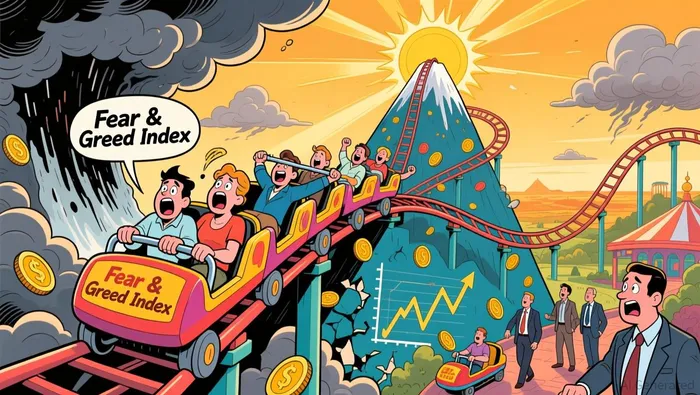 Long-term investors must contextualize these movements. For example, the index's drop to 11 in 2025 mirrors its behavior during the 2022 FTX crash, where fear eventually gave way to a multi-month rally. Yet, as noted by market analysts, extreme fear levels often precede strong rallies, but they rarely guarantee immediate reversals. This underscores the need for patience and a multi-faceted approach to entry strategies.
Strategic Entry Points: Balancing Sentiment and Fundamentals
For investors seeking to capitalize on fear-driven dips, three principles emerge from historical data:
Contrarian Timing: The adage "be greedy when others are fearful" holds weight. When the index falls below 30, it often signals oversold conditions. For example, Bitcoin's 2023 recovery began after the index hit 12 in early 2023. However, investors should avoid buying at the lowest point and instead use gradual accumulation to mitigate timing risks.
Technical Validation: Sentiment alone is insufficient. The November 2025 rebound gained traction only after Bitcoin formed a bullish engulfing pattern on daily charts and reclaimed key moving averages. Technical indicators like RSI divergence and volume profiles can confirm whether fear is translating into buying interest.
3. Diversification and Position Sizing: Given the index's volatility, long-term investors should allocate capital across a basket of assets (e.g., Bitcoin, EthereumETH--, and undervalued altcoins) rather than overexposing to a single asset. This approach mitigates risks from sector-specific corrections.
The Road Ahead: Patience as a Virtue
While the current fear metrics suggest a potential inflection point, history cautions against overconfidence. The index's rise to 28 in late November hints at a possible stabilization, but sustained recovery will depend on macroeconomic factors-such as Fed policy and regulatory clarity-that the index does not capture. Investors should treat the current environment as a "buying opportunity with a caveat," using the Fear & Greed Index as one tool among many to assess risk-reward ratios.
In conclusion, the November 2025 market reflects a classic case of fear-driven capitulation. For long-term investors, this presents a disciplined opportunity to accumulate assets at discounted levels, provided they couple sentiment analysis with technical and fundamental due diligence. As the market navigates its next phase, patience and adaptability will remain the cornerstones of a resilient strategy.







Comentarios
Aún no hay comentarios