
Cryptocurrency Adoption Through Mobile Integration: Strategic Partnerships Driving Mass-Market Onboarding in 2025
In 2025, cryptocurrency adoption has reached a tipping point, driven by strategic partnerships between blockchain platforms and mobile technology companies. These collaborations are dismantling barriers to entry, transforming crypto from a niche asset into a mainstream financial tool. By embedding digital asset capabilities into everyday devices and services, tech giants and crypto-native firms are creating seamless on-ramps for billions of users.
The Mobile-Crypto Synergy: A New Era of Accessibility
The integration of cryptocurrency into mobile ecosystems has been catalyzed by partnerships that prioritize user experience and security. A landmark example is the Samsung–Coinbase alliance, which brought integrated crypto wallet access to over 75 million Galaxy users. By leveraging Samsung's secure hardware and Coinbase's institutional-grade infrastructure, the partnership enabled users to store, trade, and stake digital assets directly from their smartphones. Features like zero trading fees and enhanced staking rewards have made crypto management as intuitive as traditional banking.
Similarly, AppleAAPL--, X, and Airbnb are exploring stablecoin integrations to streamline cross-border payments. These efforts aim to reduce transaction costs and settlement times, addressing a critical pain point for global commerce. Meanwhile, T-Mobile's collaboration with Helium Mobile has introduced a novel model: users earn cryptocurrency by contributing to a decentralized wireless network, offering low-cost data plans while incentivizing network participation. Such innovations highlight how mobile-first strategies are democratizing access to crypto rewards.
Institutional and Institutional-Grade Partnerships: Scaling Trust
Beyond retail users, strategic alliances are reshaping institutional adoption. PNC Bank and Coinbase have partnered to provide institutional clients with secure, compliant crypto services via Coinbase's Crypto-as-a-Service (CaaS) platform. This collaboration underscores the growing demand for institutional-grade custody and trading solutions, with 83% of institutional investors planning to increase crypto allocations in 2025, according to EY.
In the real estate sector, Ripple and Ctrl Alt are tokenizing property in Dubai, enabling fractional ownership through the XRP Ledger. This government-backed initiative allows investors to purchase stakes starting at AED 2,000, demonstrating blockchain's potential to unlock liquidity in traditionally illiquid assets. Such partnerships are notNOT-- only expanding crypto's utility but also attracting conservative investors seeking tangible returns.
Technological Catalysts: Layer 2, DeFi, and AI
The acceleration of mass adoption is underpinned by technological advancements. Layer 2 scaling solutions and interoperability protocols have reduced transaction costs and improved throughput, making crypto viable for everyday use. Meanwhile, decentralized finance (DeFi) platforms are gaining traction, with 24% of users already engaging in staking and derivatives, according to the Global Crypto Adoption Report 2025. Regulatory clarity, such as the U.S. Senate's passage of the GENIUS Act, has further bolstered confidence in stablecoin frameworks.
Artificial intelligence is also playing a pivotal role. AI-driven tools are automating portfolio management, fraud detection, and user onboarding, reducing friction for new adopters. For instance, Bitget's collaboration with Indian crypto educator Pushpendra Singh in Southeast Asia is promoting blockchain and AI literacy, fostering a generation of informed Web3 users.
Demographic Shifts: Younger, Broader, and Borderless
Demographically, crypto adoption is skewing younger and more diverse. 51% of global crypto holders are aged 18–34, with 61% identifying as male, reflecting a generational shift toward digital finance, as reported in the Global Crypto Adoption Report 2025. In regions like South Asia and Southeast Asia, stablecoins like USDTUSDT-- and USDCUSDC-- are facilitating remittances and inflation hedging, with India, Vietnam, and Nigeria leading adoption. Mobile integration has been critical in these markets, where smartphone penetration outpaces traditional banking infrastructure.
Regulatory and Institutional Tailwinds
Regulatory progress has been a linchpin for adoption. The U.S. Strategic BitcoinBTC-- Reserve and reforms like the GENIUS Act have institutionalized crypto as a strategic asset, as noted in a Coingape analysis. Meanwhile, 80+ public companies now hold Bitcoin on their balance sheets, signaling a normalization of digital assets in corporate treasuries. These developments are attracting institutional capital, with Bitcoin projected to reach $120,000–$140,000 by year-end, according to the same Coingape analysis.
Conclusion: A Tipping Point for Global Finance
The convergence of mobile integration, institutional partnerships, and technological innovation has positioned 2025 as a watershed year for crypto adoption. As smartphones become gateways to decentralized finance, the barriers between traditional and digital ecosystems are dissolving. For investors, this represents a unique opportunity to capitalize on a market poised for exponential growth. The next phase of adoption will likely be defined by AI-driven platforms, tokenized real-world assets, and cross-border payment networks-each accelerated by the strategic alliances reshaping the industry today. 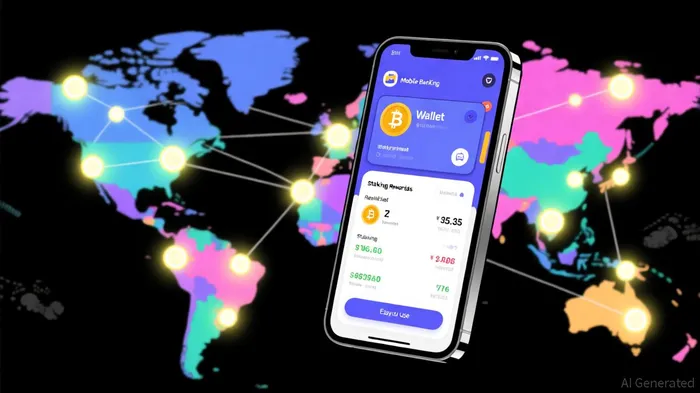





Comentarios
Aún no hay comentarios