
Crypto Treasury Share Buybacks and the Credibility Race: A New Era of Investor Trust in Blockchain Projects
The cryptocurrency and blockchain industry is witnessing a seismic shift in how companies signal trust and financial discipline to investors. At the heart of this transformation lies the concept of the "credibility race"—a competitive dynamic where blockchain projects and crypto treasury firms leverage strategic share buybacks, transparent capital allocation, and digital asset holdings to establish themselves as credible, long-term value creators. This race is notNOT-- merely about financial engineering; it reflects a deeper institutionalization of blockchain-based assets into mainstream corporate finance, driven by investor demand for accountability and innovation.
The Mechanics of the Credibility Race
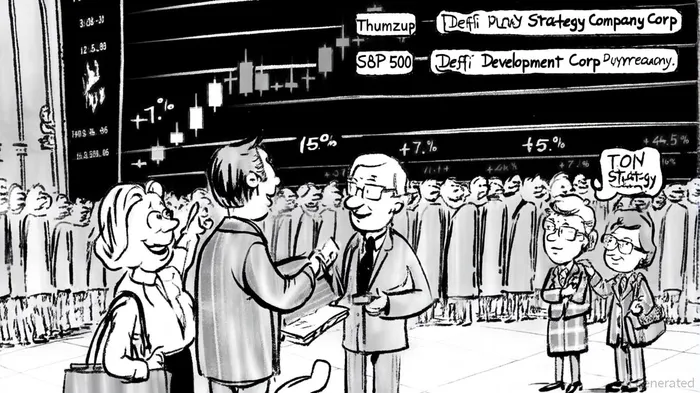
Crypto treasury share buybacks have emerged as a cornerstone of this credibility race. By repurchasing shares, companies demonstrate confidence in their own stock and align their interests with shareholders. For instance, Thumzup, a media company linked to Donald Trump Jr., increased its buyback program from $1 million to $10 million, resulting in a 7% stock price surge[1]. Similarly, DeFi Development Corp (DFDV) expanded its buyback to $100 million, driving a 5% gain[1]. These moves signal disciplined capital management, a critical differentiator in an industry historically plagued by speculative hype and opaque governance.
Analysts argue that the credibility race is no longer about merely stating "we hold Bitcoin"—it's about showcasing "we act professionally". As Ryan McMillin of Merkle Tree Capital notes, investors now demand clear strategies involving buybacks, dividends, and treasury transparency as proof of financial responsibility[1]. This shift mirrors broader trends in traditional finance, where buybacks are a standard tool for value creation, but it is amplified in crypto by the dual pressures of regulatory scrutiny and market volatility.
Academic Foundations and Market Signaling
The concept of credibility in blockchain projects is not new. Academic research has long emphasized the role of signaling theory in decentralized systems, where on-chain activity and governance participation build trust[2]. However, the application of these principles to corporate treasuries is novel. A 2025 study in Finance Research Letters highlights how blockchain-based reputation systems—such as Ethos Network—quantify trust through peer reviews and slashing mechanisms[2]. These systems are now being adapted to corporate contexts, where share buybacks and crypto holdings serve as analogous "signals" of credibility.
For example, MicroStrategy (now Strategy) has become a poster child for this approach, raising $2.5 billion through convertible notes to acquire over 600,000 Bitcoin[3]. By treating BitcoinBTC-- as a strategic reserve asset, the company positions itself as a forward-thinking entity, attracting investors who view digital assets as a hedge against fiat devaluation. This strategy is not limited to Bitcoin; firms like SharpLink Gaming have allocated $425 million to EthereumETH--, reflecting growing institutional confidence in the broader crypto ecosystem[3].
Risks and Market Realities
Despite the allure, the credibility race is fraught with risks. Not all buybacks yield positive outcomes. TON Strategy Company saw its stock decline by 7.5% after a buyback announcement[1], underscoring the market's sensitivity to execution quality and timing. Critics also warn against overleveraging, as some firms use debt to fund buybacks—a practice that undermines the original premise of crypto treasuries, which relies on asset appreciation rather than financial engineering[2].
Moreover, the credibility race has created a financial boom for intermediaries. Custodians like BitGo now manage $100 billion in assets under custody, while investment banks and asset managers profit from every trade, transfer, and lending deal[3]. This ecosystem, however, raises questions about long-term sustainability. Companies trading below the net asset value of their crypto holdings—such as Semler Scientific and Twenty One Capital—highlight the fragility of the model when market conditions shift[2].
The Future of the Credibility Race
As the crypto treasury market matures, the credibility race is likely to intensify. Over 152 publicly traded companies now hold more than 950,000 Bitcoin, valued at over $110 billion[3]. This trend is expected to expand beyond Bitcoin to include Ethereum, SolanaSOL--, and even niche assets like TRX, as firms seek to differentiate their treasuries[3]. However, success will depend on three key factors:
1. Consistency: Maintaining crypto holdings through both bullish and bearish cycles to prove long-term commitment[3].
2. Transparency: Providing real-time, auditable data on treasury allocations and buyback progress[1].
3. Innovation: Exploring hybrid strategies, such as tokenized real-world assets or yield-generating staking, to enhance returns[2].
Conclusion
The credibility race in blockchain projects and crypto treasuries represents a pivotal moment in the evolution of digital assets. By adopting share buybacks and transparent capital strategies, companies are not only responding to investor demands but also redefining what it means to be a credible, innovative entity in the 21st century. However, as with any high-stakes competition, the winners will be those who balance ambition with prudence, leveraging blockchain's unique properties to build trust in an increasingly skeptical world.





Comentarios
Aún no hay comentarios