
Crypto.com's Strategic Move for a US National Bank Charter and Its Implications for Crypto-Friendly Financial Infrastructure
Regulatory Progress: A New Paradigm for Crypto Infrastructure
The U.S. regulatory landscape for crypto has evolved significantly in recent years. The approval of federal charters for crypto-native firms like Anchorage Digital and Paxos has demonstrated regulators' willingness to accommodate innovation while maintaining compliance standards. For instance, Anchorage Digital Bank, the first federally chartered crypto bank, has pioneered white-label stablecoin solutions, leveraging its regulatory headstart to secure partnerships with major institutions like BlackRockBLK--. Similarly, Paxos's ongoing pursuit of a national trust bank charter highlights the growing demand for federally sanctioned infrastructure to support tokenized assets and digital securities, as detailed in a ValueWalk report.
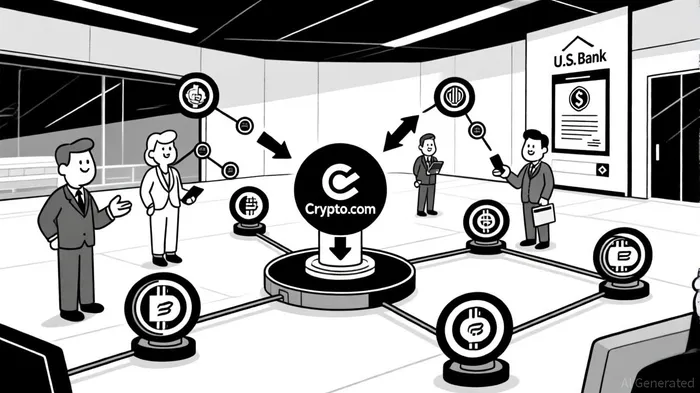
Crypto.com's application follows this trajectory. By operating under a single federal regulatory framework, the company can bypass the fragmented state-level compliance challenges that have historically hindered institutional participation. As stated by Crypto.com, its focus is not on traditional banking but on expanding custody offerings and Digital Asset Treasuries under a regulated umbrella, according to the Crypto.com filing. This strategy mirrors the approach of early adopters like Anchorage, which has shown that federal oversight can enhance trust and operational efficiency for institutional clients.
Institutional Adoption: The Role of Regulatory Clarity
Regulatory clarity has been a cornerstone of institutional crypto adoption. Between 2023 and 2025, frameworks such as the U.S. and Europe's have provided legal certainty, enabling banks and hedge funds to integrate crypto assets into their portfolios, according to a RiskWhale analysis. A 2025 Chainup survey , . , showcasing the viability of regulated investment vehicles; the RiskWhale analysis also highlighted these ETF inflows.
Crypto.com's charter application could amplify this trend. By offering federally regulated custody and staking services, the company addresses a key institutional pain point: the lack of secure, compliant infrastructure for managing digital assets. This is particularly relevant for institutional-grade products like tokenized securities and stablecoins, which require robust regulatory frameworks to mitigate risks, as Anchorage has demonstrated. As more firms seek federal charters, the crypto industry is moving toward a model where compliance and innovation coexist, reducing friction for institutional entrants.
Challenges and Opportunities
While the push for federal charters signals optimism, challenges remain. Critics argue that centralized regulatory models may conflict with the decentralized ethos of crypto. However, the industry's response has been pragmatic: firms like Crypto.com and Anchorage are demonstrating that compliance can coexist with innovation, provided it is structured to preserve user autonomy and security, as noted in Crypto.com's filing.
Moreover, the success of these initiatives hinges on global regulatory harmonization. As the U.S. and Europe refine their frameworks, cross-border alignment will be critical to prevent fragmentation and ensure seamless institutional operations. For example, the GENIUS Act's emphasis on stablecoin regulation has already reinforced U.S. leadership in digital finance, attracting international investors seeking clarity-an outcome Anchorage's chartered stablecoin work has helped illustrate.
Conclusion
Crypto.com's pursuit of a U.S. National Bank Charter is more than a strategic maneuver-it is a reflection of the industry's maturation. By aligning with regulatory progress, the company is positioning itself to capitalize on the growing institutional demand for crypto infrastructure. As federal charters become more common, they will likely accelerate the adoption of digital assets, enabling institutions to navigate the space with confidence. For investors, this represents a pivotal opportunity: the convergence of regulatory clarity and institutional capital could redefine the crypto landscape, transforming it from a speculative niche into a cornerstone of global finance.





Comentarios
Aún no hay comentarios