
Crypto Scam Vulnerabilities in Fintech Platforms: Lessons from Betterment and the Path to Robust Risk Mitigation
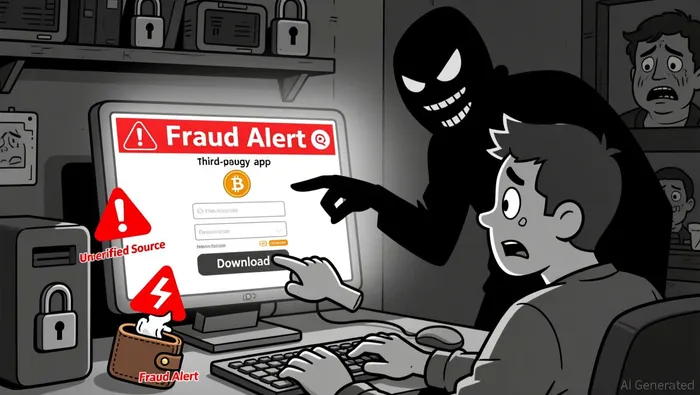
The 2025 Betterment crypto scam incident exposed critical vulnerabilities in fintech platforms, particularly in third-party system security, fraud prevention, and investor education. A user reported being lured into a suspicious verification process involving a third-party app that required submitting a photo of themselves holding their ID-a practice that raised alarms about data privacy and insecure authentication methods. This incident is not an isolated event but a symptom of a broader systemic issue in the crypto ecosystem, where rapid innovation often outpaces risk management. As digital asset portfolios grow in complexity, investors and institutions must adopt a multi-layered approach to mitigate risks, balancing technological safeguards with regulatory compliance and user education.
The Third-Party Security Crisis
The Betterment incident underscores the fragility of third-party integrations in crypto platforms. Cyberattacks increasingly exploit vulnerabilities in vendor ecosystems, with 38% of invoice fraud cases and 43% of phishing attacks originating from compromised third-party systems. Attackers leverage AI and social engineering to infiltrate trusted relationships, making continuous monitoring of vendor ecosystems a necessity. For instance, the Betterment user's experience highlights how insecure APIs and unverified third-party apps can become entry points for fraud.
Post-2025 regulatory shifts, such as the Department of Defense's CMMC 2.0 framework, now mandate stricter third-party accountability. Contractors must register systems handling sensitive data in the SPRS and maintain "current" cybersecurity status throughout their lifecycle. These changes signal a normalization of cybersecurity as a contractual obligation, requiring fintech platforms to adopt zero-trust architectures and continuous threat exposure monitoring.
Fraud Prevention: From Reactive to Proactive
Traditional fraud prevention methods are no longer sufficient. The rise of synthetic identity fraud-responsible for over 80% of new account fraud- demands advanced identity verification tools, such as behavioral biometrics and real-time analytics. Betterment's incident revealed a failure in this area, as the third-party verification process lacked robust multi-factor authentication.
AI-powered fraud detection systems are now critical. By 2025, 55% of companies had adopted AI tools to detect anomalies and prevent fraudulent transactions. These systems also combat deepfake-driven scams and account takeovers, which are increasingly sophisticated. For example, real-time transaction monitoring could have flagged the suspicious Betterment-Gemini transfer before it escalated.
Investor Education: A Regulatory and Ethical Imperative
The SEC's 2025 shift toward investor education over enforcement highlights a growing recognition that users must understand the risks of digital assets. An SEC investor bulletin warned of practices like rehypothecation and pooled customer assets, which amplify systemic risk during market stress. Meanwhile, a Betterment Advisor Solutions survey found that 65% of financial advisors were concerned about clients using unregulated generative AI platforms for crypto advice, underscoring a gap in user literacy.
Investor education must evolve beyond basic warnings. Platforms should provide resources on spotting phishing attempts, understanding custody models, and evaluating third-party risks. For instance, Betterment's updated portfolio strategies-such as lower-cost crypto ETFs and expanded bond access-aim to balance innovation with risk mitigation. However, these tools are only effective if users understand how to use them.
Regulatory and Industry Responses: A New Era of Accountability
Regulatory frameworks are tightening in response to incidents like Betterment's. The SEC's 2025 amendments to Regulation S-P now require written cybersecurity policies, incident response plans, and 30-day breach notifications for sensitive customer data. Similarly, NIST's updated incident response guide (SP 800-61r3) emphasizes continuous risk management.
Looking ahead, CISA's 2026 Cyber Incident Reporting for Critical Infrastructure Act (CIRCIA) will mandate 72-hour reporting of substantial cyber incidents and 24-hour reporting of ransom payments. These timelines force organizations to prioritize real-time monitoring and rapid response. For crypto platforms, this means integrating AI-driven threat intelligence and fostering a culture of cybersecurity awareness among employees and users.
Conclusion: A Holistic Approach to Risk Mitigation
The Betterment incident serves as a cautionary tale for the fintech industry. Mitigating crypto scam vulnerabilities requires a holistic strategy:
1. Strengthening third-party security through zero-trust architectures and continuous vendor monitoring.
2. Leveraging AI and real-time analytics to detect and prevent fraud.
3. Educating investors on risks and best practices, supported by regulatory guidance.
4. Aligning with evolving regulations to ensure compliance and accountability.
As digital asset portfolios become integral to modern investing, the stakes for security and education have never been higher. The path forward lies in balancing innovation with vigilance, ensuring that the next generation of fintech platforms prioritizes user safety as much as growth.







Comentarios
Aún no hay comentarios