
Crypto Regulatory Clarity and Institutional Adoption in Europe in 2026: Strategic Entry Points for Investors
The European Union's Markets in Crypto-Assets Regulation (MiCA), which entered into force in June 2023, has catalyzed a seismic shift in the digital asset landscape. By December 2025, the finalization of Level 2 and Level 3 measures under MiCA had established a robust framework for transparency, compliance, and market integrity, positioning Europe as a global leader in crypto regulation according to ESMA. As 2026 unfolds, the regulatory clarity provided by MiCA is not only reshaping the euro stablecoin market but also unlocking strategic investment opportunities for institutional and retail investors alike. This article explores the key entry points for capital in a maturing European crypto market, emphasizing the interplay between regulatory alignment, institutional-grade products, and the tokenization of real-world assets.
MiCA-Driven Market Maturation and Stablecoin Dominance
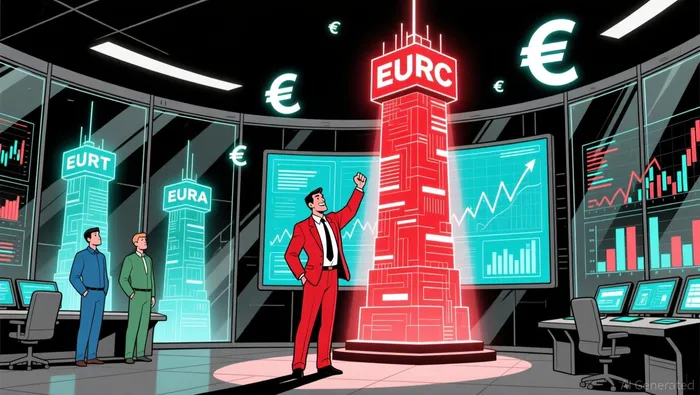
MiCA's enforcement has already begun to redefine the euro stablecoin ecosystem. By mandating compliance with stringent requirements-such as white paper formatting, data standards, and order book record-keeping- non-compliant stablecoins like EURT and EURA have seen a sharp decline in market share. In contrast, MiCA-compliant stablecoins, particularly Circle's EURCEURC--, have captured 41% of the euro stablecoin market, signaling a broader shift toward regulated assets according to market analysis. This trend underscores the importance of aligning investments with MiCA-compliant stablecoins, which are now the preferred vehicle for cross-border transactions and institutional liquidity management according to industry reports.
For investors, the dominance of EURC and similar assets represents a low-risk entry point into the European crypto market. As traditional financial institutions, including ING and UniCredit, expand their stablecoin offerings, the demand for MiCA-compliant assets is expected to grow further, creating a flywheel effect for liquidity and adoption according to market forecasts.
Institutional-Grade Products: ETPs and Tokenized Real-World Assets
The rise of institutional-grade crypto products has been another cornerstone of MiCA's impact. Exchange-traded products (ETPs) for BitcoinBTC-- and EthereumETH--, which provide a familiar and regulated interface for traditional investors, have seen surging demand. By 2026, 68% of institutional investors are either already invested in or planning to allocate capital to BTC ETPs, driven by the regulatory certainty MiCA has provided. This trend is mirrored in the broader European market, where platforms like Bitpanda and OKX are leveraging MiCA licenses to expand their institutional services according to industry reports.
Beyond ETPs, tokenized real-world assets (RWAs) have emerged as a critical investment category. By late 2025, the total value of tokenized RWAs onchain reached $18.6 billion, with major asset managers like BlackRock and Franklin Templeton launching regulated tokenized products such as government bonds and money market funds. These instruments bridge traditional finance and blockchain infrastructure, offering investors exposure to crypto without the volatility of native digital assets. For 2026, the tokenization of treasuries and other high-quality assets is expected to accelerate, supported by operational readiness demonstrated by platforms like DTCC according to industry analysis.
Strategic Entry Points for 2026
Investors seeking to capitalize on MiCA-driven market maturation should prioritize three key areas:
1. MiCA-Compliant Stablecoins: As the backbone of cross-border transactions and institutional liquidity, EURC and similar assets will remain central to European crypto infrastructure.
2. Tokenized RWAs: With regulatory clarity and operational scalability, tokenized treasuries and bonds offer a low-risk, high-liquidity entry point into the digital asset class.
3. Institutional ETPs: The growing adoption of ETPs by institutional investors-particularly in Bitcoin and Ethereum-reflects a broader shift toward regulated exposure, making these products a strategic lever for capital allocation.
Regional trends also highlight opportunities. The EU's regulatory leadership has spurred global alignment, with the U.S. passing the GENIUS Act in July 2025 to harmonize crypto frameworks according to market analysis. This cross-jurisdictional coordination reduces friction for investors seeking to diversify across European and North American markets.
Challenges and Considerations
While MiCA has fostered innovation, it has also introduced compliance challenges for smaller firms, with licensing costs and prescriptive rules favoring larger institutions. Investors should remain cautious of market concentration risks and prioritize platforms with proven operational track records according to industry experts. Additionally, the maturation of DeFi protocols with institutional-grade features-such as enhanced custody solutions and on-chain settlement-will further refine the investment landscape in 2026 according to market forecasts.
Conclusion
The EU's MiCA regulation has not only stabilized the European crypto market but also laid the groundwork for a new era of institutional adoption. As 2026 progresses, investors who align with MiCA-compliant assets, tokenized RWAs, and institutional ETPs will be well-positioned to capitalize on the continent's regulatory leadership. The coming months will likely see a continued migration of capital into regulated digital assets, driven by the convergence of compliance, innovation, and global alignment.







Comentarios
Aún no hay comentarios