
Crypto Regulation and Political Dynamics: Opportunities in a Post-Trump Era
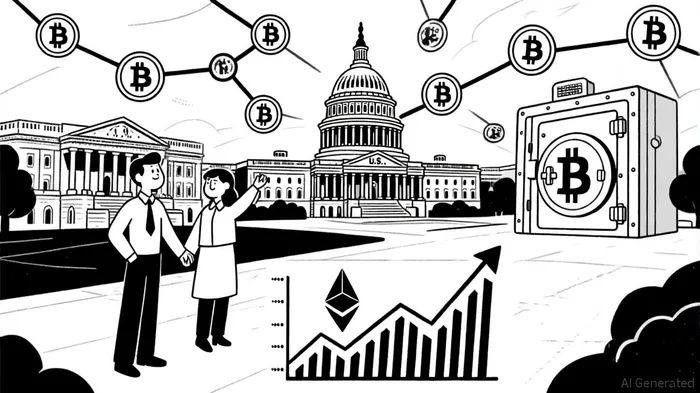
The U.S. cryptocurrency landscape has undergone a seismic shift since the Trump administration's 2025 regulatory overhauls. With the passage of the Guiding and Establishing National Innovation for U.S. Stablecoins Act of 2025 (GENIUS Act) and the ongoing debate over the Digital Asset Market Clarity Act (CLARITY Act), the sector now faces a pivotal juncture. For investors, this evolving regulatory environment presents both risks and opportunities, particularly as institutional adoption accelerates and decentralized finance (DeFi) gains legitimacy.
Regulatory Clarity and Stablecoin Innovation
The GENIUS Act, signed into law in July 2025, has become a cornerstone of U.S. crypto policy, mandating that stablecoin issuers maintain fully backed reserves in U.S. Treasuries or high-quality liquid assets [1]. This framework has not only stabilized investor confidence but also spurred growth in Ethereum-based stablecoins, which now dominate the market. According to a report by Grayscale, Ethereum's performance surged 16% in August 2025, outpacing Bitcoin's decline, as the blockchain solidified its role as the primary infrastructure for stablecoin issuance [2].
The Securities and Exchange Commission (SEC) has further reinforced this momentum by rescinding restrictive measures like Staff Accounting Bulletin No. 121 (SAB 121), which previously barred banks from offering crypto custody services [3]. This deregulation has opened the door for major financial institutions to enter the space, with BlackRock's iShares BitcoinBTC-- Trust alone attracting $57.4 billion in inflows by September 2025 [4].
Institutional Adoption and Strategic Reserves
The Trump administration's creation of a Strategic Bitcoin Reserve and a Digital Asset Stockpile has added another layer of institutional credibility to cryptocurrencies. By consolidating seized assets like Bitcoin and Ether under the Treasury, the government has signaled its intent to treat digital assets as legitimate reserve holdings [5]. This move has been mirrored by private companies, with digital asset treasuries (DATs) purchasing $7.2 billion in Ether in August 2025 alone [2].
Investors should also note the rise of tokenized real-world assets (RWAs), particularly in real estate and commodities. Blockchain platforms like EthereumETH-- are enabling fractional ownership and enhanced liquidity, creating new avenues for portfolio diversification [2]. For example, tokenized real estate projects now offer yields comparable to traditional REITs while leveraging blockchain's transparency and efficiency.
DeFi and the Future of Financial Infrastructure
Decentralized finance (DeFi) has emerged as a key beneficiary of the administration's pro-innovation stance. The SEC's Crypto 2.0 task force, led by Commissioner Hester Peirce, has prioritized clarifying the regulatory status of DeFi protocols, reducing the threat of enforcement actions that stifled growth under the previous administration [3]. This shift has led to a surge in Ethereum-based DeFi platforms, with total value locked (TVL) in the sector rising by 40% year-to-date [2].
However, challenges remain. The CLARITY Act's uncertain legislative path—competed by Senate proposals—introduces regulatory ambiguity, particularly regarding the division of jurisdiction between the SEC and CFTC [1]. Investors must monitor these developments closely, as a fragmented regulatory framework could hinder long-term growth.
Navigating Risks and Strategic Positioning
While the regulatory environment is more favorable than ever, risks persist. The administration's protectionist trade policies, for instance, have driven up costs for crypto mining operations reliant on Chinese hardware, triggering short-term market corrections [5]. Additionally, the absence of a U.S. central bank digital currency (CBDC) leaves the door open for foreign competitors to dominate the global digital asset race [1].
To mitigate these risks, investors should adopt a diversified approach. Allocating capital to Ethereum-based stablecoins, DeFi protocols, and tokenized RWAs offers exposure to multiple facets of the crypto ecosystem. Meanwhile, hedging against geopolitical volatility through DATs and strategic reserves can provide stability in an unpredictable market.
Conclusion
The post-Trump era has redefined the U.S. crypto landscape, blending regulatory clarity with innovation-driven policies. For investors, the key lies in leveraging these shifts to build resilient portfolios that capitalize on institutional adoption, DeFi growth, and tokenized assets. As the CLARITY Act's fate remains unresolved, strategic positioning now will determine long-term success in this dynamic market.






Comentarios
Aún no hay comentarios