
U.S. Crypto Regulation 2025: A Catalyst for Global Fintech Innovation and Investment
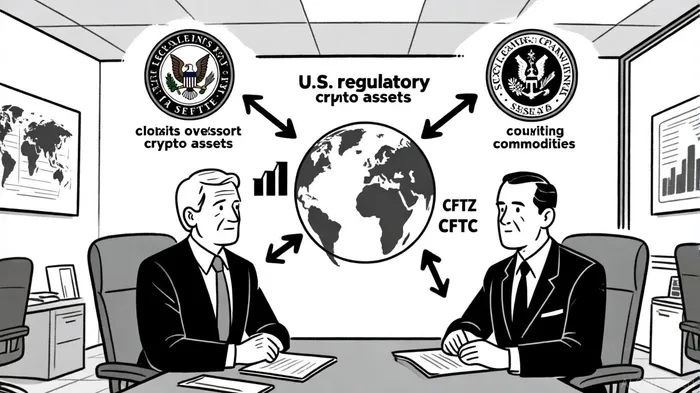
The U.S. Securities and Exchange Commission's (SEC) Spring 2025 regulatory agenda has ignited a paradigm shift in the crypto industry, positioning the United States as a pivotal force in shaping the future of global fintech innovation. By prioritizing clarity, investor protection, and technological integration, the SEC's proposals are not only recalibrating domestic markets but also setting benchmarks that ripple across international financial systems. This analysis explores how U.S.-led regulatory advancements could redefine investment opportunities in fintech, from stablecoin ecosystems to decentralized finance (DeFi), while navigating geopolitical and competitive dynamics.
The SEC's 2025 Agenda: Balancing Innovation and Oversight
The SEC's Spring 2025 agenda underscores a strategic pivot toward structured rulemaking, moving away from enforcement-driven approaches under previous administrations. Key initiatives include clarifying the regulatory status of crypto assets, updating custody rules for distributed ledger technology (DLT), and integrating crypto trading into existing market structures via Alternative Trading Systems (ATSs) and national exchanges [1]. These measures aim to reduce compliance burdens while fostering innovation. For instance, the proposed “Crypto Market Structure Amendments” seek to harmonize crypto trading with traditional securities markets, enabling 24/7 trading and real-time settlement [2].
Chair Paul Atkins has emphasized a deregulatory ethos, withdrawing 14 rulemaking items from the prior administration deemed inconsistent with a “smart, effective” regulatory philosophy [1]. This shift signals a focus on market efficiency and investor confidence, which could attract institutional capital to crypto markets. The SEC's Crypto Task Force is also exploring an exemptive order to allow DLT-based securities issuance and settlement, potentially unlocking $1.2 trillion in tokenized assets by 2030 [3].
Legislative Clarity: The Responsible Financial Innovation Act vs. the CLARITY Act
Congressional efforts to define the regulatory boundaries between the SEC and the Commodity Futures Trading Commission (CFTC) are further stabilizing the landscape. The Senate's Responsible Financial Innovation Act introduces “ancillary assets,” a category that shields noncustodial software developers from liability, while the House's CLARITY Act classifies digital assets as “commodities” under CFTC jurisdiction [4]. These bills aim to resolve jurisdictional ambiguities that have stifled innovation, particularly in decentralized technologies.
The CLARITY Act's “maturity” test, which allows tokens to transition from securities to commodities upon achieving decentralization, offers a clear pathway for projects to scale without regulatory overhang [5]. Meanwhile, the SEC's proposed Innovation Exemption for DeFi reduces enforcement risks for developers, encouraging experimentation in self-custody solutions and automated market makers [5].
Global Implications: U.S. Leadership and Geopolitical Responses
The U.S. regulatory framework is reshaping global fintech dynamics, particularly in stablecoin and cross-border payment ecosystems. The GENIUS Act, signed into law in July 2025, mandates that payment stablecoins be 100% backed by high-quality liquid assets like U.S. Treasuries, reinforcing the dollar's dominance in digital finance [6]. This has spurred traditional banks like JPMorgan and Citigroup to enter the stablecoin space, creating new opportunities for institutional-grade crypto custody and lending [6].
However, U.S. leadership has prompted countermeasures from rival economies. China, for instance, views dollar-backed stablecoins as a threat to its financial sovereignty and is accelerating the development of its yuan-backed e-CNY digital currency [7]. The European Union, meanwhile, is advancing a digital euro initiative to counter U.S. stablecoin dominance, while Hong Kong and Singapore are adopting balanced frameworks to attract global stablecoin activity [7]. These responses highlight the geopolitical stakes in the race for digital financial hegemony.
Investment Opportunities: Fintech Sectors Poised for Growth
The regulatory clarity provided by the SEC and Congress is unlocking new investment avenues in fintech:
1. Stablecoin Infrastructure: With the GENIUS Act's reserve requirements, firms specializing in stablecoin custody, compliance, and analytics are gaining traction.
2. Tokenized Assets: The SEC's DLT exemptions could catalyze tokenization of real estate, art, and equities, creating liquid markets for previously illiquid assets.
3. Cross-Border Payments: U.S. stablecoins are becoming a preferred medium for remittances and international trade, with fintech firms like Ripple and StellarXLM-- benefiting from reduced regulatory friction [8].
4. DeFi Protocols: The Innovation Exemption is likely to spur growth in decentralized lending platforms and automated market makers, particularly in emerging markets.
Conclusion: A New Era for Global Fintech
The U.S. regulatory landscape is evolving into a cornerstone of global fintech innovation. By balancing investor protection with technological integration, the SEC and Congress are fostering an environment where crypto markets can mature without stifling creativity. While geopolitical rivals are developing their own frameworks, the U.S. remains a magnet for capital and talent, particularly in stablecoin and DeFi ecosystems. For investors, the coming years present a unique window to capitalize on the convergence of regulatory clarity, technological advancement, and global demand for digital financial solutions.






Comentarios
Aún no hay comentarios