
Crypto Market Volatility and Systemic Risk: Investor Preparedness in the Wake of the $19 Billion Liquidation Event
The cryptocurrency market's recent $19.141 billion in 24-hour liquidations-its largest since April 2021-serves as a stark reminder of the systemic risks inherent in leveraged trading and macroeconomic volatility, according to a MEXC announcement. This event, driven by a confluence of Trump's 2025 tariff policies, overleveraged positions, and a sharp correction in BitcoinBTC-- and EthereumETH--, has reshaped how investors must approach risk management. As the market grapples with interconnected vulnerabilities, the need for diversified, macro-aware portfolios has never been more urgent.
The Perfect Storm: Causes of the Liquidation Crisis
The liquidation wave was catalyzed by Trump's aggressive tariff strategy, which introduced economic uncertainty and triggered a flight to safety in assets like gold, according to a CGAA analysis. Bitcoin plummeted from $100,000 to $94,100, while Ethereum dropped 8% below $3,800, wiping out $1.7 billion in leveraged positions, as reported in a CryptoBriefing report. Altcoins like XRPXRP--, SolanaSOL--, and CardanoADA-- fell by up to 23%, exposing the fragility of smaller, less liquid assets, a trend also noted by CryptoBriefing. Over 1.6 million traders faced margin calls, with the largest single liquidation-a $203 million ETH-USDT trade on Hyperliquid-highlighting the cascading effects of forced selling, MEXC reported.
Macroeconomic pressures compounded the crisis. Tariffs on Chinese imports, including crypto mining hardware, disrupted supply chains and increased operational costs for miners, as the CGAA piece explained. Meanwhile, elevated funding fees and open interest levels in perpetual contracts created a "leverage flush," where aggressive shorting and long unwinding accelerated price declines, according to an OurCryptoTalk guide.
Asset-Specific Impacts and Systemic Risks
Bitcoin and Ethereum bore the brunt of the liquidations, with $5.304 billion and $4.361 billion in losses, respectively, per MEXC data. Altcoins, however, faced even sharper declines. Ripple (XRP) dropped 11%, DogecoinDOGE-- (DOGE) fell 10%, and Cardano (ADA) plummeted 13%-underscoring the heightened volatility of smaller tokens, a pattern observers noted in the OurCryptoTalk guide. The event also exposed systemic risks in the crypto ecosystem. A de-pegging of AxiomUSD and a security breach at NovaTrade triggered cascading liquidations, prompting regulatory responses like the U.S. GENIUS Act, which now mandates 1:1 reserve backing for stablecoins, as detailed in a NY Fed post.
Hedging Strategies for a Volatile Market
In the wake of the crisis, investors are reevaluating hedging strategies to mitigate systemic risks. Traditional tools like options and futures contracts remain critical. For example, a long BTC position can be hedged with a short futures contract, capping downside exposure while retaining upside potential, as illustrated in a KuCoin guide. Perpetual swaps and structured products, such as call options with defined risk profiles, are also gaining traction, a tactic covered in the OurCryptoTalk guide.
Diversification into non-correlated assets has emerged as a key tactic. Post-pandemic data from TVP-VAR models shows that smart contract tokens, NFTs, and DeFi protocols offer superior hedging effectiveness; KuCoin's analysis highlights that metaverse tokens and decentralized finance (DeFi) assets demonstrated resilience during the liquidation event, attracting investors seeking refuge from overleveraged markets.
Investor Preparedness: Tools and Behavioral Discipline
Proactive risk management is now a necessity. Traders are leveraging liquidation heatmaps to identify zones of leverage stress and potential reversals, a technique discussed in the OurCryptoTalk guide. Platforms like KuCoin and Gate.io offer automated stop-loss orders, perpetual contracts, and real-time margin checks, enabling investors to adjust exposure dynamically, as KuCoin outlines. Behavioral discipline-such as avoiding high-leverage momentum trades and scaling into positions gradually-has also proven vital, a consistent recommendation from OurCryptoTalk.
Regulatory clarity is another pillar of preparedness. The UK's FCA has introduced prudential rules for crypto firms, including minimum capital tiers and liquidity buffers, while the U.S. GENIUS Act aims to prevent artificial balance sheet inflation, a shift emphasized in the NY Fed post. These frameworks, though reactive to recent crises, underscore a move toward systemic risk mitigation.
The Path Forward: Macro-Aware Portfolios
The $19 billion liquidation event is a wake-up call for investors. As macroeconomic uncertainties-ranging from AI-driven market bubbles to U.S. government shutdown risks-persist, portfolios must prioritize macro-aware diversification, a strategy echoed in the OurCryptoTalk guide. This includes:
1. Balancing Leverage: Limiting exposure to overleveraged positions and using derivatives to hedge directional bets.
2. Diversifying Assets: Allocating to non-correlated tokens (e.g., smart contracts, NFTs) and traditional safe-haven assets like gold.
3. Monitoring Systemic Risks: Staying informed on regulatory shifts and macroeconomic indicators, such as inflation and interest rates.
Conclusion
The October 2025 liquidation crisis has redefined risk management in crypto. While volatility remains a hallmark of the asset class, the integration of hedging tools, regulatory safeguards, and behavioral discipline can mitigate systemic risks. For investors, the lesson is clear: adaptability and macro-awareness are no longer optional-they are survival strategies in an increasingly interconnected and turbulent market.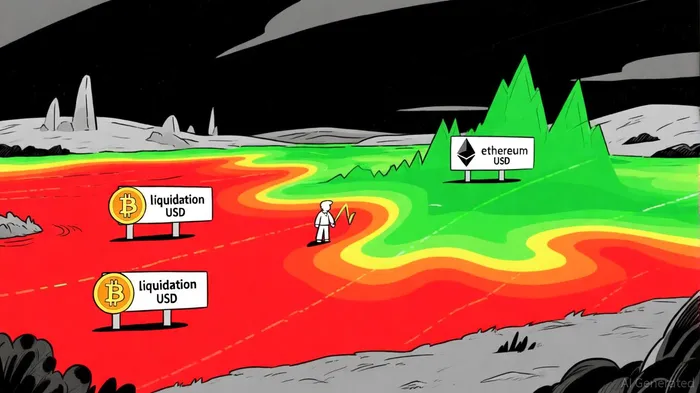






Comentarios
Aún no hay comentarios